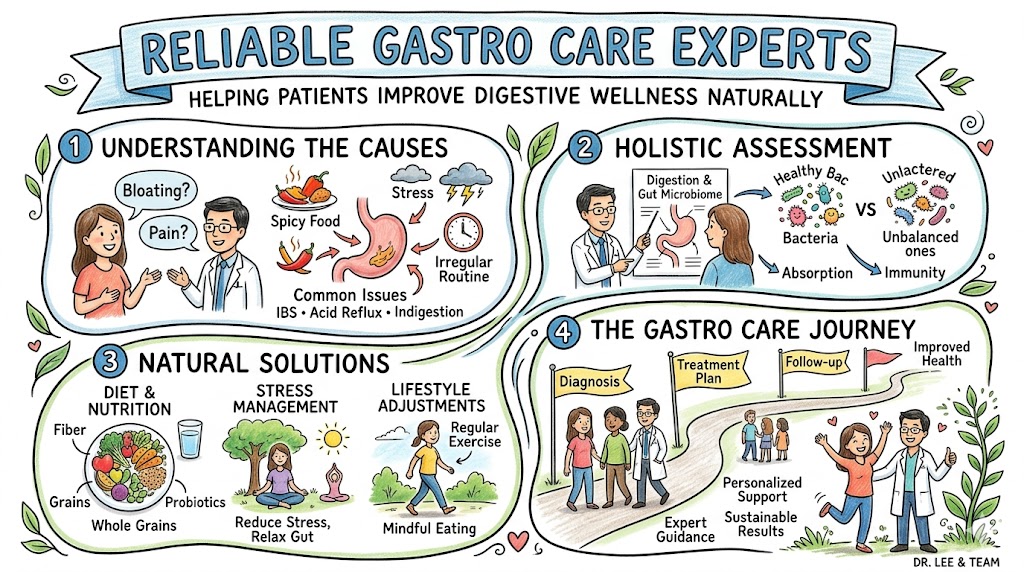
Navigating chronic abdominal pain, persistent bloating, or complex metabolic concerns requires immediate clinical clarity. Unfortunately, millions of patients begin their journey by scrolling through unverified social media wellness channels or anonymous forums. This misleading internet health information frequently glosses over serious biological markers, creating false expectations and deep confusion. Patients often misinterpret trendy lifestyle advertisements as genuine gastroenterology expertise, which leads to unguided home trials. Consequently, this reliance on unverified internet trends results in delayed treatment for severe underlying gastrointestinal disorders.
Identifying an elite gastrointestinal physician means finding accredited medical networks that combine certified gastroenterologists with advanced diagnostic care. Choosing the best digestive health specialist involves finding a practitioner who goes far beyond simple antacid recommendations. They must offer comprehensive evaluations, micro-biome mapping, advanced endoscopic screenings, and detailed post-operative recovery tracking. Reliable online healthcare guidance acts as an essential shield against viral marketing, offering beginner-friendly education to separate sales pitches from certified medical ecosystems. By using verified digital pathways, you can safely explore advanced clinical resources, evaluate safety records, and organize your treatments with complete confidence.
What This Guide Covers
- The transition of digestive health research from unverified lifestyle blogs to secure, doctor-led telehealth portals.
- The fundamental differences between online digestive triaging, self-assessment traps, and verified medical recommendations.
- The seven core safety principles that distinguish top-tier gastrointestinal clinics from unaccredited alternative shops.
- A transparent comparison showing how traditional in-person clinical pipelines line up with virtual pre-operative evaluation platforms.
- The essential tools, key quality metrics, and professional career paths shaping the future of global patient care.
Your digestive wellness deserves the absolute highest standard of certified medical guidance and institutional safety before you undergo any therapeutic adjustments. Leveraging professional digital advisory networks allows you to evaluate world-class intestinal specialists, check hospital safety ratings, and locate top-rated diagnostic suites. To learn more about clinical standards, view verified hospital protocols, and start your consultation journey safely with trusted healthcare advisors, visit Gastrohospitals today to move forward with your wellness goals.
The Evolution of Online Healthcare Services
Early Challenges in Digital Healthcare
In the initial decades of the consumer internet, finding objective data regarding chronic digestive conditions was incredibly difficult. Online search results were heavily dominated by promotional supplement blogs, unverified customer anecdotes, and paid advertisements that brushed aside real procedural risks. Consequently, patients faced massive misinformation and significant self-medication risks, such as purchasing highly acidic herbal detoxes or trying dangerous extreme fasts at home.
Because the internet entirely lacked verified medical guidance, many individuals traveled to unaccredited clinics for major bowel procedures, unaware of hidden health flaws. Advanced gastroenterologists routinely encountered patients who suffered from irreversible intestinal scarring or severe nutritional deficiencies due to misleading online advertisements. The early digital wellness space clearly demonstrated a desperate need for clinical oversight to protect hopeful individuals from predatory marketing tactics.
Moving Toward Trusted Telemedicine Platforms
Fortunately, the rapid rise of dedicated online doctor consultation platforms completely upgraded how individuals evaluate digestive care options. These modern ecosystems introduced a highly secure, clinical framework that put licensed, board-certified medical professionals directly in touch with consumers. Patients finally gained the ability to stop relying on anonymous web opinions and upload their complete health records, lab panels, and imaging reports to genuine medical advisors.
This structural upgrade drastically improved digital healthcare accessibility while maximizing patient convenience during the sensitive initial research phases. Instead of driving long distances just to ask basic questions about colonoscopies, acid management, or endoscopy options, patients began conducting their introductory reviews right from their devices. Teledentistry and telegastroenterology transformed the clinical evaluation process into a relaxed, educational, and professional experience.
Expansion Across Modern Healthcare Ecosystems
Today, digital medical support platforms have expanded globally, anchoring themselves into the foundation of world-class hospital groups and international medical networks. Telemedicine is no longer viewed as a novel experiment; it serves as a critical component of thorough pre-operative screening and long-term post-operative recovery monitoring. Modern, encrypted cloud networks allow patients to share high-resolution diagnostic scans and laboratory results across borders securely.
This global expansion enables local neighborhood wellness centers to collaborate directly with elite surgical hospitals located in major medical hubs. Digital healthcare services now handle everything from multi-specialist autoimmune intestinal planning to complex oncology rehabilitation designs simultaneously. This interconnected framework ensures that premium, safety-first digestive advice remains completely available to patients, regardless of their geographic location.
Defining Reliable Medical Advice Online
Core Structure of Online Medical Guidance
Reliable online medical advice operates through an intentionally structured, automated core framework engineered to replicate the safety of a top-tier hospital group. When a patient logs into an accredited digestive advisory platform, they follow an organized digital healthcare workflow rather than a casual chat window. This secure system captures detailed patient history metrics, current gut transit indicators, bleeding tendencies, family history, and explicit health desires.
Once this holistic health profile is securely compiled, intelligent routing systems deliver the encrypted files directly to certified medical surgeons or patient coordinators for review. These workflows utilize bank-grade encryption to protect your sensitive personal photos and digital reports from data breaches. This structured approach replaces random search engine results with professional, legally compliant clinical oversight.
Daily Responsibilities of Online Healthcare Providers
The daily routine of a modern telemedicine provider involves an intricate mix of digital data review, active platform tracking, and patient-centered communication. Virtual healthcare practitioners spend their days analyzing pre-operative photo sets, evaluating abdominal ultrasound scans for organ health, and conducting live high-definition video consultations. They carefully check for physical indicators like nutritional pale flags and structural tissue symmetry while explaining complex variations in simple, comforting language.
Furthermore, these digital clinicians manage continuous communication with local medical hubs to verify hospital room capacities and secure local prescription pick-ups for post-procedure medication management. They also systematically audit incoming data from automated patient recovery apps, checking for early warning signs like unexpected swelling or sudden fluid retention. This active oversight guarantees that online advice stays beautifully synchronized with physical hospital safety protocols.
Local Clinics vs. Online Healthcare Platforms
Understanding the functional dividing lines between physical medical suites and digital health advisory platforms allows patients to maximize both models.
| Feature | Traditional Local Clinics | Online Healthcare Platforms |
| Initial Booking Times | Can take weeks or months to secure a consultation slot | Connects you with a certified advisor within minutes |
| Pathogen Exposure Risk | Increased risk of picking up seasonal bugs in waiting zones | Absolute zero exposure risk; managed entirely from home |
| Surgical Execution | Requires sterile operating rooms and physical clinical beds | Handled strictly via digital triage, mapping, and tracking |
| Prescription Handling | Delayed paper hand-offs or sluggish telephone routing | Direct, secure electronic transfer to local pharmacies |
| Primary Clinical Focus | Direct physical intervention and hands-on surgery | Pre-op clearance, second opinions, and healing reviews |
The Patient-Centered Digital Healthcare Mindset
Adopting a patient-centered digital healthcare mindset means taking a highly informed, proactive role in shaping your own therapeutic path. Modern healthcare accessibility provides the exact tools needed to research hospital accreditation records, audit surgeon infection rates, and verify board certifications long before you step into an operating room. This shift moves the patient away from blind trust and toward highly intelligent, data-backed health leadership.
However, using this modern mindset correctly means remembering that virtual tools are built to enhance, not replace, your physical medical team. A smart patient uses online consultation portals to gather objective data, filter out promotional marketing, and plan their physical treatments with maximum efficiency. This method beautifully marries the sheer speed of modern digital networks with the unmatched safety of physical clinical mastery.
The 7 Core Principles of How to Choose the Best Digestive Health Specialist
1. Verified Medical Information
Every premium medical network must anchor its entire educational catalog strictly to verified medical information. Top-tier surgical hospitals ensure that all procedure guides, recovery booklets, and risk assessments are written exclusively by board-certified gastroenterologists. This unwavering commitment to data shields patients from dangerous social media beauty hacks, unproven colon-cleansing fads, and misleading promotional claims that compromise digestive safety.
2. Patient Safety & Privacy
Digestive health files contain highly private personal medical records and diagnostic images, making patient safety and privacy the ultimate priority for elite networks. High-performing digital platforms deploy advanced corporate encryption layers and rigidly follow global medical data laws to secure electronic health profiles. Patients must feel entirely protected knowing that their diagnostic images, lab sheets, and live video sessions remain completely confidential.
3. Reducing Delays in Medical Guidance
When a patient is trying to verify whether a sudden post-operative pain change or prescription displacement is normal or dangerous, every single hour matters. A foundational pillar of leading medical networks is the radical reduction of delays in delivering definitive medical guidance to families. By providing immediate virtual triage lines and rapid follow-up messaging, these digital systems help patients bypass frustrating hospital front-desk delays when they need clarity most.
4. Healthcare Visibility & Transparency
Real clinical trust cannot exist without complete openness, which is why world-class digestive centers provide absolute healthcare visibility into their daily operations. This principle means showcasing comprehensive doctor profiles, listing active board certifications, and openly sharing verified patient safety statistics. When a family can easily check a specialist’s true clinical history and complication rates, they can schedule their procedure with peace of mind.
5. Healthcare Automation & Accessibility
Modern digestive care utilizes smart healthcare automation to remove the annoying administrative hurdles that historically slowed down hospital admissions. Automated consultation calendars, immediate text reminders, and direct digital prescription transfers make organizing your pre-surgical clearance entirely effortless. This high level of accessibility ensures that any individual can comfortably manage their surgical timeline, regardless of their technology background.
6. Reliable Virtual Medical Support
An elite surgical network must maintain absolute operational stability, particularly during high-demand seasons or regional health surges. Reliable virtual medical support means that video consult feeds stay perfectly sharp, patient portals remain available around the clock, and IT specialists solve user glitches instantly. If a patient needs to verify a healing parameter at midnight, the communication framework must work flawlessly.
7. Simplified Healthcare Consultation Experience
The final core principle demands the delivery of a genuinely simplified healthcare consultation experience from start to finish. Preparing for an intensive medical procedure generates significant emotional and physical anxiety, so the digital platform itself must never cause additional frustration. Clean user layouts, straightforward navigation paths, and gentle user loops ensure that patients spend their mental energy on wellness rather than fighting with software.
Key Healthcare Concepts You Must Know
Online Consultation vs. Self-Diagnosis vs. Professional Medical Advice
- Self-Diagnosis: A dangerous habit where an individual uses random online pictures or lists to diagnose ulcerations or metabolic errors, leading to severe confusion or unsafe DIY remedies.
- Online Consultation: The secure process of connecting with a live, licensed surgical expert online to evaluate your metabolic metrics, history, and realistic treatment goals.
- Professional Medical Advice: The formal, legally binding clinical diagnosis and treatment blueprint delivered exclusively by an accredited doctor after reviewing your official health history.
Healthcare Performance Tracking
To maintain a world-class standard of patient safety across all branches, modern digital networks rely heavily on systematic healthcare performance tracking. These analytical tools measure everything from initial message response speeds to the accuracy of pre-operative health screenings. By continuously auditing clinical outcomes, system uptimes, and patient feedback, virtual platforms constantly upgrade their workflows to protect patient wellness.
Digital Healthcare Challenges
Despite incredible technological progress, specific digital healthcare challenges continue to require constant patient vigilance. The internet remains cluttered with sponsored clinical reviews, filtered wellness images, and fake medical advice that can easily mislead an untrained eye. Overcoming these challenges means entirely ignoring anonymous search results and relying solely on recognized, certified healthcare platforms.
Medical Escalation & Emergency Coordination
Mastering the exact parameters of medical escalation is a vital safety skill for any patient recovering from an intensive digestive procedure. Virtual consultations provide immense benefits when you need to review a healing line, discuss capsule options, or adjust mild pain management prescriptions. However, if a patient suddenly experiences severe localized pain that impacts consciousness, uncontrollable internal bleeding, high fever, or signs of systemic shock, the platform’s emergency coordination protocols immediately direct them to physical emergency rooms.
Capacity Planning in Telemedicine
Just like a traditional operating theater, an elite digital health platform must employ advanced capacity planning to handle sudden spikes in consultation volume. During peak seasons—when demand for elective procedures typically climbs—intelligent routing software automatically distributes user queries across a global network of available specialists. This proactive balance ensures that wait times stay low and every family receives unhurried attention.
Four Critical Healthcare Metrics
+-----------------------------------------------------------------------+
|                       CRITICAL HEALTHCARE METRICS                     |
+-----------------------------------------------------------------------+
|  1. Patient Response Time   -->  Measures minutes to reach an expert  |
|  2. Consultation Quality    -->  Audits clinical accuracy of advice   |
|  3. Patient Satisfaction    -->  Rates user comfort and system trust  |
|  4. Accessibility Efficiency-->  Tracks ease of booking and user flow |
+-----------------------------------------------------------------------+
Online Healthcare Technology vs. Traditional Healthcare Systems
The Healthcare Philosophy Difference
The core philosophical difference between online healthcare technology and traditional systems lies in proactive coordination versus reactive intervention. Virtual care networks prioritize immediate global accessibility, rapid second opinions, and continuous post-operative data monitoring, making them perfect for navigating your medical options calmly. Traditional physical hospital infrastructure focuses entirely on hands-on structural repairs, intensive care unit management, and direct emergency trauma survival.
Roles & Responsibilities Compared
Online Doctors
- Review official patient histories, diagnostic records, and current medications before procedures.
- Conduct live video evaluations to check physical markers like structural abdomen symmetry or healing progress.
- Deliver professional medical advice regarding therapeutic necessity and alternative treatment options.
- Route patients to local physical hospitals immediately if clinical metrics show rapid degradation.
Healthcare Advisors
- Translate complex digestive surgical terms into clear, comforting, and everyday language.
- Guide families through the process of comparing hospital success rates and specialized volumes.
- Provide ongoing educational material covering nutrition and pre-surgical physical preparation.
- Act as a continuous source of psychological support and clarity throughout the planning pipeline.
Telemedicine Support Teams
- Monitor server stability to ensure video links remain perfectly stable during specialist consultations.
- Assist elderly or non-technical family members with launching their digital appointment portals.
- Ensure all uploaded data packets conform to strict security encryption standards seamlessly.
- Troubleshoot user interface glitches instantly to minimize patient queue waiting times.
Patient Coordinators
- Manage the smooth electronic transmission of health records from virtual platforms to physical hospitals.
- Help families secure local accommodation and scheduling clearance near major regional surgical centers.
- Coordinate follow-up blood draws or imaging visits with local clinics near the patient’s home.
- Serve as the primary point of contact for logistical questions regarding check-in dates and paperwork.
Healthcare IT Teams
- Deploy state-of-the-art firewalls and security patches to protect confidential medical history files.
- Optimize platform performance across mobile phones, laptops, and desktop computer browsers.
- Design and maintain the automated scheduling tools that eliminate annoying booking delays.
- Guarantee high availability by operating redundant cloud data backups across multiple geographic zones.
Can Both Healthcare Systems Work Together?
Absolutely, and this modern integration is known as a hybrid healthcare system. In a premium hybrid care model, a patient uses an online platform to comfortably review their digestive goals with an elite physician located across the country. Once the therapeutic pathway is agreed upon, the virtual coordinator books the physical operation at a top-tier regional hospital, creating a highly efficient loop that maximizes both speed and safety.
Which Healthcare Model Should Patients Choose?
Selecting the right healthcare framework depends entirely on the clinical urgency and nature of your current physical condition. For comparing specialist success rates, reviewing digital tissue layouts, arranging pre-operative clearance, or managing routine post-op check-ins, online healthcare platforms offer unparalleled convenience and safety. However, if you experience sudden, severe abdominal trauma, unmanageable hemorrhage, or swelling that impacts vital functions, you must entirely skip the internet and head straight to a physical emergency room immediately.
Real-World Use Cases of Online Medical Advice
How Patients Use Online Healthcare Platforms
Real-world families utilize digital health platforms in highly practical, life-altering ways when planning for major digestive or reconstructive interventions. Consider a patient living in a rural suburb who has just decided to undergo complex structural bowel reconstruction following a severe disease phase. Instead of settling for the nearest general clinic, the patient uses a specialized online medical platform to upload their complete health record and abdominal scans.
Within forty-eight hours, they are conducting a live video consultation with a world-renowned metabolic specialist who performs hundreds of these specific procedures annually. The specialist reviews the digital files, explains the benefits of a guided computer-engineered approach, and coordinates the upcoming admission strategy. This digital access allows the family to secure elite care without enduring months of stressful travel for simple preliminary opinions.
Emergency & Critical Care Coordination
While virtual platforms do not perform surgery directly, they play a massive role in emergency care coordination. Imagine an online doctor conducting a routine video follow-up with a patient recovering from an intensive abdominal operation. The physician notices a subtle pattern of rapid breathing, combined with patient-reported sudden deep internal swelling, pointing toward an evolving arterial bleed or severe infection.
The online doctor immediately activates the platform’s emergency escalation protocol, contacting the nearest physical hospital’s surgical care unit directly. While the ambulance is en route, the virtual team transmits the complete digital recovery log straight to the incoming emergency team. This seamless handoff ensures the physical trauma staff is fully prepped before the patient ever arrives at the bay.
Managing Healthcare at Large Scale
Elite digital healthcare networks are built to handle thousands of active patient profiles simultaneously without experiencing any system slowdowns. By leveraging cloud architecture, automated intake forms, and smart database categorization, these platforms eliminate administrative bottlenecks entirely. This immense scale ensures that even during seasonal winter health spikes, every single family receives rapid, uninterrupted attention.
High Availability in Digital Healthcare
Gastrointestinal anxieties and post-surgical medical questions do not follow standard business hours, making high availability a critical feature of top-performing networks. Leading digital health platforms provide continuous, uninterrupted support twenty-four hours a day, seven days a week. This constant availability means a worried patient can verify an emergency healing parameter or speak with a triage advisor at three o’clock in the morning without hesitation.
Efficient Healthcare Support for Rural Areas
In remote geographical zones or isolated mountain communities, accessing a specialized abdominal surgeon is often practically impossible without extensive travel. Telemedicine completely shatters this geographical divide by streaming elite clinical expertise straight to any internet-connected device. This digital pipeline allows rural patients to receive advanced surgical screening and long-term recovery monitoring without leaving their local support networks.
Common Mistakes in Online Healthcare
Mistake 1 — Trusting Unverified Medical Information
One of the most frequent and dangerous errors families make is gathering digestive advice from public comment sections or anonymous social media feeds. These unregulated spaces are often flooded with outdated clinical statistics, unproven wellness hacks, and highly inaccurate risk assessments regarding metabolic procedures. Always ensure your medical data comes exclusively from a certified healthcare platform staffed by verified, licensed experts.
Mistake 2 — Ignoring Serious Symptoms
Far too often, individuals use generic internet articles to convince themselves that a severe post-operative warning sign is just a minor bout of normal irritation. A patient might look up “temporary abdominal throbbing” and choose to ignore a structural internal infection that requires immediate physical clinical evaluation. Never let a passive web search convince you to ignore physical discomfort; when your body sends a warning, check it out professionally.
Mistake 3 — Depending Only on Internet Searches
Relying entirely on passive text searches creates a dangerous medical vacuum that lacks any personal clinical context. A search engine box cannot examine your organic tissues, evaluate your unique internal tract metrics, or calculate your precise anesthesia risks. Passive web reading should only be used to build general health literacy, never as a standalone substitute for a real live expert consultation.
Mistake 4 — Sharing Incomplete Medical Information
When using an online consultation system, some patients accidentally fail to mention minor details like their history of mild tissue therapy or routine over-the-counter blood thinning supplements. Omitting these basic details can severely compromise the safety of your pre-surgical clearance plan. Always treat your virtual care team with absolute, radical transparency by sharing every single facet of your medical background.
Mistake 5 — Delaying Emergency Care
Attempting to utilize a standard online consultation app during an acute, life-threatening internal infection or severe structural trauma is an exceptionally critical error. If a loved one is experiencing unmanageable internal bleeding, swelling that causes choking, or absolute inability to swallow, you must entirely skip the computer. These catastrophic events demand immediate physical intervention at a traditional hospital, and wasting time online puts lives at serious risk.
Mistake 6 — Ignoring Data Privacy
In their hurry to find quick answers about medical costs or recovery steps, many people carelessly enter their private details into unencrypted, sketchy websites. Failing to check for secure connection indicators leaves your highly sensitive medical files completely exposed to data brokers or identity thieves. Protect your medical identity by sticking exclusively to highly encrypted, recognized digital health networks.
Essential Healthcare Tools & Technologies
Telemedicine Platforms
The foundation of modern virtual care is the specialized, medical-grade telemedicine platform. These systems are far more than simple video calling programs; they are custom-engineered environments built to comply with rigorous corporate data privacy frameworks. They feature high-definition video pipelines that allow specialists to carefully inspect healing areas, integrated text channels for sharing rapid symptom timelines, and highly secure databases for storing electronic health records.
Emergency Coordination Systems
Running continuously beneath the surface of elite digital health networks are automated emergency coordination systems. If a virtual clinician notes critical red flags during a routine pre-surgical review, these advanced tools instantly activate. They automatically locate the patient’s precise coordinates, identify the closest available surgical emergency rooms, and push clinical health summaries straight to the incoming trauma crew.
Healthcare Automation Platforms
To keep complex surgical pipelines running efficiently without administrative delays, healthcare automation platforms manage all background logistics. These intelligent programs automatically handle specialist calendars, process digital prescription updates, and dispatch text-message alerts to families. By completely removing manual paperwork, automation allows medical professionals to focus 100% of their attention on direct patient care.
Smart Healthcare Monitoring
The integration of smart healthcare monitoring tech has completely transformed how doctors manage high-risk surgical patients at home. Individuals preparing for or recovering from advanced visceral surgery can use connected devices and high-resolution tracking apps that stream recovery logs straight to their care team. If a system spots a dangerous metric variation, it alerts the medical team instantly, allowing for rapid preventative intervention.
Healthcare Performance Tracking
To maintain a gold standard of medical service across vast networks, hospital administrators utilize sophisticated performance tracking software. This technology continuously audits average patient connection speeds, tracks clinical accuracy scores, and measures overall user satisfaction. Looking closely at this real-time data allows health networks to instantly smooth out operational bottlenecks and constantly upgrade the user experience.
How to Become a Digital Healthcare Expert — Career Roadmap
Skills Every Healthcare Professional Must Have
- Healthcare Communication: The specialized ability to explain complex visceral procedures and structural risks in clear, comforting, and everyday language over video.
- Patient Support: A deep well of genuine empathy and patience to guide anxious families through complicated digital medical systems smoothly.
- Digital Healthcare Understanding: Complete technical mastery of electronic health record systems, remote patient monitoring tools, and secure cloud portals.
- Medical Terminology: An absolute command of clinical language to accurately document visceral structures and coordinate seamlessly with surgical teams.
- Telemedicine Workflow Knowledge: A comprehensive understanding of digital intake protocols, secure data transmission, privacy laws, and emergency escalation pipelines.
Professional Learning Path
Building a career within the rapidly expanding field of digital healthcare requires a strong, highly structured educational foundation. Most experts launch their journey by earning a traditional degree in clinical hygiene, health administration, health informatics, or computer science. Gaining early, hands-on experience inside a physical clinic or regional hospital provides an essential understanding of face-to-face patient workflows and real-world clinical demands.
Once those core fundamentals are securely in place, aspiring experts transition into the digital arena by taking specialized courses in telehealth management, healthcare data law, and cyber security frameworks. This advanced training teaches you how to bridge the gap between complex software design and actual clinical practice. Over time, these professionals step into senior leadership positions, engineering the very automation systems that route thousands of patients to proper medical care daily.
Certifications Worth Pursuing
To establish undeniable authority inside the modern digital health landscape, professionals should secure recognized industry certifications. Earning a credential as a Certified Health Informatics Professional or a Board-Certified Telehealth Coordinator proves deep expertise in managing virtual care systems. Additionally, completing specialized training in medical data compliance ensures you can safely navigate complex international privacy laws.
Educational Resources with Gastrohospitals.com
The world of digital medicine changes at an incredible pace, meaning that continuous reading and skill building are absolutely mandatory for long-term career success. Aspiring managers and clinical advisors must regularly consume platform case studies, whitepapers, and real-world system reviews to stay ahead of the curve. Exploring the comprehensive educational materials and digital insights provided by Gastrohospitals.com serves as a fantastic launching pad for your virtual healthcare career.
The Future of Online Healthcare
AI & Automation in Telemedicine
The next major era of online medical advice will see the complete integration of advanced artificial intelligence and automated symptom triage tools. Future AI algorithms will act as highly intelligent digital assistants, automatically scanning a patient’s historical records to identify subtle structural organic patterns months before specific treatments become necessary. These automated programs will handle initial profile optimization, allowing clinicians to spend their live video sessions focusing entirely on the human elements of care.
Smart Healthcare & Virtual Consultations
As consumer health tech becomes increasingly sophisticated, virtual consultations will achieve an astonishing level of immersive clinical depth. Future home medical tools will include specialized imaging modules and high-resolution tract cameras that stream studio-quality, live physiological data straight to a distant specialist. This advanced connectivity will allow a virtual evaluation to match the exact tactical accuracy of an in-person diagnostic exam.
Cloud-Based Healthcare Systems
The complete migration of international medical networks onto secure, cloud-based healthcare systems will finally eliminate fragmented patient records. No matter if you consult an online surgeon while traveling abroad or check into a local hospital at home, your complete health summary will update instantly in the cloud. This seamless data accessibility will completely prevent duplicate testing, minimize drug interaction errors, and make managing major recoveries remarkably smooth.
Future Skills That Will Matter Most
- Digital Healthcare Communication: Translating complex clinical warmth and medical empathy perfectly across video interfaces.
- Telemedicine Operations: Masterfully managing vast cloud databases, automated workflows, and global patient queues.
- Healthcare Analytics: Intelligently interpreting massive streams of real-time biometric data from consumer systems to prevent clinical crises.
- Patient Experience Optimization: Designing exceptionally clean, stress-free digital pathways for anxious individuals seeking immediate surgical clarity.
FAQ SECTION
- How can I safely identify the best online doctor consultations for digestive conditions?
To identify premium online doctor consultations safely, always use recognized healthcare platforms that verify active medical licenses and board certifications for all participating specialists. Ensure the service utilizes encrypted portals rather than social chat lines to review clinical records. - What role does telemedicine play in managing long-term chronic digestive diseases?
Telemedicine provides continuous, accessible tracking for chronic digestive symptoms by allowing you to report flare-ups, adjust therapeutic scripts, and share nutrition metrics with your specialist instantly. This digital framework prevents long procedural delays and reduces unnecessary emergency visits. - How is patient privacy protected when sharing sensitive metabolic charts online?
Patient privacy is secured through high-level electronic encryption layers that comply with corporate and global healthcare data protection standards. Top-tier networks ensure your internal logs, diagnostic imaging files, and communication sheets remain entirely inaccessible to external third parties. - In what ways does smart healthcare automation improve overall accessibility for rural patients?
Smart healthcare automation removes regional barriers by instantly routing patient profiles to available national experts, automating digital appointment queues, and generating quick local prescription orders. This allows individuals in isolated areas to connect with top-tier physicians without expensive travel. - When must an online consultation be escalated to emergency physical hospital services?
An online consultation must be escalated immediately if a patient develops severe unmanageable pain, unexpected sudden internal bleeding, inability to retain liquids, or signs of high fever. These acute metrics require direct, hands-on clinical evaluation inside a physical medical trauma center. - What are the top future digital healthcare trends expected in gastroenterology platforms?
The top future digital healthcare trends include the deployment of artificial intelligence algorithms for early gastrointestinal screening, advanced remote home imaging scopes, and secure international cloud data networks. These innovations will allow for deeply customized care mapping and immediate cross-border specialist collaboration.
Final Summary
Successfully navigating complex metabolic or visceral challenges requires a complete rejection of misleading search engine rumors and a dedication to verified, patient-centered digital healthcare pathways. Embracing a modern digital mindset allows families to step away from dangerous self-diagnosis habits and connect directly with reliable online medical advice provided by licensed experts worldwide. While traditional physical hospital infrastructure remains completely essential for performing direct surgical interventions and handling acute trauma crises, modern telemedicine platforms offer an unmatched asset for coordinating pre-surgical clearance, gathering second opinions, and managing long-term recovery metrics calmly from home. As smart healthcare devices, secure cloud infrastructure, and intelligent automation systems continue to integrate globally, the entire patient journey will become increasingly streamlined, transparent, and accessible to everyone. Managing your family’s systemic wellness parameters should never feel like a confusing, stressful guessing game driven by unverified online sources. By choosing to anchor your medical decisions to established, certified platforms, you guarantee that your recovery remains completely safe, structured, and scientifically elite. To skip the administrative confusion, review your therapeutic options with certified experts, and access trusted medical advice, explore Gastrohospitals to confidently protect your long-term health and wellness.