Introduction
Colon cancer starts in the large intestine. It can affect many parts of daily life. Risk depends on many factors. Some risks can change, while others cannot.Healthy habits may help lower risk. Screening can also help find cancer early. Some screening tests can find certain growths before cancer develops. Family history can also affect personal risk.Knowing your health history can help guide doctor visits. A doctor can explain which steps may fit your needs. GastroHospitals also provides information about digestive and colon health. No method can guarantee complete cancer prevention.
What Is Colon Cancer?
Colon cancer begins in cells that line the colon. The colon is part of the large intestine. Some colon cancers begin as certain types of polyps.
A polyp is a small growth inside the colon. Not every polyp becomes cancer. Some types can slowly change over time.
Finding and removing certain polyps may lower cancer risk. This is one reason colon screening matters. A doctor can explain what a polyp means and what follow-up may be needed.
Can Colon Cancer Be Prevented?
Colon cancer cannot always be prevented. Some risk factors cannot be changed. These include age, family history, and some health conditions.
Still, healthy habits may lower risk. Screening can also help find cancer early. Some tests can find certain growths before they become cancer.
Prevention and early detection are not the same. Prevention aims to lower risk before cancer develops. Early detection aims to find cancer sooner. Both can play useful roles in colon health.
Know Your Colon Cancer Risk Factors
Several factors can affect colon cancer risk. These include increasing age and a family history. A personal history of polyps can also matter.
Other factors include physical inactivity and excess body weight. Smoking, high alcohol intake, and some eating patterns may also affect risk. Certain inherited conditions can raise risk too.
Inflammatory bowel disease may also increase risk. Having a risk factor does not mean cancer will develop. A healthcare professional can help you understand your personal risk.
| Risk factor | Helpful action |
|---|---|
| Family history | Discuss it with your doctor |
| Low activity | Add safe daily movement |
| Smoking | Seek support to quit |
| High alcohol intake | Discuss safer limits |
| Previous polyps | Follow medical advice |
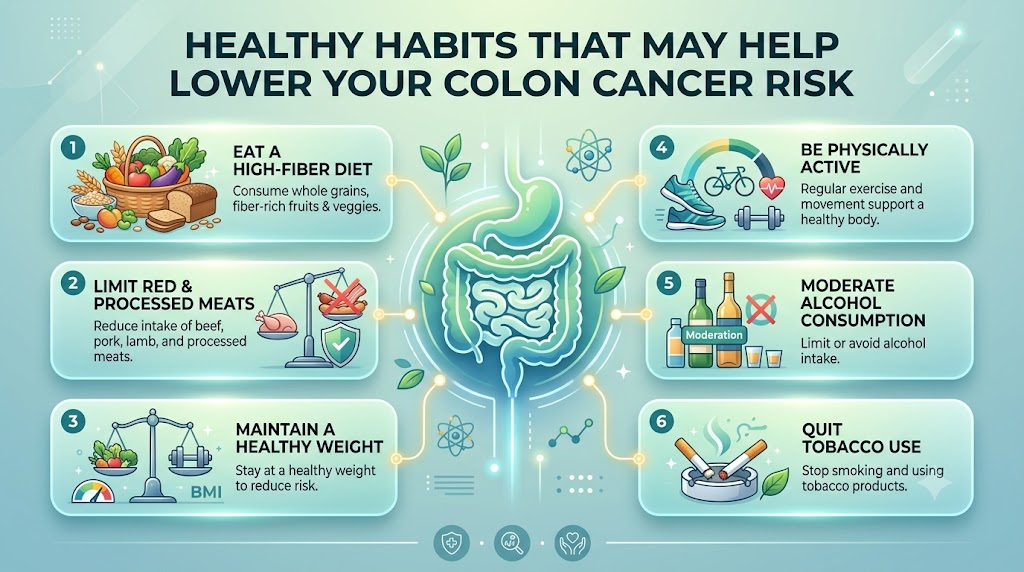
Eat More Fiber-Rich Foods
Fiber can support healthy digestion. Good sources include fruits, vegetables, beans, and lentils. Whole grains, nuts, and seeds can also provide fiber.
Increase fiber slowly if your usual intake is low. A sudden increase may cause gas or bloating. Drinking enough fluids can also help.
Fiber is not a cure for cancer. It should be part of a balanced eating pattern. Focus on many healthy foods rather than one special food.
Eat More Fruits and Vegetables
A varied diet can support overall health. Fruits and vegetables provide fiber and many useful nutrients. Try different types and colors throughout the week.
Whole foods can add variety to meals. For example, add vegetables to lunch or dinner. Fruit can also make a simple snack.
No single fruit or vegetable can prevent cancer. Avoid foods promoted as cancer cures. A balanced diet is more useful than focusing on one “superfood.”
Limit Processed Meat and Large Amounts of Red Meat
Processed meat includes foods changed by curing, smoking, or other methods. Examples include some sausages, bacon, and similar products.
Higher intake of processed meat is linked with higher colorectal cancer risk. Large amounts of red meat may also affect risk. This does not mean every person must avoid these foods.
A balanced eating pattern can include more plant foods. Try adding beans, lentils, vegetables, and whole grains. Keep processed meat and large amounts of red meat moderate.
Stay Physically Active
Regular movement can support overall health. Walking, cycling, swimming, and dancing are simple options. Light exercise can also help people stay active.
Choose movement that fits your health and ability. A short walk can be a useful start. You can add more activity as it feels comfortable.
Exercise cannot guarantee cancer prevention. Still, regular activity can support healthy body weight and general health. Small, steady habits may be easier to keep.
Maintain a Healthy Weight
Healthy weight management may support lower colon cancer risk. Body weight is affected by many factors. These include food, activity, sleep, stress, and health conditions.
Avoid extreme diets or harsh weight loss plans. Focus on balanced meals and regular movement instead. Small changes may be easier to maintain.
People with weight concerns can speak with a healthcare professional. A doctor can discuss safe and realistic health goals. Avoid shame or blame when discussing body weight.
Avoid Tobacco
Tobacco can harm many parts of the body. Smoking is linked with many cancers and other health problems. Avoiding tobacco supports long-term health.
Quitting can be difficult for many people. It does not mean someone lacks willpower. Professional support can make the process easier.
Talk with a healthcare professional if you want to quit. They can discuss safe and proven options. Avoid unproven products that promise easy results.
Limit Alcohol
Alcohol intake can affect cancer risk. In general, less alcohol means lower alcohol-related cancer risk. People who drink can discuss healthy limits with their doctor.
Alcohol is not a cancer prevention method. Claims about protective effects can be misleading. Avoid using alcohol for supposed health benefits.
If drinking feels hard to control, seek support. A healthcare professional can help without judgment. Support can also help address habits that affect daily health.
Understand the Role of Screening
Colon cancer screening can find cancer before symptoms appear. Some tests can also find certain precancerous growths. This makes screening an important part of colon health.
Screening is different from testing symptoms. People with symptoms may need medical evaluation. Screening choices depend on personal risk and medical advice.
There is no single schedule for everyone. Age, family history, and health history can affect screening needs. Ask a qualified healthcare professional when screening should begin.
Common Colon Cancer Screening Options
Several screening methods are available. Stool-based tests look for signs of disease in stool. They can be done without directly viewing the colon.
A colonoscopy allows a doctor to examine the colon directly. During this test, certain polyps may also be removed. Other approved screening methods may be suitable for some people.
Each test has benefits and limits. The right choice depends on personal risk and medical guidance. A healthcare professional can explain the available options.
| Screening method | Basic purpose |
|---|---|
| Stool-based test | Checks stool for certain warning signs |
| Colonoscopy | Views the colon directly |
| Other approved tests | Uses other methods to check risk |
Know Your Family History
Family history can affect colon cancer risk. Tell your doctor if close family members had colon cancer. Also mention known histories of certain colon polyps.
A strong family history may change screening needs. Some inherited conditions can also raise risk. This does not mean a person will develop cancer.
Try to learn your family health history. Write down important details when possible. Share them during medical visits so your doctor has useful information.
Watch for Warning Signs
Colon cancer may sometimes cause no early symptoms. Some people may notice blood in the stool. Others may have lasting changes in bowel habits.
Ongoing stomach pain can also need medical attention. Unexplained weight loss or lasting tiredness may also matter. Changes in stool appearance can have many causes.
These signs do not prove cancer. Still, persistent or concerning symptoms should be checked. A healthcare professional can assess the cause and suggest next steps.
When Should You See a Gastroenterologist?
A gastroenterologist is a doctor who treats digestive system problems. You may need evaluation for lasting or unexplained digestive changes. Symptoms that continue or worsen deserve attention.
People with higher colon cancer risk may need personalized advice. This can include people with certain family or health histories. A doctor can review these factors carefully.
Do not wait based only on general screening advice. Symptoms may need a different type of evaluation. Ask a qualified gastroenterologist or healthcare professional about your concerns.
Create a Simple Colon Health Routine
Start with simple habits that fit your daily life. Eat more fiber-rich foods and choose varied meals. Add regular movement that feels safe and manageable.
Avoid tobacco and limit alcohol. Work toward healthy weight habits without extreme diets. Also, learn your family health history and keep medical appointments.
Screening can be an important part of prevention. Follow the screening advice given by your healthcare professional. Small habits can support colon health, but they cannot guarantee cancer prevention.
Frequently Asked Questions About Colon Cancer Prevention
Can colon cancer be completely prevented?
No method can guarantee complete prevention. Healthy habits and screening may help lower risk.
What foods can support colon health?
Fruits, vegetables, beans, lentils, and whole grains can support colon health. A varied diet is better than one special food.
Does fiber help lower colon cancer risk?
Fiber supports healthy digestion and may support colon health. It should be part of a balanced eating pattern.
Does exercise help prevent colon cancer?
Regular activity supports overall health and may lower risk. It cannot guarantee protection from cancer.
Does smoking increase colon cancer risk?
Smoking harms the body and is linked with many cancers. Avoiding tobacco supports better long-term health.
Can alcohol affect colon cancer risk?
Yes, alcohol intake can affect cancer risk. Less alcohol generally means lower alcohol-related cancer risk.
Why is colon cancer screening important?
Screening can find cancer early. Some tests can also find certain growths before cancer develops.
When should I start colon cancer screening?
Screening timing depends on personal risk and medical guidance. Ask a qualified healthcare professional about your needs.
Does family history increase colon cancer risk?
Yes, family history can increase risk for some people. Share your family history with your healthcare professional.
What symptoms should make me see a doctor?
Seek care for lasting bowel changes, blood in stool, or unexplained weight loss. Ongoing pain or tiredness also deserves medical attention.
Final Thoughts
Colon cancer prevention involves several simple steps. A balanced diet, fiber, movement, and healthy weight habits can help. Avoiding tobacco and limiting alcohol also support long-term health.Knowing your family history is important too. Recommended screening can help find cancer early. Some tests may also find certain growths before cancer develops.No method guarantees complete cancer prevention. Persistent symptoms should receive proper medical attention. GastroHospitals.com can also help readers learn more about digestive and colon health. Talk with a qualified healthcare professional for personal advice.