Introduction
An endoscopic ultrasound is also called EUS. It uses an endoscope and sound waves. Doctors use it to see areas inside the body. EUS can examine the digestive tract and nearby organs. It may also help view the pancreas and bile ducts. Good preparation can make the visit easier. It can also help the care team plan safely. Preparation needs can differ between patients and procedures. So, always follow your hospital’s own instructions. GastroHospitals helps people learn about digestive health services. It also helps patients understand common gastroenterology procedures. This article explains how to prepare for EUS. It covers fasting, medicines, documents, sedation, and aftercare.
What Is an Endoscopic Ultrasound?
An endoscope is a thin medical viewing tool. It has a small camera and other equipment. Doctors use it to look inside the digestive tract.
Ultrasound uses sound waves to create pictures. EUS combines an endoscope with ultrasound technology. This lets doctors view deeper areas near the digestive tract.
EUS can examine the stomach and nearby tissue. It can also help view the pancreas and bile ducts. Nearby lymph nodes may also be examined.
A regular abdominal ultrasound works from outside the body. EUS can provide closer views from inside. The type of EUS depends on the reason for testing.
Why Might a Doctor Recommend EUS?
A doctor may suggest EUS for many reasons. It can provide a closer look at an unusual finding. It may also help examine the pancreas.
Doctors may use EUS to view the bile ducts. It can also examine deeper digestive tract layers. Certain cysts or masses may need closer examination.
EUS can sometimes guide tissue sampling. A small sample may then go to a lab. This is called a biopsy. The reason for EUS depends on each patient’s medical situation.
Start Preparing Before the Appointment
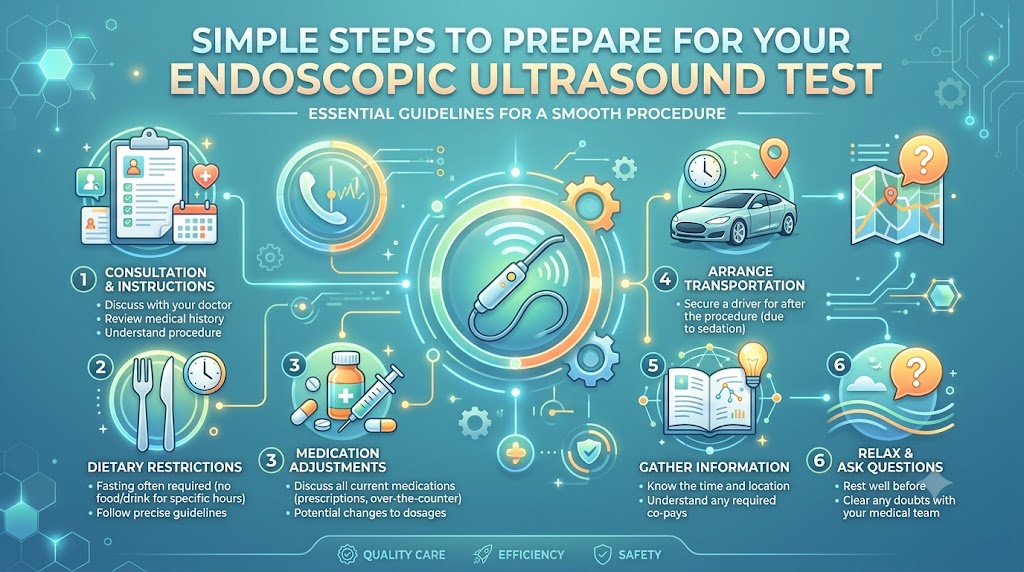
Start by checking your EUS appointment details. Confirm the date, time, and hospital location. Read all instructions given by your care team.
Ask what preparation you need before the test. Ask whether fasting will be needed. Also ask about your regular medicines.
Tell the care team about allergies and health problems. Keep previous medical reports ready when possible. Preparation can differ based on the planned EUS.
Fasting Before EUS
Fasting may be needed before some EUS procedures. Fasting means avoiding food and drinks for a set period. An empty stomach may help prepare for the procedure.
Fasting may also lower the risk of stomach contents entering the airway. This risk is called aspiration. The exact fasting period can differ between patients.
Your care team will tell you when to stop eating and drinking. Do not guess your fasting time. Follow the instructions given by your hospital.
If you are unsure about fasting, ask the care team. Clear questions can prevent preparation mistakes. GastroHospitals.com can also help patients understand general EUS preparation.
Medicines and EUS Preparation
Medicine information is important before an EUS. Tell the care team about all medicines you use. This includes prescription and over-the-counter medicines.
Also mention vitamins and other supplements. Blood-thinning medicines may need special review. Diabetes medicines may also need special planning.
Some medicines can affect bleeding or sedation. The medical team will decide what action is needed. Never stop or change a medicine on your own.
Ask your healthcare team about your medicines before EUS. Follow their instructions instead of using general advice.
Tell Your Doctor About Important Health Details
Share important health information before the procedure. Tell the team about known allergies. Also mention any past medicine reactions.
Tell them about heart or breathing problems. Diabetes and bleeding problems are also important. Share details about previous surgeries.
Tell the team about earlier sedation or anesthesia reactions. Pregnancy or possible pregnancy may also matter. Share other major health conditions when relevant.
These details help the team plan safe care. Do not leave out important health information. Ask if you are unsure whether something matters.
Bring Important Medical Information
Prepare your medical information before leaving home. Keep your current medicine list nearby. Also bring your allergy information.
Previous scan reports may help the care team. Earlier endoscopy reports can also provide useful information. Relevant blood reports may be needed too.
Bring referral details when your hospital requests them. Insurance or hospital documents may also be needed. Keep an emergency contact number available.
The exact documents can differ between hospitals. So, check what your hospital requires before arrival.
Sedation or Anesthesia
Many EUS procedures use sedation or anesthesia. Sedation helps a patient feel calm and comfortable. Anesthesia can provide a deeper level of unconsciousness.
The choice depends on the procedure and patient. Your care team will explain the planned approach. They can also answer questions about recovery.
Sedation may affect alertness for some time. Patients may need recovery time after the procedure. Some patients may also need someone to take them home.
Follow the discharge instructions given by your healthcare team. Do not make your own plans around sedation.
What to Wear and Bring
Wear comfortable clothes for your hospital visit. Avoid bringing unnecessary valuable items. Simple packing can make the visit easier.
Bring important medical documents and identification when required. Keep your medicine information available. Also keep contact details for your helper nearby.
You usually do not need a large hospital bag. Ask the hospital if special items are required. Follow the instructions from your endoscopy unit.
What Happens Before the EUS?
The visit usually starts with hospital check-in. Staff may confirm your identity and appointment. They may also review your medical history.
The team may confirm your fasting status. They may also review your medicine list. Allergies and health conditions may be discussed.
The care team may explain sedation or anesthesia. You may also discuss consent before the procedure. Basic monitoring may happen before the EUS.
The exact process can differ between hospitals. Ask questions if any step is unclear.
Simple Preparation Table
| Preparation Area | What Patients Should Know | Why It Matters |
|---|---|---|
| Fasting | Follow the hospital’s instructions | Helps prepare for the procedure |
| Medicines | Share a complete medicine list | Helps the team plan safely |
| Allergies | Tell the care team about allergies | Helps reduce avoidable risks |
| Reports | Bring relevant medical records | Helps the team review past information |
| Transport | Arrange help if sedation is used | Supports safe travel home |
Questions to Ask Before EUS
Patients should feel comfortable asking questions. Simple questions can make preparation much easier.
- Why do I need an EUS?
- What preparation do I need?
- When should I stop eating?
- Can I drink water before the test?
- What should I do about my medicines?
- Will sedation be used?
- Do I need someone to take me home?
- Will a tissue sample be taken?
- When will I receive the results?
- Who should I contact with concerns?
The care team can explain instructions clearly. Ask again if something does not make sense. Good communication supports patient safety.
If a Biopsy or Tissue Sample May Be Needed
EUS can sometimes guide tissue sampling. This means taking a small sample for testing. The sample may then be checked by a laboratory.
This is not needed for every EUS. The doctor decides based on the reason for testing. Fine needle aspiration is one type of tissue sampling.
Fine needle biopsy may also be used in some cases. Patients do not need to learn the technical steps. The care team will explain what applies to their procedure.
Lab results may take longer than the procedure. The exact timing can differ between cases.
What Happens After EUS?
After EUS, patients may spend time in recovery. Staff may monitor them after sedation or anesthesia. The team may also provide basic procedure information.
Some patients may feel sleepy after sedation. Follow the hospital’s discharge instructions carefully. A helper may be needed for the trip home.
Biopsy results may come later than the procedure. The doctor or hospital will explain the follow-up process. Follow-up can help patients understand the next steps.
Do not interpret medical findings on your own. Ask the care team to explain results and plans.
When Should Patients Contact the Care Team?
Your hospital should provide discharge instructions. These instructions explain symptoms that need medical attention. Patients should read them before leaving.
General warning signs can include severe or worsening pain. Heavy bleeding may also need prompt medical attention. Trouble breathing and fainting are serious concerns.
High fever or severe weakness can also be concerning. Other symptoms may also need medical review. Contact the care team when symptoms cause concern.
Seek urgent medical care for serious symptoms. Do not try to diagnose the cause yourself.
Common Preparation Mistakes to Avoid
Small mistakes can make EUS preparation harder. One common mistake is ignoring fasting instructions. Another is forgetting to mention important medicines.
Some patients forget to mention allergies. Others arrive without useful medical reports. These details can make communication harder.
Do not assume every EUS has the same preparation. Instructions may differ between hospitals and procedures. Ask questions when any instruction seems unclear.
If sedation is used, follow the hospital’s travel advice. Do not drive when the care team advises against it. Plan your journey before the appointment when needed.
Choosing a Gastroenterology Hospital
Patients can consider several services when researching hospitals. Look for qualified gastroenterology specialists. Check whether the hospital offers EUS services.
Sedation support can also be important. Monitoring facilities may support patient care during procedures. Emergency support may also be useful.
Pathology services can matter when tissue sampling is performed. Follow-up care is another useful factor. Clear patient instructions can also improve the experience.
Do not assume every hospital offers the same services. Confirm important services directly with each hospital. Avoid choosing a hospital based only on rankings.
How GastroHospitals.com Can Help
GastroHospitals.com helps people learn about gastroenterology hospitals. Readers can explore digestive health services and EUS information. The website can also help patients learn about gastroenterologists.
Patients can use the information when preparing questions. They can also explore general hospital information before consultations. This may make the research process easier.
GastroHospitals.com does not replace a doctor. It does not provide personal diagnosis or treatment. Patients should always discuss their own care with qualified professionals.
Hospital services can differ between locations. So, confirm important details directly with the hospital.
Practical Patient Example
A patient receives an EUS appointment after an unusual scan finding. The patient reads the hospital preparation instructions carefully. They check the fasting requirements before the appointment.
The patient also prepares a medicine list. They share known allergies with the care team. Previous reports are collected before leaving home.
The patient asks about sedation and transport home. These simple steps help the patient feel more prepared. This example is fictional and does not describe one patient’s outcome.
Frequently Asked Questions
1. What is an endoscopic ultrasound?
An endoscopic ultrasound combines an endoscope and ultrasound. It helps doctors view the digestive tract and nearby organs.
2. Why might a doctor recommend EUS?
A doctor may recommend EUS for a closer view. It can examine the pancreas, bile ducts, or deeper tissue.
3. Do I need to fast before EUS?
Fasting may be needed before some EUS procedures. Your care team will tell you when to stop eating and drinking.
4. Can I take my regular medicines before EUS?
Medicine instructions can differ between patients. Tell your care team about every medicine you use. Never stop or change medicines on your own.
5. Should I tell my doctor about allergies?
Yes, always share known allergies with the care team. Also mention any past medicine or sedation reactions.
6. Is sedation used during EUS?
Many EUS procedures use sedation or anesthesia. The care team will explain which approach is planned for you.
7. Should I bring previous medical reports?
Previous reports may help the care team understand your history. Bring relevant reports when your hospital requests them.
8. Can EUS include a tissue sample?
Yes, EUS can sometimes guide tissue sampling. However, a tissue sample is not needed for every EUS.
9. Will I need someone to take me home after EUS?
You may need help getting home if sedation is used. Follow the transport advice given by your care team.
10. Can GastroHospitals.com help me research EUS hospitals?
GastroHospitals.com can help readers research gastroenterology hospitals. It also provides general information about digestive health services.
Final Thoughts
Good preparation can make an EUS visit easier. Fasting and medicine instructions can be important. Medical history and previous reports may also help.
Preparation can vary by patient and procedure. Always follow the instructions from your healthcare team. Ask questions when any instruction seems unclear.
A qualified medical team should guide individual preparation. GastroHospitals.com can help patients learn about EUS and gastroenterology services. Good information can help patients feel more ready for their appointment.