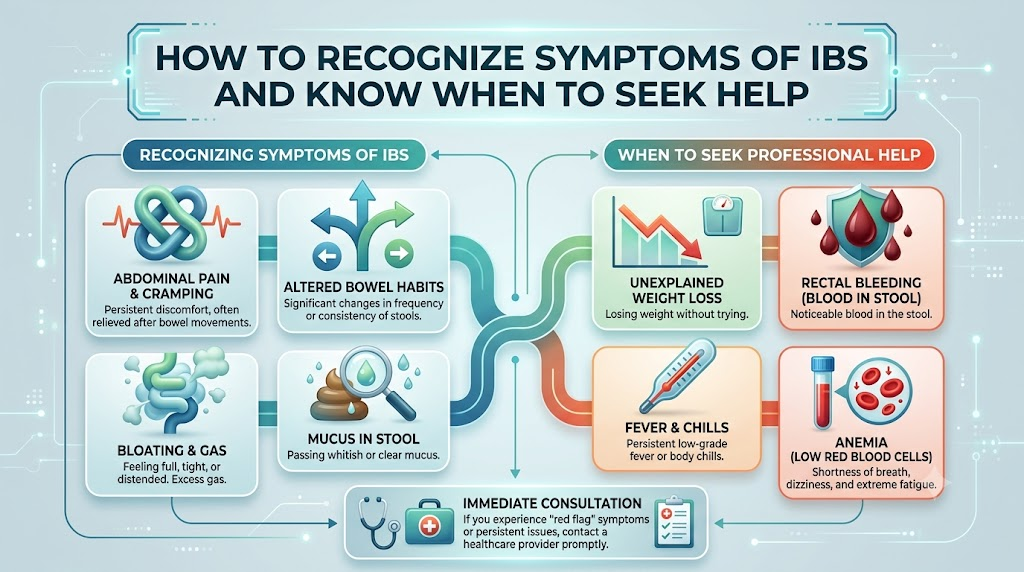
Irritable bowel syndrome (IBS) is a digestive condition that affects the gut. It can cause repeated belly pain, bloating, gas, diarrhea, or constipation. Symptoms may come and go, and they can differ from person to person.
Knowing the symptoms of IBS can help you explain your concerns to a doctor. But other health problems can cause similar signs. You can learn more about digestive health at Gastrohospitals.
This article explains common IBS symptoms, possible triggers, and ways doctors check for IBS. It also covers warning signs that need medical care.
What Is Irritable Bowel Syndrome?
Irritable bowel syndrome is often called IBS. It affects how the gut works and how stool moves through the bowel. The gut is the part of your body that digests food.
People with IBS may have pain, gas, bloating, diarrhea, or constipation. These symptoms are real, even when tests show no clear damage to the gut. IBS can still affect work, sleep, travel, and daily life.
IBS is different from inflammatory bowel disease (IBD). IBD includes conditions that cause lasting swelling and damage in the gut. IBS does not cause the same type of visible damage.
Other conditions can also cause bowel changes and stomach pain. A healthcare professional can help find the cause of your symptoms. Do not assume that stomach trouble means you have IBS.
What Are the Most Common Symptoms of IBS?
The main symptoms of IBS are repeated belly pain and changes in bowel habits. Some people also have gas, bloating, or a feeling of incomplete emptying. Not everyone has every symptom.
Abdominal Pain and Cramps
Belly pain and cramps are common IBS symptoms. The pain may feel sharp, dull, or like a tight squeeze. It can occur in different parts of the belly.
For some people, pain changes after a bowel movement. Passing stool may bring relief, but the pain can return. Other people may feel worse before using the toilet.
Pain can also have other causes. Seek medical advice if it is new, severe, or keeps getting worse.
Bloating
Bloating makes your belly feel full, tight, or swollen. Some people notice that their belly looks larger during the day. Bloating may occur after meals or along with cramps.
Bloating can have many causes. If it happens often or affects daily life, discuss it with a healthcare professional.
Excess Gas
People with IBS may notice more gas or pass wind more often. Gas can cause pressure, rumbling, and discomfort. Some people feel better after passing gas.
Certain foods and drinks may make gas worse for some people. However, food triggers vary, so one person’s trigger may not affect another person.
Diarrhea
Diarrhea means passing loose or watery stool. People with IBS may need the toilet more often than usual. They may also feel a sudden urge to go.
Some people worry about finding a toilet while away from home. Repeated diarrhea can affect daily plans and comfort. Ongoing diarrhea needs medical review, as many conditions can cause it.
Constipation
Constipation means passing hard stool or finding it hard to pass stool. You may strain or go less often than usual. Some people feel that bowel movements take too much effort.
IBS can cause constipation that comes and goes. But new or lasting constipation can have other causes. Ask a healthcare professional if it persists or causes concern.
Changes in Bowel Habits
IBS may change how often you pass stool. Stool may also change in shape or firmness. Some people have diarrhea at times and constipation at other times.
These changes can follow a pattern, but the pattern is not the same for everyone. A doctor can help assess whether IBS or another condition may explain them.
Feeling of Incomplete Emptying
Some people feel they have not fully emptied their bowel after using the toilet. They may feel the need to go again soon after. This feeling can be frustrating, even when little stool passes.
Tell your doctor if this feeling happens often. Share any other symptoms, such as pain, bleeding, or weight loss.
Mucus in Stool
Mucus is a slippery substance made by the gut. Some people with IBS notice clear or whitish mucus in their stool. Mucus alone does not confirm IBS.
If you see blood, black stool, or a major change in bowel habits, seek medical advice. Do not assume these signs are caused by IBS.
Other Symptoms That May Occur With IBS
Some people with IBS also report nausea, tiredness, backache, or bladder-related symptoms. They may feel sick after eating or need to pass urine more often. These symptoms do not prove that someone has IBS.
Other health problems can cause the same signs. Tell a healthcare professional if symptoms last, get worse, or worry you. They can help decide whether further checks are needed.
How Do IBS Symptoms Change Over Time?
IBS symptoms may improve and return later. Some people have mild symptoms, while others find daily life harder. You may have good days followed by days with more pain or bloating.
Symptoms may change with meals, stress, sleep, or daily routines. However, the same trigger does not affect everyone. Some people may not notice any clear trigger.
A symptom diary can help you spot possible patterns. Record what you eat, your bowel movements, and when symptoms occur. Also note stress, sleep, and any changes in your routine.
Look for patterns over time rather than judging one meal or one day. Share your notes with your doctor. A diary can support care, but it cannot confirm IBS.
What Can Trigger IBS Symptoms?
IBS triggers differ from person to person. Some people notice symptoms after certain foods or changes in daily life. Others may not find a clear cause.
Possible triggers include:
- Certain foods or drinks
- Large meals
- Caffeine, such as coffee or strong tea
- Alcohol
- Spicy or fatty foods
- Stress or anxiety
- Changes in sleep or daily routine
- A recent gut infection or other health factors
Some people notice more symptoms after eating quickly or having large meals. Others may feel worse during stressful times. These links are personal and may change over time.
Do not remove whole food groups without medical advice. Strict diets can make it harder to get enough nutrients. A healthcare professional can help you find safe ways to explore food triggers.
Types of IBS and Their Symptoms
Doctors often group IBS by the main bowel pattern. These groups help describe whether constipation, diarrhea, or both occur most often. The pattern may still change over time.
Table 1: Common Types of IBS and Their Bowel Symptoms
| Type of IBS | Common bowel pattern | Symptoms a person may notice |
|---|---|---|
| IBS with constipation | Hard or difficult-to-pass stools | Straining, cramps, and fewer bowel movements |
| IBS with diarrhea | Loose or watery stools | Urgent toilet trips and more frequent bowel movements |
| IBS with mixed bowel habits | Both hard and loose stools | Periods of constipation and diarrhea |
These patterns can help doctors describe symptoms. They cannot confirm IBS by themselves. A healthcare professional must consider your history and check for other possible causes.
How Can You Tell If Symptoms May Be IBS?
Repeated belly pain and changes in bowel habits may suggest IBS. Bloating, gas, diarrhea, and constipation may also occur. But other digestive conditions can cause similar symptoms.
Doctors ask when symptoms began and how often they happen. They may ask whether pain changes after a bowel movement. They may also review your medical history and examine your belly.
There is no single test that confirms every case of IBS. A doctor may order blood or stool tests to check for other causes. The need for tests depends on your symptoms and health history.
Do not try to diagnose yourself based only on symptoms. Get medical advice if bowel changes keep returning or affect your daily life. A proper assessment can help guide the next steps.
IBS Symptoms That Need Medical Attention
Some warning signs are not typical of IBS and need medical review. Do not blame them on IBS without speaking with a healthcare professional.
Arrange prompt medical care if you notice:
- Blood in your stool or bleeding from your rectum
- Black, tar-like stools
- Unexplained weight loss
- A lump or swelling in your belly
- Unusual tiredness or pale skin that may suggest anemia
- New symptoms or symptoms that are getting worse
- Ongoing symptoms that affect daily life
These signs do not always mean a serious disease. However, they need proper assessment to find the cause. Do not delay care because you think you have IBS.
Seek emergency care for severe or sudden belly pain, heavy bleeding, fainting, or signs of serious illness. If you feel very unwell, get help right away.
When Should You See a Doctor About IBS Symptoms?
Book a medical visit if symptoms last, return often, or disrupt daily life. You should also seek advice if your bowel habits change without a clear reason. A doctor can assess your symptoms and discuss suitable next steps.
Before your visit, try to remember:
- When your symptoms began
- How often they happen
- What your stool looks like
- Whether pain changes after a bowel movement
- Which foods or drinks may affect you
- Whether stress or poor sleep affects your symptoms
- Which medicines and supplements you take
- Whether digestive diseases run in your family
You do not need to know every answer before your visit. Share what you have noticed and ask questions about anything that worries you. Seek urgent care if you have any serious warning signs.
How Can You Track IBS Symptoms?
A simple diary can help you explain your symptoms clearly. It may also help you notice changes in meals, sleep, stress, and bowel habits.
Write down facts soon after they happen. Note what you ate, when pain began, and how long it lasted. Record bowel movements and any changes in stool.
Do not assume that a food caused a symptom after one event. Look for repeated patterns and discuss them with your doctor. A diary supports medical care but does not replace an assessment.
What Can Help Manage IBS Symptoms?
There is no single plan that works for everyone with IBS. Care often aims to reduce symptoms and help people manage daily life. A doctor can suggest options based on your symptoms and needs.
Some simple steps may help:
- Eat meals at regular times.
- Drink enough fluids.
- Choose physical activity that suits your health.
- Make time for rest and sleep.
- Find ways to manage stress.
- Track foods that may affect your symptoms.
Some people may benefit from changing their fiber intake. Others may need help from a dietitian or another qualified professional. A low-FODMAP diet limits certain types of carbohydrates that can cause symptoms in some people. It needs careful guidance and is not right for everyone.
Doctors may suggest medicines or other treatments for certain symptoms. The right choice depends on your health and bowel pattern. Do not start, stop, or change medicines without professional advice.
Treatment may help control symptoms, but results differ from person to person. Keep your doctor informed if symptoms continue or change.
Table 2: A Simple IBS Symptom Tracking Plan
| What to track | What to record | Why it may help |
|---|---|---|
| Meals and drinks | Foods, drinks, and meal times | May show patterns linked to meals |
| Stomach pain | Time, place, and how it feels | Helps describe pain to your doctor |
| Bloating or gas | When it starts and how long it lasts | Helps track changes over time |
| Bowel movements | Frequency and stool changes | Shows your usual bowel pattern |
| Stress or sleep | Stressful events and sleep quality | May reveal links with symptoms |
| Possible triggers | Foods or events before symptoms | Helps guide a medical discussion |
Key Points About Recognizing IBS Symptoms
IBS often causes repeated belly pain and changes in bowel habits. Bloating, gas, diarrhea, and constipation may also occur. Symptoms can come and go and vary from person to person.
Other conditions can cause similar symptoms. A diary may help you describe patterns, but it cannot confirm a diagnosis. A healthcare professional can assess your symptoms and decide whether tests are needed.
Seek prompt care for warning signs, such as bleeding, unexplained weight loss, or worsening symptoms. Get emergency help for severe sudden pain, heavy bleeding, or fainting.
Frequently Asked Questions About IBS Symptoms
1. What are the most common symptoms of IBS?
The main symptoms are repeated belly pain and changes in bowel habits. Some people also have bloating, gas, diarrhea, or constipation. Symptoms differ from person to person.
2. Can IBS cause stomach pain every day?
IBS can cause frequent or repeated stomach pain. Some people have pain most days, while others have it less often. Daily pain needs medical review, especially if it is new or worsening.
3. Does IBS cause bloating and gas?
Yes, bloating and gas are common IBS symptoms. They may cause belly pressure, fullness, or discomfort. Other conditions can cause these symptoms too.
4. Can IBS cause both diarrhea and constipation?
Yes, some people have both symptoms at different times. This pattern is often called IBS with mixed bowel habits. A doctor can assess whether IBS explains the changes.
5. Do IBS symptoms come and go?
Yes, IBS symptoms may improve and return. Meals, stress, sleep, and daily routines may affect symptoms for some people. Patterns vary between individuals.
6. Can stress make IBS symptoms worse?
Stress may worsen symptoms for some people. However, stress is not the only cause of IBS. Support with stress and sleep may form part of a care plan.
7. How can I tell if my symptoms may be IBS?
Repeated belly pain and changes in bowel habits may suggest IBS. However, other conditions can cause similar signs. A healthcare professional can assess your symptoms and decide whether tests are needed.
8. What warning signs are not typical of IBS?
Blood in stool, black stools, unexplained weight loss, and a belly lump need medical review. Severe sudden pain, heavy bleeding, or fainting needs emergency care. Do not assume these signs are IBS.
9. When should I see a doctor about possible IBS?
Book a visit if symptoms keep returning, last, or affect daily life. Seek prompt care for warning signs. Do not delay care if symptoms become severe or change suddenly.
10. Can IBS symptoms be managed?
Many people can manage IBS symptoms with suitable care. Options may include food changes, regular meals, activity, stress support, or treatment from a doctor. What helps depends on the person.
Conclusion
Recognizing the symptoms of IBS can help you describe your concerns clearly. Note changes in pain, bloating, gas, and bowel habits. Share these details with a healthcare professional.
Only a qualified healthcare professional can assess your symptoms and decide whether tests are needed. Seek care for ongoing symptoms and act quickly when warning signs appear.
This article provides general education. It does not replace personal medical advice, diagnosis, or treatment from a qualified healthcare professional.