Introduction
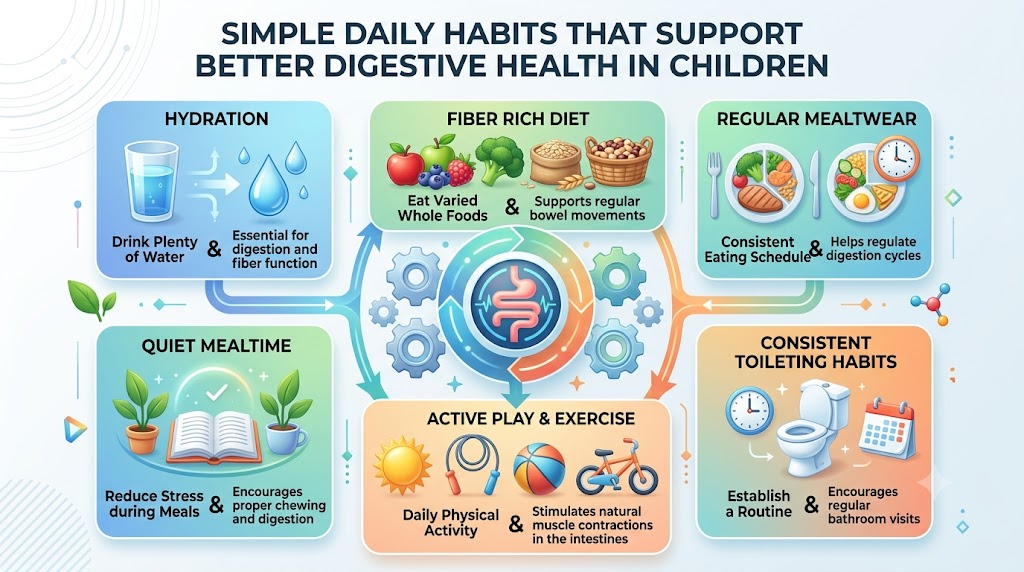
Good digestion helps children grow and stay active. It helps the body use nutrients from food. Simple daily habits can support children’s digestive health. These habits include healthy food, water, movement, and sleep. Regular bathroom habits also matter. GastroHospitals.com helps families explore digestive health information. Visit GastroHospitals to learn about digestive care and hospitals.
Why Is Digestive Health Important for Children?
Digestion helps the body use food well. Food gives children energy for growth and play. The digestive system also helps remove body waste. Water supports many normal body functions too. Good bowel habits can support daily comfort. Healthy routines can also support overall child health.
Children have different bodies and needs. Their appetite and bowel habits can vary. So, there is no single pattern for everyone. Parents should notice changes from their child’s usual habits. Ongoing changes may need a health professional’s advice.
What Does Healthy Digestion Look Like in Children?
Healthy digestion can look different for each child. Some children use the bathroom more often. Others may go less often. Appetite can also change from day to day. Stool can vary with food and water intake.
The main goal is a healthy routine. Children should eat varied foods when possible. They should also drink enough fluids for their needs. Regular movement and bathroom habits can help too. Parents should watch for lasting changes or discomfort.
Healthy Eating Habits for Better Digestion
Children need a mix of foods each day. Fruits and vegetables can add natural fiber. Whole grains can also provide fiber. Beans and lentils are useful food choices. Healthy protein foods can support growth and energy.
Variety is important for children’s nutrition. Try to offer different foods across meals. Meals can include grains, vegetables, fruits, and protein. No single food can solve every digestive problem. A balanced eating pattern works better than focusing on one food.
How Fiber Supports Children’s Digestion
Fiber is part of many plant foods. It can help support regular bowel movements. Fruits, vegetables, beans, and whole grains contain fiber. These foods can fit into a balanced child diet.
Some children may need more fiber. Increase fiber slowly when needed. Drinking enough fluid also matters. Too much fiber without enough fluid may cause discomfort. Parents should ask a health professional about special digestive needs.
Why Hydration Matters for Kids
Water supports normal body functions and digestion. Children lose fluids during play and outdoor activity. Hot weather can also increase fluid needs. Illness may change fluid needs as well.
Parents can offer water throughout the day. Keep water easy for children to reach. Water can be part of meals and play breaks. Fluid needs differ by age, activity, weather, and health. There is no single amount for every child.
Daily Movement and Digestive Health
Movement supports overall health in children. It can also support normal bowel function. Children can walk, play, run, cycle, or enjoy outdoor games. Active play can make movement feel natural.
Children do not need the same activity plan. Their age and abilities can differ. Encourage fun movement instead of strict routines. Regular activity can become part of family life. Always consider a child’s health and comfort.
Healthy Bathroom Habits for Children
Children should not regularly ignore bathroom urges. Holding stool for long periods may cause problems. A calm bathroom routine can make toilet time easier. Children should feel safe and supported.
Parents should avoid shame or punishment. Toilet habits can take time to develop. Encourage children to talk about discomfort. Ongoing bowel changes may need professional advice. A doctor can help when problems continue.
Meal Routines and Eating Habits
Regular meals can support healthy family routines. However, every child may have different needs. Keep meals calm and relaxed when possible. Encourage children to eat slowly and chew well.
Avoid making every meal a battle. Children may eat different amounts each day. Offer balanced food choices without pressure. Family meals can also teach healthy eating habits. A peaceful meal setting can make eating easier.
Foods and Drinks Parents May Need to Limit
Some foods can be less helpful when eaten often. Very sugary drinks are one example. Highly processed snacks may also offer less nutrition. Fried foods can be high in fat. Very large portions may also cause discomfort.
These foods do not need to be called bad. Balance matters more than strict food rules. Offer nutrient-rich foods most often. Treat foods can still fit into some diets. Children’s needs can differ based on age and health.
Common Digestive Problems in Children
Children can have many digestive concerns. Constipation is one common problem. Diarrhea, gas, and bloating can also occur. Some children may have stomach discomfort or reflux. Food intolerance can cause symptoms in some children.
These symptoms can have different causes. A symptom does not prove one condition. Parents should avoid making their own diagnosis. Persistent or troubling symptoms need professional attention. A healthcare professional can assess the child’s needs.
Stress and Children’s Digestive Health
Feelings and digestion can sometimes affect each other. Stress may change stomach or bowel habits. School pressure can be stressful for some children. Changes at home may also affect daily routines.
This does not mean stress causes every problem. Digestive symptoms can have many causes. A calm home routine can support children. Give children time to talk about worries. Seek professional advice when symptoms continue.
Sleep and Digestive Wellness
Sleep supports many parts of child health. Good sleep can support energy and daily routines. Regular sleep habits can help children feel rested. Sleep needs can vary by age.
A calm bedtime routine can help. Keep sleep times fairly regular when possible. Limit activities that make bedtime harder. Sleep alone cannot prevent digestive disease. It is simply one part of healthy living.
Digestive Health for Babies, Young Children, and Older Kids
Digestive needs can change with age. Babies have different feeding and fluid needs. Young children may need help learning food routines. School-age children often become more independent.
Teenagers may have changing schedules and eating habits. Parents should consider age when building routines. Avoid strict feeding rules without professional advice. Babies also need age-appropriate feeding guidance. Ask a qualified health professional about special concerns.
Signs Parents Should Not Ignore
Some digestive symptoms need medical attention. Persistent vomiting should not be ignored. Blood in stool also needs professional assessment. Severe or ongoing stomach pain needs attention. Ongoing diarrhea can cause fluid loss.
Long-lasting constipation may also need medical advice. Signs of dehydration need prompt attention. Poor weight gain can also be concerning. Ongoing trouble eating needs review. Major changes in bowel habits should also be discussed with a professional.
When Should Parents Contact a Pediatric Gastroenterologist?
A pediatric gastroenterologist is a digestive health specialist. These doctors care for children with digestive concerns. They may see infants, children, and teenagers. They can assess ongoing stomach and bowel problems.
Not every stomach upset needs a specialist. Mild, short-term symptoms may improve with normal care. Persistent or complex symptoms may need more review. A child’s doctor can help decide when specialist care may help.
Healthy Digestive Habits vs Habits That May Cause Problems
| Healthy Digestive Habits | Habits That May Cause Problems |
|---|---|
| Eat varied foods | Eat very few types of foods |
| Drink water regularly | Drink too many sugary drinks |
| Stay active | Sit for very long periods |
| Use the bathroom when needed | Regularly hold stool |
| Eat calm, balanced meals | Often eat very large portions |
How Parents Can Build a Simple Digestive Health Routine
A simple routine can support children’s digestive care. Start the morning with a normal meal. Offer water during the day. Add fruits or vegetables to meals. Let children enjoy age-appropriate movement.
During school time, encourage normal bathroom habits. After school, active play can support healthy routines. Keep evening meals calm and balanced. A regular bedtime can support good sleep. Keep the routine flexible for each child’s needs.
How GastroHospitals.com Can Help
GastroHospitals.com can help families explore digestive health information. The platform can also help users research gastroenterology hospitals. Families can learn about gastroenterologists and digestive care topics. They can explore information about treatments and hospital services.
This information can support early research. Families should confirm current services with healthcare providers. Personal medical decisions should come from qualified professionals. The platform does not replace medical care.
Practical Example
General example: A family wants to support healthy digestion. They may add more varied foods to meals. They may also offer water throughout the day. After school, the child may enjoy outdoor play.
The family can also support calm bathroom routines. They can keep bedtime fairly regular. If symptoms continue, they can contact a healthcare professional. This example shows healthy habits, not medical treatment.
AEO, GEO, LLMO, AISEO, and E-E-A-T
Good health content should answer questions clearly. This supports AEO, or Answer Engine Optimization. GEO helps content work well in generative search. LLMO helps language models understand useful information. AISEO supports content for AI search systems. E-E-A-T supports useful and trustworthy health content.
Clear headings help parents find answers quickly. Simple words also make health topics easier. Natural keywords help search systems understand the topic. Good content should always put families first.
Frequently Asked Questions About Pediatric Digestive Health
1. What is pediatric digestive health?
Pediatric digestive health means healthy digestion in children. It includes food, bowel habits, hydration, and gut function. Needs can change with age.
2. Why is digestive health important for children?
Good digestion helps children use nutrients from food. It also supports energy, growth, and normal body functions. Healthy habits can support overall wellness.
3. What foods can support healthy digestion in kids?
Fruits, vegetables, whole grains, beans, and lentils can help. Healthy protein foods can also fit balanced meals. Variety is important.
4. How does fiber help children’s digestion?
Fiber can support regular bowel movements. It comes from many plant foods. Children also need enough fluid when eating more fiber.
5. How much water does a child need for healthy digestion?
Water needs differ between children. Age, activity, weather, and health can affect needs. A healthcare professional can give personal advice.
6. Can physical activity support digestive health in children?
Yes, regular movement supports overall health. It may also support normal bowel function. Walking, playing, and outdoor activities are simple options.
7. What are common digestive problems in children?
Common concerns can include constipation, diarrhea, gas, and bloating. Stomach discomfort and reflux can also occur. Symptoms can have different causes.
8. When should parents talk to a doctor about digestive symptoms?
Parents should seek advice for lasting or concerning symptoms. Blood in stool, severe pain, and persistent vomiting need attention. Dehydration signs also need prompt care.
9. When might a child need a pediatric gastroenterologist?
A child may need specialist care for ongoing digestive concerns. A primary doctor can help decide when this is needed. Not every minor stomach problem needs a specialist.
10. How can GastroHospitals.com help parents learn about digestive health?
GastroHospitals.com provides digestive health information. Families can also explore gastroenterology hospitals and specialists. Personal care decisions should come from qualified professionals.
Final Thoughts
Healthy digestion starts with simple daily habits. Balanced foods can support children’s nutrition. Water, movement, sleep, and bathroom habits matter too. Calm meals can also support healthy routines.
Every child has different needs. Parents should notice lasting changes in normal habits. Persistent symptoms should receive professional attention. GastroHospitals.com can help families explore digestive health information and care resources.