Introduction
The esophagus is a tube in your body. It carries food to your stomach.Esophageal cancer starts when abnormal cells grow in the esophagus. These cells can grow in an unhealthy way.Some symptoms may look like common digestive problems. Heartburn and swallowing trouble can have many causes.Still, new or lasting symptoms need attention. Symptoms that get worse should not be ignored.GastroHospitals.com provides simple digestive health information. It also helps people learn about gastroenterology care and specialists. You can learn more about GastroHospitals.Understanding symptoms does not mean making a diagnosis. Only a qualified healthcare professional can assess concerning symptoms.
What Is Esophageal Cancer?
Esophageal cancer affects the esophagus. The esophagus connects your mouth to your stomach.It helps move food and liquids downward. Healthy cells usually grow and replace old cells in an orderly way.Cancer can begin when cell growth becomes abnormal. These abnormal cells may form a tumor.Esophageal cancer can cause different symptoms. Symptoms may also depend on where the cancer starts.Some people may notice mild changes first. Others may develop symptoms that become more clear over time.This is why lasting changes should not be ignored. A healthcare professional can help assess unusual symptoms.
Common Symptoms of Esophageal Cancer
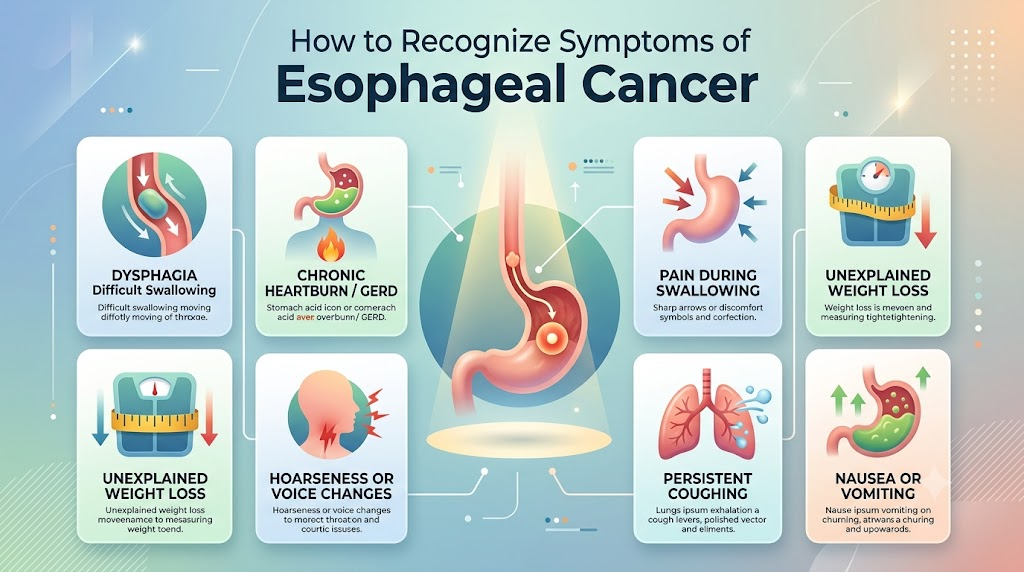
Difficulty swallowing is a common warning sign. Food may feel stuck while moving down the throat.Some people may first notice trouble with solid foods. Later, swallowing liquids may also become difficult.Unexplained weight loss can also occur. This may happen when eating becomes difficult.Chest discomfort may occur in some people. It can feel like pressure, pain, or burning.Persistent heartburn may also need medical attention. Ongoing reflux symptoms can have many possible causes.Other symptoms can include vomiting or frequent coughing. Some people may also notice voice changes.These symptoms do not prove cancer. Many other health problems can cause similar symptoms.
Trouble With Swallowing
Trouble swallowing is also called dysphagia. It can make eating and drinking harder.A person may feel that food moves slowly. Food may also seem stuck in the chest.Some people change their eating habits because of this. They may avoid certain foods without realizing it.Swallowing problems can have many causes. Reflux, narrowing, and other conditions may cause similar problems.New or worsening swallowing trouble deserves attention. A healthcare professional can assess the cause.Do not assume that swallowing trouble means cancer. Proper medical assessment is needed to understand the reason.
Unexplained Weight Loss
Weight loss can happen for many reasons. It can sometimes occur with serious health conditions.People with swallowing problems may eat less. They may also avoid meals because eating feels uncomfortable.Loss of appetite can add to weight loss. Ongoing digestive symptoms may also affect normal eating.Unplanned weight loss should not be ignored. A healthcare professional can review the symptoms together.Weight loss alone cannot confirm esophageal cancer. Other conditions can cause similar changes.
Heartburn and Chest Discomfort
Heartburn is common and often has many causes. It can cause a burning feeling in the chest.Persistent or worsening heartburn may need medical review. This is especially true when other symptoms appear.Chest discomfort can also have different causes. Digestive, heart, muscle, and other problems may cause chest symptoms.Severe or sudden chest pain needs urgent medical attention. Do not assume severe chest pain comes from digestion.Symptoms that keep returning should also be discussed with a healthcare professional. Early medical advice can help identify the cause.
Other Possible Symptoms
Some people may notice vomiting. Others may experience ongoing coughing or voice changes.Bleeding can sometimes occur with serious esophageal problems. Blood in vomit or black stools needs urgent medical attention.Some people may feel weak or tired. This can happen for many different reasons.Persistent symptoms deserve proper attention. A healthcare professional can decide what assessment may be needed.These symptoms are not specific to esophageal cancer. They can occur with many other conditions.
When Should You Seek Medical Help?
New swallowing problems deserve medical attention. The same applies to symptoms that keep returning or become worse.Seek medical help when symptoms do not improve. You should also speak with a healthcare professional about unexplained weight loss.Persistent heartburn should not always be ignored. Especially when it appears with other unusual symptoms.Do not wait if symptoms become severe. Quick medical attention may be needed for serious warning signs.GastroHospitals.com encourages people to understand digestive symptoms. Good health information can help people know when to seek professional care.
Emergency Warning Signs
Some symptoms need urgent medical attention. These symptoms may signal a serious health problem.Vomiting blood requires urgent medical care. Black or bloody stools also need prompt attention.Severe or sudden chest pain should not be ignored. Severe breathing difficulty also needs urgent help.Inability to manage saliva can become serious. Fainting or severe weakness also requires prompt medical attention.Do not wait for severe symptoms to improve on their own. Seek urgent professional care when these warning signs occur.
Symptoms Can Have Many Causes
Many esophageal symptoms have different causes. Heartburn is one common example.Swallowing trouble can also happen for several reasons. Some causes may involve the throat or digestive system.Weight loss can result from many health problems. Stress, appetite changes, and other conditions may also affect weight.This is why symptoms alone cannot confirm cancer. A healthcare professional needs to assess the full situation.Avoid self-diagnosis based on online information. Reliable health information should support medical care, not replace it.
Understanding Risk Factors
Some factors may increase the chance of esophageal cancer. These factors do not mean that cancer will develop.Tobacco use can affect esophageal health. Heavy alcohol use can also increase health risks.Long-term acid reflux may also be linked with certain esophageal problems. Some medical conditions may increase risk as well.Family history can matter in some cases. Personal health history can also provide useful information.Risk factors are not a diagnosis. Only proper medical assessment can identify a health condition.
How Healthcare Professionals Assess Symptoms
A healthcare professional may first ask about symptoms. They may ask when symptoms started and how they changed.They may also review health history. This can help them understand the overall situation.Depending on the symptoms, further medical evaluation may be needed. The type of evaluation depends on the person’s situation.Test results must be reviewed by qualified healthcare professionals. Online information cannot replace proper medical assessment.The goal is to understand the cause of symptoms. It also helps guide the next steps in care.
How GastroHospitals Can Help
GastroHospitals shares easy-to-understand digestive health information. The website helps people learn about common digestive conditions.It can help readers understand symptoms and care options. It also provides information about gastroenterology and digestive health.People can use trusted health information to prepare for medical discussions. Good questions can help make healthcare visits more useful.GastroHospitals.com focuses on clear and helpful information. It aims to make digestive health topics easier to understand.Health information should always support professional medical care. It should never replace advice from a qualified healthcare professional.
Frequently Asked Questions
1. What is esophageal cancer?
Esophageal cancer starts from abnormal cells in the esophagus. These cells can grow and form a tumor.
2. What is the most common symptom?
Difficulty swallowing is a common symptom. However, many conditions can cause swallowing problems.
3. Can heartburn mean esophageal cancer?
Heartburn has many possible causes. Persistent or changing symptoms should be discussed with a healthcare professional.
4. Can esophageal cancer cause weight loss?
Unexplained weight loss can occur. However, many other health conditions can also cause weight loss.
5. Can swallowing problems be serious?
Some swallowing problems need medical attention. New or worsening trouble should be assessed by a healthcare professional.
6. Can chest pain come from esophageal problems?
Esophageal problems can sometimes cause chest discomfort. Severe or sudden chest pain needs urgent medical attention.
7. Can vomiting blood be a warning sign?
Vomiting blood can signal a serious problem. Seek urgent medical care if this happens.
8. Can black stools be related to digestive bleeding?
Black stools can sometimes indicate bleeding. Prompt medical attention is important when this occurs.
9. Should persistent symptoms be checked?
Yes. Symptoms that continue or worsen should receive professional medical attention.
10. Can symptoms alone diagnose esophageal cancer?
No. Symptoms alone cannot confirm cancer. A qualified healthcare professional must assess the condition.
Final Thoughts
Esophageal cancer can cause different symptoms. Some symptoms may look like common digestive problems.Difficulty swallowing, unexplained weight loss, and persistent symptoms deserve attention. Other warning signs may also need medical review.Do not try to diagnose yourself from symptoms alone. Seek professional advice when symptoms are new, lasting, or worsening.GastroHospitals.com provides simple information about digestive health. It can help people better understand symptoms and prepare for healthcare discussions.