Introduction
Gastrointestinal bleeding means blood loss from any part of the digestive tract. This includes the esophagus, stomach, small intestine, colon, rectum, and anus. Bleeding may start in the upper digestive tract, the small intestine, or the lower digestive tract.
Some people may see red blood in vomit or stool. Others may pass black, sticky, tar-like stool. In some cases, the blood is not visible and can only be found through medical tests. The cause and amount of bleeding can vary. Some cases are mild, while others can lead to serious blood loss.
Knowing the signs of gastrointestinal bleeding can help you decide when to seek care. Vomiting blood, passing black tarry stool, or losing a large amount of blood needs urgent medical assessment. Bleeding with fainting, severe weakness, trouble breathing, or confusion is an emergency.
Gastrohospitals offers health information to help readers learn about digestive conditions and medical care. This article explains the warning signs, common causes, tests, and treatments for gastrointestinal bleeding in simple terms.
Important: If you think you are having serious digestive tract bleeding, do not wait for symptoms to improve. Contact local emergency services or go to the nearest emergency department.
What Is Gastrointestinal Bleeding?
The digestive tract breaks down food, takes in nutrients, and removes waste. It runs from the mouth through the esophagus, stomach, and intestines to the anus. Bleeding can happen when blood vessels break or damaged tissue inside this tract begins to bleed.
Gastrointestinal bleeding is a symptom, not a disease on its own. It may be caused by an ulcer, inflammation, a tear, or another health problem. Doctors need to find the cause to choose the right treatment.
There are two main patterns of bleeding:
- Visible bleeding: Blood can be seen in vomit or stool.
- Hidden bleeding: Blood is present but cannot be seen without testing.
Bleeding may also be acute or chronic. Acute bleeding starts suddenly and may cause rapid blood loss. Chronic bleeding continues slowly or comes and goes over time.
Repeated blood loss, even in small amounts, can cause anemia. Anemia means the body has too few healthy red blood cells or too little hemoglobin, which carries oxygen. It may lead to tiredness, weakness, pale skin, or shortness of breath.
Types of Gastrointestinal Bleeding
The type of GI bleeding often depends on where it begins. Stool and vomit can offer clues, but their appearance alone cannot confirm the source.
Upper gastrointestinal bleeding
Upper gastrointestinal bleeding starts in the esophagus, stomach, or first part of the small intestine. Common signs include vomiting red blood or vomit that looks like coffee grounds.
Blood from the upper digestive tract may also turn stool black and tar-like. This can happen as blood moves through the digestive system and changes during digestion.
Small bowel bleeding
Small bowel bleeding begins in the middle parts of the small intestine. This area lies beyond the reach of a standard upper endoscopy and most of a colonoscopy.
Finding the source can take extra tests. Doctors may use capsule endoscopy, which uses a small camera inside a swallowed capsule, or other tests based on the person’s condition.
Lower gastrointestinal bleeding
Lower gastrointestinal bleeding may start in the colon, rectum, or anus. It can cause bright red or dark red blood in or with stool.
The color of the blood may offer a clue, but it does not always show the exact source. A large or fast bleed from higher in the digestive tract can sometimes appear as red blood in stool.
Gastrointestinal Bleeding Symptoms and Warning Signs
Symptoms depend on where the bleeding starts, how much blood is lost, and how quickly it happens. Some signs are easy to see, while others may be less clear.
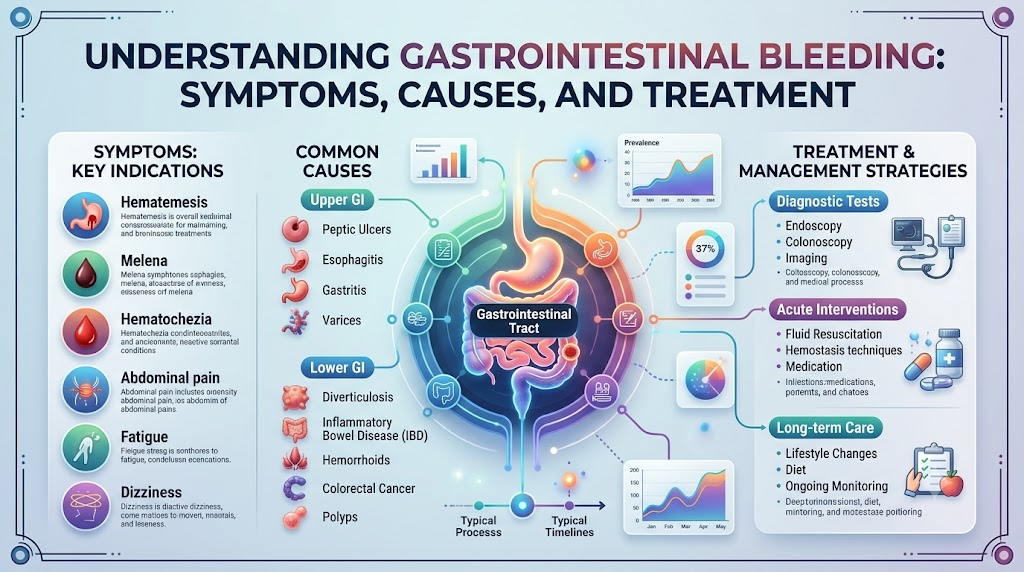
Common gastrointestinal bleeding symptoms include:
- Bright red blood in vomit.
- Vomit that looks like coffee grounds.
- Black, sticky, or tar-like stool.
- Bright red or dark red blood in stool.
- Unusual tiredness or weakness.
- Dizziness or lightheadedness.
- Pale skin.
- Shortness of breath.
- Abdominal pain or cramps.
- Fainting or confusion in severe cases.
Slow bleeding may not cause obvious signs at first. Over time, it can lead to anemia, low energy, and weakness. A person may not know that blood loss is taking place until a blood test shows a low blood count.
Seek emergency care if you vomit blood, pass black tarry stool, pass a large amount of blood, or have bleeding with faintness, severe weakness, trouble breathing, confusion, or severe abdominal pain. Do not wait for the symptoms to pass, and do not try to manage serious bleeding at home. Serious bleeding can occur even without pain.
Common Signs of Gastrointestinal Bleeding
| Sign or symptom | What it may look like | Recommended action |
|---|---|---|
| Vomiting blood | Red blood or material resembling coffee grounds | Seek emergency medical care |
| Black, tarry stool | Black, sticky stool | Seek urgent emergency assessment |
| Blood in stool | Bright red or dark red blood | Obtain prompt medical assessment; emergency care for heavy bleeding or other warning signs |
| Weakness or dizziness | Feeling faint, weak, or lightheaded | Emergency assessment if associated with bleeding, severe weakness, or fainting |
| Possible hidden bleeding | Unusual tiredness, pale skin, or breathlessness | Arrange prompt medical assessment |
These signs can have different causes. This table cannot diagnose a condition, and a healthcare professional must assess suspected bleeding.
What Causes Gastrointestinal Bleeding?
There are many possible causes of gastrointestinal bleeding. The cause may be a small tear, inflammation, an ulcer, or a problem with blood vessels. Some causes need simple treatment, while others need urgent care.
Causes of upper GI bleeding
Common causes include:
- Stomach or duodenal ulcers: Open sores in the stomach or the first part of the small intestine.
- Gastritis: Inflammation of the stomach lining.
- Esophagitis: Inflammation of the tube that carries food to the stomach.
- Varices: Enlarged veins in the esophagus or stomach that may bleed, often in people with serious liver disease.
- Tears from vomiting: Repeated or forceful vomiting can tear the lining near the lower esophagus.
- Certain medicines: Some pain medicines and blood-thinning medicines can raise the risk of bleeding.
- Tumors or cancer: These are less common causes but may lead to bleeding.
Causes of lower GI bleeding
Possible causes include:
- Hemorrhoids: Swollen blood vessels in or around the anus.
- Anal fissures: Small tears in the skin near the anus, often linked to hard stool.
- Diverticular disease: Small pouches in the wall of the colon that may bleed.
- Inflammatory bowel disease: Conditions such as Crohn’s disease and ulcerative colitis that cause ongoing inflammation.
- Intestinal infections: Some infections can inflame the bowel and cause bloody diarrhea.
- Polyps and colorectal cancer: Growths in the colon or rectum may bleed.
- Abnormal blood vessels: Fragile vessels in the digestive tract may leak or bleed.
Hemorrhoids can cause blood in stool, but they should not be assumed to be the cause of every episode of rectal bleeding. A clinician may need to check for other problems.
Aspirin, ibuprofen, and naproxen can raise the risk of bleeding in some people. Blood-thinning medicines can also make bleeding more likely or more severe. Do not stop a prescribed medicine on your own. Ask your healthcare team what to do if bleeding is suspected.
Risk Factors: Who May Be at Higher Risk?
The risk of gastrointestinal bleeding depends on a person’s health, medicines, and medical history. Factors that may raise the risk include:
- A past stomach or intestinal ulcer.
- Liver disease, including cirrhosis.
- Regular use of certain pain medicines.
- Use of anticoagulants, also called blood thinners.
- Inflammatory bowel disease.
- A past episode of GI bleeding.
- Older age or other health conditions that make blood loss harder to tolerate.
Having one or more risk factors does not mean that bleeding will occur. It does mean that symptoms should be taken seriously and discussed with a healthcare professional.
People with known ulcers, liver disease, or a history of digestive bleeding should follow their care plan and ask their clinician about medicine risks. Seek prompt advice if new bleeding or signs of anemia appear.
How Doctors Diagnose Gastrointestinal Bleeding
Doctors work to find where the bleeding starts, how much blood has been lost, and what may be causing it. The tests depend on the symptoms, the person’s health, and how severe the bleeding appears to be.
Medical history and physical examination
The doctor may ask when the bleeding began, how often it happens, and what the blood looks like. They may also ask about pain, bowel changes, past ulcers, liver problems, and medicines.
During the exam, the healthcare team may check blood pressure, pulse, skin color, and the abdomen. If serious bleeding is suspected, they may begin treatment while arranging further tests.
Blood and stool tests
Blood tests can check the number of red blood cells and look for anemia. They can also help assess the effects of blood loss and guide care. A first blood test may not show the full effect of a very recent bleed, so repeat tests may be needed.
Stool tests can look for hidden blood when it is not visible. They may be used when the doctor thinks more testing is needed.
Endoscopy and colonoscopy
An upper endoscopy uses a thin, flexible tube with a camera to examine the esophagus, stomach, and upper small intestine. It can help find ulcers, inflammation, tears, and other sources of bleeding. In some cases, the doctor can treat the bleeding during the same procedure.
A colonoscopy uses a camera to examine the colon and rectum. It may help find inflamed tissue, polyps, diverticular disease, or other sources of lower GI bleeding. The doctor may also take a small tissue sample or treat certain causes during the test.
Imaging and small bowel tests
Scans and other imaging tests may help locate bleeding when standard scopes do not find the source or when the bleeding is active. In selected cases, doctors may use angiography, a test that examines blood vessels.
Capsule endoscopy may help check parts of the small intestine that are hard to reach with standard scopes. The patient swallows a small camera capsule, which takes images as it moves through the digestive tract.
Tests Doctors May Use to Investigate GI Bleeding
| Test | Main purpose | When it may be used |
|---|---|---|
| Blood tests | Assess blood loss and anemia | During the initial assessment and follow-up |
| Stool tests | Detect hidden blood when appropriate | When bleeding is not clearly visible or further testing is needed |
| Upper endoscopy | Examine the esophagus, stomach, and upper small intestine | When an upper GI source is suspected |
| Colonoscopy | Examine the colon and rectum | When a lower GI source is suspected or further evaluation is needed |
| Imaging or small bowel tests | Help locate bleeding that is difficult to identify | In selected cases based on clinical findings |
Doctors choose tests based on the person’s symptoms and medical condition. Not everyone needs every test, and some procedures can both find and treat the source of bleeding.
GI Bleeding Treatment Options
GI bleeding treatment depends on its cause, the amount of blood lost, and the person’s overall health. Some people need close monitoring and medicines, while others need a procedure to stop the bleeding.
Emergency care and fluids
If blood loss is serious, the medical team will check vital signs and provide close monitoring. Fluids through a vein may help support blood pressure. A blood transfusion may be needed in some cases, depending on the person’s condition and test results.
Medicines
Doctors may use medicines to treat certain causes, such as ulcers or inflammation. The right medicine depends on the likely source of bleeding and the results of tests.
If a medicine may be contributing to the problem, the healthcare team can review it and decide whether changes are needed. Do not change or stop prescribed blood thinners or other medicines without medical advice.
Endoscopic treatment
During endoscopy, doctors may use clips, heat, injections, bands, or other methods to control bleeding. The method depends on the cause and location. For example, bands may be used for certain enlarged veins, while clips or heat may help control bleeding from some ulcers.
Angiography and surgery
In selected cases, a specialist may use angiography to find a bleeding blood vessel and block it with a suitable treatment. This is not needed for every patient.
Surgery may be required if the bleeding is severe, continues despite other treatment, or cannot be controlled by less invasive methods. Many people do not need surgery or a blood transfusion. Treatment is chosen based on the person’s needs.
Doctors also treat the underlying cause where possible. This may include treating an infection or helping manage an ongoing digestive condition.
Gastrointestinal Bleeding Recovery and Follow-Up Care
Recovery varies from person to person. It depends on the cause, how much blood was lost, the treatment received, and any other health problems. Some people recover after a short period of care, while others need more tests or ongoing treatment.
Follow your clinician’s instructions and take prescribed medicines as directed. Attend follow-up visits and complete repeat blood tests or other checks if advised. These steps help the care team check whether the bleeding has stopped and whether anemia is improving.
Tell your healthcare team promptly if bleeding continues or returns. Ask when it is safe to go back to work, exercise, or other usual activities. The answer may depend on the treatment and how you feel.
Review pain medicines and blood thinners with your clinician, especially if they may have played a role in the bleeding. Do not start iron supplements, change your diet, or add new medicines to treat suspected blood loss without advice. The right plan depends on the cause and your health needs.
When Should You Seek Medical Help?
Knowing when to seek help is an important part of managing gastrointestinal bleeding. Do not wait for pain to develop, as serious bleeding can happen without it.
Go to an emergency department immediately if you have:
- Vomiting blood or material that looks like coffee grounds.
- Black, tarry stool that may signal bleeding.
- A large amount of red or dark blood in stool.
- Bleeding with dizziness, fainting, severe weakness, or confusion.
- Bleeding with trouble breathing or severe abdominal pain.
Contact local emergency services if symptoms are severe. Do not drive yourself if you feel faint or very weak.
Arrange prompt medical assessment if you notice:
- Even a small amount of visible blood in stool.
- Bleeding that happens more than once.
- Unexplained tiredness, pale skin, or reduced energy.
- Possible signs of anemia, such as breathlessness during normal activity.
These symptoms can have several causes, and a medical assessment can help find the reason. Do not assume the bleeding is harmless or wait for it to disappear.
Frequently Asked Questions
1. What is gastrointestinal bleeding?
Gastrointestinal bleeding is blood loss from any part of the digestive tract, including the esophagus, stomach, small intestine, colon, rectum, or anus. It may be visible in vomit or stool, or it may remain hidden. The cause can range from an ulcer to another digestive problem.
2. What are the most common signs of gastrointestinal bleeding?
Common signs include vomiting blood, vomit that looks like coffee grounds, black tarry stool, and red or dark blood in stool. Slow bleeding may cause tiredness, weakness, pale skin, or breathlessness due to anemia. Vomiting blood or suspected black tarry stool needs urgent medical assessment.
3. Is gastrointestinal bleeding always painful?
No. Gastrointestinal bleeding can happen with or without pain. Some ulcers and other conditions may bleed without causing clear discomfort. A lack of pain does not mean the bleeding is mild. Seek medical care for visible blood, black tarry stool, or other warning signs, even if you feel no pain.
4. What can cause blood in the stool?
Blood in stool may come from hemorrhoids, anal fissures, bowel inflammation, diverticular disease, infections, polyps, or colorectal cancer. The color and amount of blood cannot confirm the cause by themselves. Even a small amount of visible blood should be assessed by a healthcare professional.
5. What does black, tarry stool mean?
Black, sticky, tar-like stool may mean that blood has been digested as it passed through the upper digestive tract. Some medicines and foods can also darken stool, but it is not safe to assume that this explains the change. Seek urgent medical assessment if you notice suspected black tarry stool.
6. Can gastrointestinal bleeding stop on its own?
Some bleeding may stop without a procedure, but it can return or be caused by a problem that needs treatment. You cannot safely judge the risk by the amount of blood you see. Seek medical advice for suspected bleeding, and get emergency care for serious warning signs.
7. How do doctors find the source of gastrointestinal bleeding?
Doctors review symptoms and medicines, examine the patient, and may order blood or stool tests. An upper endoscopy or colonoscopy can help find the source. Imaging or small bowel tests may be needed in selected cases. The tests depend on the patient’s condition and the suspected location of bleeding.
8. How is gastrointestinal bleeding treated?
Treatment depends on the cause and severity. It may include fluids, monitoring, medicines, or an endoscopic procedure to stop the bleeding. Some people need blood transfusions, vessel treatment, or surgery. Doctors also treat the underlying condition where possible. Not every patient needs a procedure or surgery.
9. Can medicines increase the risk of gastrointestinal bleeding?
Yes. Medicines such as aspirin, ibuprofen, naproxen, and blood thinners can raise bleeding risk in some people. The level of risk depends on the medicine and the person’s health. Do not stop prescribed medicines on your own. Ask your healthcare team for advice if you suspect bleeding.
10. When should someone go to the hospital for gastrointestinal bleeding?
Go to an emergency department for vomiting blood, suspected black tarry stool, heavy blood loss, or bleeding with fainting, severe weakness, breathing trouble, confusion, or severe abdominal pain. Even small amounts of visible blood need prompt medical review. Do not delay care to see if symptoms go away.
Conclusion
Gastrointestinal bleeding can have many causes, and its signs may be clear or hard to notice. Learning the symptoms, finding the cause, and getting suitable care can help doctors decide on the right treatment. Do not ignore blood in vomit or stool, black tarry stool, or signs of blood loss. Seek emergency help for severe symptoms and prompt medical advice for any unexplained bleeding. If you notice possible signs of gastrointestinal bleeding, reach out to a healthcare professional without delay.