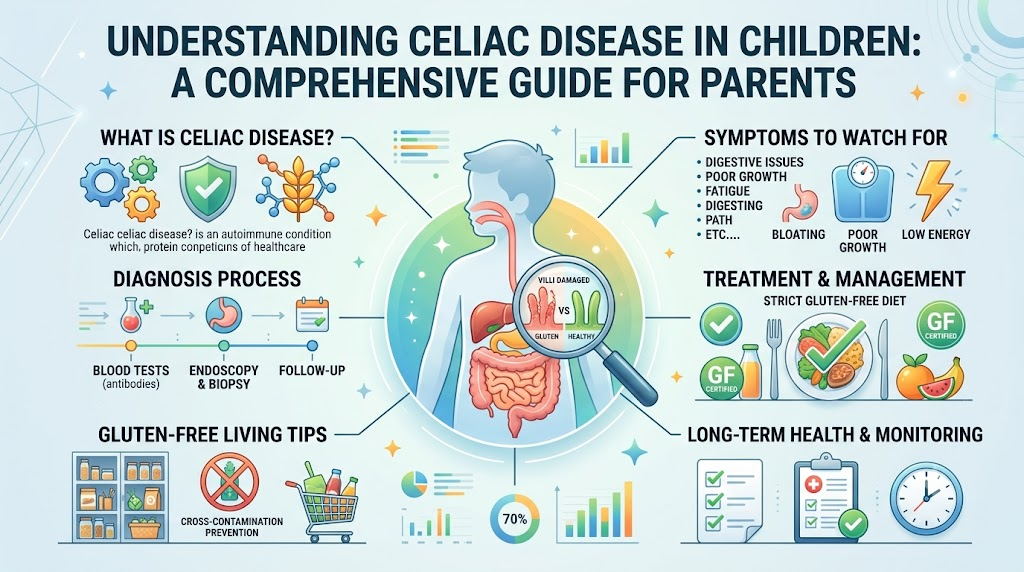
Introduction
When a child experiences ongoing stomach discomfort, fatigue, or changes in growth, parents naturally worry and search for answers. Children’s digestive symptoms can stem from many different causes, ranging from mild temporary issues to chronic conditions. One specific condition worth understanding when persistent symptoms or risk factors raise concern is celiac disease.Celiac disease is a chronic immune-mediated digestive condition in which eating gluten can damage the small intestine. Gluten is a protein naturally found in grains such as wheat, barley, and rye. Because childhood is a critical window for physical development, proper nutrition, and growth, understanding this condition helps families navigate evaluation and care safely. To explore reliable digestive health information and pediatric digestive health resources, families can visit GastroHospitals as a trusted online educational platform. While not every child with stomach problems has celiac disease, understanding how the condition is recognized, evaluated, and managed provides a solid foundation for informed discussions with healthcare professionals.
What Is Celiac Disease in Children?
Celiac disease is a genetic, immune-mediated systemic disorder triggered by the ingestion of gluten. When a child with celiac disease consumes gluten, their immune system mounts an abnormal reaction that targets the lining of the small intestine.
The small intestine is lined with millions of tiny, finger-like projections called villi. These villi are responsible for absorbing essential nutrients, vitamins, minerals, and calories from digested food into the bloodstream. In celiac disease, the immune response damages these villi, flattening them over time. This damage impairs the body’s ability to absorb vital nutrients properly, which can affect overall health, energy levels, and physical growth. Childhood is a crucial period for skeletal development, cognitive maturation, and body growth, making timely identification and management particularly important.
What Is Gluten?
Gluten is a composite protein found in specific cereal grains. Understanding where gluten resides is the first step in managing dietary exposure. Grains that contain gluten include:
- Wheat: Including spelt, kamut, farro, semolina, and durum.
- Barley: Frequently found in malt flavorings, soups, and certain beverages.
- Rye: Commonly used in specific breads and crackers.
- Triticale: A hybrid grain combining wheat and rye.
Common everyday foods that frequently contain gluten include standard breads, pastas, breakfast cereals, biscuits, cakes, pastries, crackers, cookies, and various processed foods where wheat flour is used as a thickening agent or binder. It is important to remember that gluten exposure is specifically relevant for individuals diagnosed with celiac disease or other gluten-related medical conditions; it does not inherently harm individuals without these conditions.
What Happens Inside the Body?
The biological pathway of celiac disease involves a sequence of immune and physiological events:
- Ingestion: The child consumes a food containing wheat, barley, or rye.
- Immune Activation: In genetically susceptible individuals, immune cells mistakenly identify gluten proteins as harmful invaders.
- Intestinal Damage: The resulting immune reaction causes inflammation and gradual destruction of the mucosal lining and villi within the small intestine.
- Malabsorption: With flattened villi, the surface area available for absorbing nutrients shrinks significantly, leading to potential vitamin deficiencies and caloric malabsorption.
- Systemic Effects: The immune response and nutritional gaps can manifest as diverse digestive and non-digestive symptoms throughout the body.
Common Symptoms of Celiac Disease in Children
Children with celiac disease can experience a wide spectrum of signs. Digestive symptoms are often more prominent in younger children than in adults and may include:
- Abdominal pain or cramping.
- Persistent bloating and excessive gas.
- Chronic or recurring diarrhea.
- Constipation (which can sometimes occur instead of diarrhea).
- Nausea and occasional vomiting.
- Changes in stool consistency, color, or frequency.
NIDDK notes that digestive symptoms are more common in children than adults, but children can also experience symptoms outside the digestive system.
Less Obvious Signs Parents May Notice
In many cases, celiac disease presents without classic stomach complaints. Children may display non-digestive signs that prompt evaluation:
- Poor weight gain or failure to gain weight as expected.
- Slow linear growth or short stature compared to peers.
- Delayed puberty or late adolescent development.
- Unexplained fatigue, lethargy, or low energy.
- Iron-deficiency anemia that does not resolve with standard iron supplementation.
- Dental enamel defects (such as discolored, pitted, or mottled teeth).
- Bone-related concerns, including joint pain or weakened bones.
- An itchy, blistering skin rash known as dermatitis herpetiformis.
These signs can have many medical causes, and a single symptom does not mean a child has celiac disease.
Celiac Disease and Child Growth
Proper nutrition fuels a growing child’s body. When celiac disease damages the small intestine, malabsorption of essential macronutrients, calcium, iron, and fat-soluble vitamins can disrupt normal developmental trajectories.
- Weight and Height: Children may fall off their established growth curves, gaining weight slowly or stopping linear growth.
- Puberty: Inadequate nutrient absorption can delay sexual maturation and pubertal milestones.
- Monitoring: Pediatric follow-up care often involves tracking height and weight velocities over time to evaluate how the body responds to treatment.
Who May Have a Higher Risk of Celiac Disease?
Certain genetic and medical profiles are associated with an increased statistical risk of developing celiac disease. Individuals in these higher-risk categories should be monitored closely:
- Family History: Having a first-degree relative (parent, sibling, or child) with celiac disease.
- Autoimmune Conditions: Living with type 1 diabetes, autoimmune thyroid disease, or autoimmune liver disease.
- Genetic Syndromes: Conditions such as Down syndrome, Turner syndrome, or Williams syndrome.
- Specific Deficiencies: Selective IgA deficiency.
Having a risk factor does not mean a child definitely has celiac disease; it simply indicates that vigilance and possible screening may be warranted if symptoms arise.
Celiac Disease in Babies, Toddlers, School-Age Children, and Teenagers
Symptoms and clinical presentations often shift depending on the child’s developmental stage.
Babies and Toddlers
Infants and toddlers who have recently been introduced to gluten-containing solid foods may present with chronic diarrhea, abdominal distention (swollen belly), poor weight gain, muscle wasting, and pronounced irritability or lethargy.
School-Age Children
School-age children may articulate recurrent tummy aches, nausea, or bowel habit changes. Parents might notice unexplained fatigue, poor athletic endurance, or subtle slowing in height growth.
Teenagers
Teenagers frequently present with atypical symptoms, including persistent fatigue, recurring abdominal pain, iron-deficiency anemia, joint pain, delayed puberty, or emotional low mood. Adolescents also face distinct social challenges regarding dietary restrictions and independence.
When Should Parents Talk to a Doctor?
Medical evaluation is appropriate when a child exhibits persistent or concerning patterns, such as:
- Chronic, unexplained digestive complaints (diarrhea, abdominal pain, bloating).
- Unexplained poor weight gain or sudden deceleration in height growth.
- Persistent iron-deficiency anemia unresponsive to iron therapy.
- Delayed puberty or unexplained chronic fatigue.
- A known family history of celiac disease combined with vague, recurring symptoms.
How Is Celiac Disease Diagnosed?
Diagnosing celiac disease requires a structured clinical assessment conducted by a qualified healthcare professional, such as a pediatrician or pediatric gastroenterologist.
- Medical and Family History: Reviewing the child’s symptoms, dietary patterns, growth charts, and family medical background.
- Physical Examination: Assessing overall nutritional status, height, weight, abdominal tenderness, skin condition, and dental health.
- Blood Testing: Serological blood tests measure specific antibodies (such as tissue transglutaminase IgA) that are elevated in the presence of celiac disease.
- Upper GI Endoscopy and Biopsy: In many cases, a pediatric gastroenterologist performs an upper endoscopy—a minor procedure where a thin, lighted tube is guided through the mouth to inspect the small intestine and take tiny tissue samples (biopsies) to examine under a microscope for villous damage.
- Genetic Testing: Blood tests for HLA-DQ2 and HLA-DQ8 gene variants can help rule out celiac disease when negative, though a positive genetic test alone does not confirm active disease. NIDDK notes that genetic testing is sometimes useful in specific diagnostic circumstances.
Why Children Should Not Stop Eating Gluten Before Testing
A critical rule in celiac disease evaluation is that children should not be placed on a gluten-free diet before medical testing is completed.
When gluten is removed from the diet, the immune system calms down, and antibody levels in the blood can drop back into the normal range. Furthermore, the small intestine begins to heal. If a child stops eating gluten prematurely, blood tests can yield false-negative results, and intestinal biopsies may appear normal, masking the condition and making an accurate diagnosis extremely difficult. Families who suspect celiac disease should always consult a physician before making any dietary changes.
Possible Celiac Disease Signs in Children
| Area | Possible Signs | Important Note |
| Digestion | Diarrhea, constipation, bloating, abdominal pain. | These common symptoms can stem from many different gastrointestinal conditions. |
| Growth | Poor weight gain or slower linear growth velocity. | Growth patterns must be evaluated over time using pediatric growth charts. |
| Nutrition | Iron-deficiency anemia or other vitamin deficiencies. | Specialized blood testing is required to identify the root cause. |
| Energy | Chronic fatigue or reduced physical stamina. | Fatigue is non-specific and can be caused by numerous factors. |
| Mouth | Dental enamel defects or recurrent canker sores. | Dental findings require professional examination for accurate attribution. |
| Skin | Itchy blistering rashes (dermatitis herpetiformis). | Skin rashes should be evaluated directly by a healthcare professional. |
| Puberty | Delayed sexual maturation or delayed adolescent milestones. | Requires formal pediatric and endocrine assessment. |
What Is the Treatment for Celiac Disease?
Currently, the only established, effective treatment for celiac disease is strict, lifelong adherence to a gluten-free diet.
- Eliminating Exposure: Completely removing wheat, barley, and rye stops the immune reaction against the small intestine.
- Intestinal Healing: Once gluten is removed, the damaged villi in the small intestine can regenerate and heal, restoring normal nutrient absorption.
- Symptom Relief: Most children experience significant improvement in digestive and systemic symptoms as healing occurs.
- Lifelong Commitment: NIDDK states that individuals with celiac disease must maintain a gluten-free diet for life to prevent symptoms and intestinal damage from recurring.
What Foods Contain Gluten?
Navigating a gluten-free lifestyle requires learning to identify hidden and obvious sources of gluten in everyday products:
- Primary Grains: Wheat, barley, rye, triticale, spelt, kamut, and semolina.
- Common Foods: Standard breads, bagels, flour tortillas, regular pasta, cookies, cakes, crackers, and cereal.
- Hidden Sources: Soups, gravies, soy sauces, salad dressings, malt flavorings, and specific processed snack foods where wheat flour or starch is used as a thickening agent.
Careful label reading is an essential skill for parents and older children.
Naturally Gluten-Free Foods
A wide variety of wholesome, nutrient-dense foods are naturally free of gluten and form the foundation of a healthy diet for growing children:
- Fresh fruits and vegetables.
- Fresh meats, poultry, fish, and seafood (unbreaded and unmarinated).
- Eggs and dairy products (milk, cheese, butter, yogurt).
- Plain rice, quinoa, corn, potatoes, and sweet potatoes.
- Beans, lentils, nuts, and seeds.
While these foods are naturally safe, families must remain vigilant about preparation methods to avoid accidental contamination.
Understanding Gluten Cross-Contact
Cross-contact occurs when safe, gluten-free food comes into contact with gluten-containing crumbs, liquids, or surfaces. Even microscopic amounts of gluten can trigger an immune reaction in a sensitive child.NIDDK explains that cross-contact can happen during food manufacturing, commercial storage, home preparation, or restaurant serving. Common scenarios include using the same toaster for regular and gluten-free bread, sharing cutting boards, sharing butter tubs with knife dips, or frying gluten-free foods in oil that previously cooked breaded chicken.
Creating a Gluten-Free Kitchen for a Child
Managing cross-contact at home does not necessarily mean turning the entire household strictly gluten-free, though many families choose to do so for safety and simplicity. Practical home strategies include:
- Designating specific cabinets or shelves exclusively for gluten-free food items.
- Using separate, clearly labeled cutting boards, colanders, and storage containers.
- Thoroughly washing all pots, pans, dishes, and utensils with hot, soapy water before preparing gluten-free meals.
- Replacing shared toasters or using toaster bags to prevent crumb transfer.
- Educating all household members about handwashing and surface cleaning.
Reading Food Labels
Label reading becomes a daily habit for families managing celiac disease.
- Ingredient Lists: Check ingredient labels for prohibited terms like wheat, barley, rye, malt, brewer’s yeast, and hydrolyzed wheat protein.
- Certified Gluten-Free: Look for trusted certification symbols or statements indicating the product meets regulatory standards for gluten-free foods (typically containing less than 20 parts per million of gluten).
- Allergen Disclosures: Many packaged foods feature prominent allergen statements (e.g., “Contains: Wheat”) that simplify identification.
- Manufacturer Inquiries: When in doubt about processing practices or ambiguous ingredient listings, contacting the food manufacturer directly is a prudent step.
Gluten-Free Nutrition for Growing Children
Eliminating gluten means cutting out many standard grain products, which can sometimes reduce dietary fiber, iron, B vitamins, and overall caloric intake if not replaced thoughtfully.
- Nutrient Density: Incorporate whole, unprocessed foods, naturally gluten-free grains (like quinoa and brown rice), lean proteins, healthy fats, and fortified products.
- Professional Guidance: NIDDK recommends working with a doctor or registered dietitian to maintain a healthy, balanced gluten-free diet that supports normal childhood growth and development.
Celiac Disease and School Life
School environments present unique management considerations for children with celiac disease. Open communication between parents and school personnel is vital:
- School Staff: Inform teachers, school nurses, and administrators about the diagnosis and the importance of strict gluten avoidance.
- Lunches and Snacks: Pack safe, appealing lunches and provide a dedicated stash of emergency snacks in the classroom.
- Classroom Celebrations: Coordinate with teachers regarding birthday parties and holiday treats so the child always has a safe, equivalent alternative available.
- Hand Hygiene: Teach children to wash their hands thoroughly before eating, especially after handling shared school supplies or playground equipment.
Birthday Parties and Social Events
Social inclusion is essential for a child’s emotional wellbeing. Celiac disease should not prevent children from enjoying birthday parties, sleepovers, and community gatherings:
- Advance Communication: Speak with party hosts ahead of time to understand the menu and offer to bring a safe, delicious duplicate of whatever food is being served (like cupcakes or pizza).
- Safe Alternatives: Ensure the child knows to eat only the food prepared from home or verified as safe by parents.
- Inclusive Mindset: Focus social events around activities, games, and friends rather than revolving entirely around food.
Eating at Restaurants
Dining out requires vigilance because of the high risk of cross-contact in commercial kitchens. When evaluating restaurants, parents and older children can ask staff key questions:
- Does the restaurant have a separate gluten-free menu or dedicated preparation protocols?
- Are foods cooked in dedicated fryers that do not touch breaded items?
- Are sauces, gravies, and marinades free of wheat thickeners or soy sauce containing gluten?
- Does the kitchen staff understand the medical necessity of preventing cross-contact?
Restaurant practices vary widely, and choosing establishments experienced in handling food allergies and celiac safety is advised.
Helping Children Understand Their Condition
Children cope better when they understand their health needs in an age-appropriate manner:
- Young Children: Use simple explanations, such as: “Some foods can make your tummy and intestine sick, so we choose special foods that keep your body strong and happy.”
- School-Age Children: Teach them what gluten is, which common foods contain it, and why they must check with parents or trusted adults before accepting unfamiliar snacks.
- Teenagers: Empower adolescents to read ingredient lists independently, communicate their dietary needs confidently to friends and restaurants, and take active responsibility for their long-term health.
Emotional and Social Challenges
Living with a chronic dietary restriction can sometimes evoke feelings of isolation, frustration, or anxiety—especially for children and teenagers who want to “fit in” with peers.
Supportive family communication, validating normal emotional reactions, connecting with celiac support groups or camps, and encouraging self-advocacy help children build resilience and confidence in managing their condition.
Follow-Up After Diagnosis
Celiac disease requires lifelong medical oversight. Pediatric follow-up care typically includes:
- Reviewing symptom resolution and assessing overall wellbeing.
- Monitoring linear growth, weight gain, and pubertal development.
- Conducting periodic follow-up blood tests to check antibody levels, which helps confirm whether dietary gluten avoidance is working successfully.
- Screening for associated nutritional deficiencies or other autoimmune conditions.
NIDDK notes that follow-up may include blood tests and, in some situations, additional evaluation of intestinal healing.
What If Symptoms Continue Despite a Gluten-Free Diet?
If a child continues to experience symptoms after starting a gluten-free diet, it does not automatically mean the original diagnosis was incorrect. Common reasons for persistent symptoms include:
- Inadvertent, accidental gluten ingestion or cross-contact in the home or school.
- Sensitivity to other foods (such as lactose intolerance, which can co-occur when the small intestine is healing).
- Small intestinal bacterial overgrowth (SIBO) or irritable bowel syndrome (IBS).
- Alternative underlying gastrointestinal conditions.
Persistent symptoms should always be discussed with the child’s pediatric gastroenterologist rather than managed through overly restrictive, self-prescribed diets.
Common Myths About Celiac Disease
- Myth 1: “Celiac disease is just a mild gluten intolerance or food allergy.”Fact: Celiac disease is a chronic autoimmune condition causing structural intestinal damage, whereas food allergies involve different immune pathways (such as IgE-mediated reactions).
- Myth 2: “If a child looks healthy and active, they cannot have celiac disease.”Fact: Celiac disease can present with subtle or absent digestive symptoms, affecting children regardless of their outward appearance.
- Myth 3: “Removing gluten before testing is a good idea to see if the child feels better.”Fact: Eliminating gluten prematurely invalidates diagnostic blood tests and biopsies, making accurate diagnosis extremely difficult.
- Myth 4: “Genetic testing alone can diagnose celiac disease.”Fact: Genetics indicate susceptibility, but blood tests and biopsies are necessary to confirm active disease.
- Myth 5: “A tiny crumb of gluten won’t hurt a child with celiac disease.”Fact: Even trace amounts of gluten can trigger an immune response and intestinal inflammation in sensitive individuals.
Common Mistakes Parents Should Avoid
- Placing a child on a gluten-free diet before completing diagnostic medical testing.
- Assuming every stomach ache or growth variation points directly to celiac disease.
- Overlooking hidden sources of gluten in medications, condiments, or processed snacks.
- Neglecting cross-contact risks in shared kitchens.
- Failing to communicate dietary needs clearly to schools, caregivers, and relatives.
- Proceeding without consulting a registered dietitian to ensure nutritional balance.
- Ignoring persistent symptoms after diagnosis without investigating accidental exposure or secondary intolerances.
When to Seek Prompt Medical Attention
While routine management of celiac disease occurs in outpatient settings, certain acute signs require prompt medical evaluation:
- Severe, persistent abdominal pain.
- Intractable, recurrent vomiting leading to signs of dehydration.
- Significant amounts of blood in the stool.
- Profound weakness, dizziness, or fainting.
- Rapid, unexplained weight loss or acute deterioration in health.
Note: Severe medical emergencies require immediate local emergency care.
Managing Celiac Disease in a Child’s Everyday Life
| Situation | Practical Approach | Family Support |
| Home | Maintain safe gluten-free food preparation zones. | Educate all household members on cross-contact prevention. |
| School | Coordinate closely with teachers, nurses, and staff. | Provide safe, appealing backup snacks and lunch options. |
| Parties | Inquire about menu items in advance. | Bring a safe, delicious duplicate treat for the child. |
| Restaurants | Ask about dedicated preparation and ingredients. | Select dining venues experienced in handling celiac safety. |
| Shopping | Read packaged food ingredient labels carefully. | Maintain an updated list of trusted, safe brand items. |
| Travel | Plan logistics and accommodation options ahead. | Pack suitable backup foods and snacks for transit. |
| Teen independence | Teach label reading and effective communication. | Encourage responsible self-management and social confidence. |
How to Choose a Pediatric Gastroenterology Team
When seeking specialized care for suspected or confirmed celiac disease, families can look for key professional strengths:
- Demonstrated expertise in pediatric gastroenterology and pediatric nutrition.
- Extensive clinical experience managing pediatric celiac disease.
- Access to accredited diagnostic facilities and pediatric endoscopy suites.
- Collaborative support from registered pediatric dietitians.
- Compassionate, child-friendly communication styles that put families at ease.
Step-by-Step Guide to Understanding Celiac Disease in Children
- Step 1: Notice persistent or concerning digestive or growth symptoms.
- Step 2: Schedule an appointment with your pediatrician or family physician.
- Step 3: Review symptoms, growth charts, and family medical history together.
- Step 4: Ensure the child continues eating a normal diet containing gluten prior to testing.
- Step 5: Complete recommended diagnostic blood tests and specialist evaluations.
- Step 6: Consult a pediatric gastroenterologist if specialist interpretation is needed.
- Step 7: Confirm diagnosis and begin a medically guided gluten-free diet.
- Step 8: Learn label reading and cross-contact prevention strategies for the home.
- Step 9: Partner with a pediatric dietitian to build a balanced, nourishing meal plan.
- Step 10: Communicate safe food guidelines clearly to schools and caregivers.
- Step 11: Monitor physical growth, symptom resolution, and nutritional health over time.
- Step 12: Attend scheduled long-term follow-up appointments to ensure sustained health.
FAQs
1. What is celiac disease in children?
Celiac disease is a chronic immune-mediated condition where eating gluten damages the small intestine and impairs nutrient absorption.
2. What are the most common symptoms of celiac disease in children?
Common symptoms include abdominal pain, bloating, gas, chronic diarrhea, constipation, and poor weight gain.
3. Can celiac disease affect a child’s growth?
Yes, intestinal damage can cause malabsorption, leading to slowed linear growth, delayed puberty, or poor weight gain.
4. Can a child have celiac disease without obvious symptoms?
Yes, some children experience very mild symptoms or none at all, particularly those in higher-risk screening groups.
5. Who is at higher risk of celiac disease?
Individuals with a family history of celiac disease, type 1 diabetes, autoimmune thyroid conditions, or specific genetic syndromes face higher risk.
6. How is celiac disease diagnosed in children?
Diagnosis involves clinical history, physical exams, specific serological blood tests, and often an upper GI endoscopy with intestinal biopsies.
7. Should a child stop eating gluten before testing?
No. Children must continue eating gluten until all diagnostic testing is completed to ensure accurate, reliable results.
8. What foods contain gluten?
Gluten is found in wheat, barley, rye, and foods made from them, such as standard breads, pastas, cereals, and baked goods.
9. What foods are naturally gluten-free?
Fresh fruits, vegetables, eggs, plain meats, fish, rice, potatoes, quinoa, and dairy products are naturally gluten-free.
10. What is gluten cross-contact?
Cross-contact occurs when gluten-free food comes into contact with gluten crumbs, utensils, or cooking surfaces.
11. Does a child with celiac disease need a lifelong gluten-free diet?
Yes, strict adherence to a gluten-free diet for life is currently the only treatment to prevent symptoms and intestinal damage.
12. Can children with celiac disease eat at restaurants?
Yes, with careful communication and by selecting establishments that understand cross-contact prevention and gluten safety.
13. How can parents manage celiac disease at school?
Parents can educate teachers and nurses, pack safe lunches, provide emergency snacks, and teach children basic hand hygiene.
14. Why might symptoms continue after starting a gluten-free diet?
Persistent symptoms may stem from accidental gluten exposure, cross-contact, secondary food intolerances, or alternative medical issues.
15. When should parents contact a pediatric gastroenterologist?
Contact your specialist for persistent symptoms, questions regarding dietary adherence, recurring growth concerns, or scheduled follow-ups.
Conclusion
Understanding celiac disease early empowers families to navigate diagnosis, dietary management, and long-term care with confidence. By recognizing potential signs, avoiding premature dietary changes before testing, implementing strict gluten avoidance, preventing cross-contact, and partnering with qualified pediatric gastroenterology teams, parents can help their children thrive. Maintaining balanced nutrition and open communication ensures that children with celiac disease live active, healthy, and fulfilling lives.