Introduction
Stomach discomfort can happen for many reasons, from a temporary digestive problem to inflammation of the stomach lining. Gastritis symptoms may include upper-abdominal discomfort, nausea, vomiting, or feeling unusually full after eating. Some people have mild symptoms, while others may have few or no noticeable symptoms at all. Understanding possible warning signs can help people decide when to discuss ongoing problems with a healthcare professional. Resources such as GastroHospitals can provide general information about digestive health, but symptoms alone cannot confirm gastritis. Persistent, worsening, or unusual stomach symptoms deserve proper medical evaluation because several digestive conditions can cause similar complaints.
What Is Gastritis?
Gastritis occurs when the lining of the stomach becomes inflamed or irritated. It can develop suddenly or continue over a longer period, depending on its underlying cause.
The condition does not affect everyone in the same way. Some people notice clear digestive symptoms, while others may have little discomfort or no obvious symptoms.
Because several digestive conditions can cause similar problems, having stomach pain or nausea does not automatically mean someone has gastritis.
Common Gastritis Symptoms
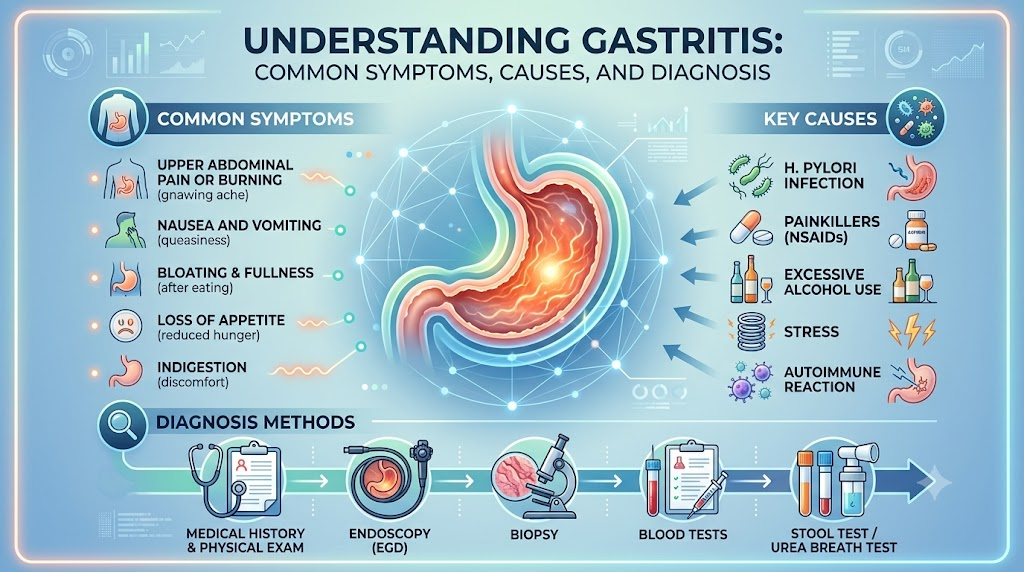
The symptoms of gastritis can vary depending on its cause and severity. Common complaints may include:
- Pain or discomfort in the upper abdomen
- Nausea
- Vomiting
- Feeling full sooner than usual while eating
- Feeling overly full after meals
- Reduced appetite
- Unexplained weight loss in some cases
Some people may describe the discomfort as burning, aching, pressure, or general irritation in the upper part of the abdomen.
| Symptom or Sign | What It May Feel Like | When to Seek Medical Advice |
|---|---|---|
| Upper-abdominal discomfort | Burning, aching, or irritation | If persistent or worsening |
| Nausea or vomiting | Feeling sick or throwing up | If frequent or severe |
| Early fullness | Feeling full after eating little | If persistent or affecting eating |
| Reduced appetite | Less interest in food | If ongoing or causing weakness |
| Black stools or blood in vomit | Signs of possible bleeding | Seek prompt medical attention |
Common Causes of Gastritis
Several factors can irritate or inflame the stomach lining.
H. pylori Infection
Helicobacter pylori, commonly called H. pylori, is a type of bacteria that can infect the stomach and may contribute to gastritis. Some people with H. pylori have no obvious symptoms.
A healthcare professional can recommend appropriate testing when this infection is suspected.
NSAID Medicines
Some nonsteroidal anti-inflammatory drugs, often called NSAIDs, can irritate the stomach lining, particularly with regular or prolonged use. These include certain medicines commonly used for pain and inflammation.
If you take medicines regularly, tell your healthcare professional about them. Do not stop a prescribed medicine without discussing it with the person who prescribed it.
Alcohol and Other Causes
Alcohol can irritate the stomach lining in some people. Gastritis can also have other causes, including certain illnesses, physical stress on the body, or immune-related conditions.
Finding the underlying cause matters because treatment depends on what is responsible for the inflammation.
When Is Stomach Discomfort Worth Checking?
Occasional mild stomach discomfort does not necessarily mean gastritis. Digestive symptoms can occur after changes in diet, temporary illness, stress, or other common causes.
However, symptoms that keep returning, last longer than expected, become more severe, or interfere with eating and daily activities should be discussed with a healthcare professional.
Unexplained weight loss also deserves medical attention rather than being assumed to be a simple stomach problem.
How Is Gastritis Diagnosed?
Symptoms alone cannot confirm gastritis. A doctor may begin by asking about symptoms, medical history, medicines, alcohol use, previous digestive problems, and other relevant factors.
Depending on the situation, testing may include blood tests, stool tests, or a breath test for H. pylori. An upper gastrointestinal endoscopy may sometimes be recommended to examine the upper digestive tract directly.
The tests used depend on the person’s symptoms and medical history.
General Stomach-Care Habits
Healthy daily habits can support general digestive health. Eating a balanced diet, staying adequately hydrated, limiting alcohol, and avoiding habits that clearly worsen your symptoms may be useful.
If certain foods consistently cause discomfort, keeping a simple food and symptom record can help you discuss patterns with a healthcare professional.
Avoid relying on restrictive diets or home remedies as a substitute for medical evaluation when symptoms persist.
Why You Should Avoid Self-Diagnosis
Upper-abdominal pain, nausea, fullness, and vomiting can occur with many different digestive conditions. Trying to identify the exact cause based only on symptoms can therefore be misleading.
The same applies to treatment. What helps one condition may not be appropriate for another. A healthcare professional can determine whether testing is needed and identify the likely underlying cause.
When to Seek Medical Attention
Contact a healthcare professional if stomach symptoms persist, repeatedly return, become worse, or interfere with normal eating and daily activities.
Certain symptoms require prompt medical attention. Black or tarry stools, blood in vomit, or vomit that looks like coffee grounds may indicate stomach or digestive tract bleeding. These warning signs should not be ignored.
Severe or rapidly worsening symptoms also warrant urgent medical evaluation.
Frequently Asked Questions
1. What are the most common symptoms of gastritis?
Common symptoms can include upper-abdominal pain or discomfort, nausea, vomiting, reduced appetite, and feeling full quickly or unusually full after meals. Symptoms vary between people, and some individuals with gastritis may have few or no noticeable symptoms.
2. What causes gastritis?
Gastritis can have several causes. Common contributors include H. pylori infection and certain NSAID medicines. Alcohol and some medical conditions can also irritate or inflame the stomach lining. Identifying the cause is important because management depends on the underlying problem.
3. What is H. pylori and how is it related to gastritis?
H. pylori is a type of bacteria that can live in the stomach and may cause inflammation of the stomach lining. Some infected people have no symptoms. Healthcare professionals can use appropriate tests, such as breath or stool testing, when H. pylori is suspected.
4. Can gastritis cause stomach pain?
Gastritis may cause discomfort or pain in the upper abdomen. People may describe it as burning, aching, or irritation. However, stomach pain has many possible causes, so pain alone cannot confirm gastritis. Persistent or worsening discomfort should be evaluated by a healthcare professional.
5. Can gastritis cause nausea and vomiting?
Nausea and vomiting can occur with gastritis, although they are not specific to the condition. Many digestive illnesses can cause similar symptoms. Frequent vomiting, worsening symptoms, or signs of dehydration should be discussed with a healthcare professional rather than treated as gastritis without an evaluation.
6. How do doctors diagnose gastritis?
Diagnosis usually begins with a discussion of symptoms and medical history, followed by an appropriate examination. Depending on the situation, doctors may use blood, stool, or breath tests and sometimes an upper GI endoscopy. The choice of testing depends on symptoms and individual circumstances.
7. What foods should I avoid if I have gastritis?
There is no single diet that is appropriate for everyone with gastritis. Some people notice that certain foods or drinks worsen their symptoms. Keeping track of foods and symptoms can help identify personal patterns, but persistent symptoms should still be discussed with a healthcare professional.
8. Can medicines cause gastritis?
Some medicines, particularly certain NSAIDs, can irritate the stomach lining. If you take prescription or non-prescription medicines regularly, tell your healthcare professional. Never stop a prescribed medicine on your own; discuss concerns with the healthcare professional who manages your treatment.
9. How long do gastritis symptoms last?
The duration varies depending on the underlying cause and whether the stomach irritation continues. Some symptoms may be temporary, while others can persist or return. Symptoms that do not improve, repeatedly come back, or interfere with normal activities should be evaluated rather than ignored.
10. What are warning signs that need urgent medical attention?
Black or tarry stools, blood in vomit, or vomit resembling coffee grounds can be signs of digestive tract bleeding and require prompt medical attention. Severe or rapidly worsening symptoms should also be assessed urgently rather than assumed to be ordinary gastritis.
Conclusion
Recognizing gastritis symptoms can help people pay attention to persistent stomach problems instead of ignoring them. Upper-abdominal discomfort, nausea, vomiting, early fullness, and reduced appetite can occur with gastritis, but they can also have other causes. Understanding possible triggers such as H. pylori infection, certain medicines, and alcohol is useful, but symptoms alone cannot establish a diagnosis. If digestive symptoms persist or warning signs such as bleeding appear, seek professional medical advice promptly so the underlying cause can be properly evaluated.