Introduction
Undergoing a liver biopsy is a significant step in understanding your digestive health. Whether you are facing tests for fatty liver disease, hepatitis, or other concerns, knowing exactly how to prepare can help reduce anxiety and ensure a smooth, safe experience. A liver biopsy allows doctors to examine a small sample of liver tissue, providing critical insights that help guide your treatment plan.In this guide, we will walk you through the essential steps of preparing for a liver biopsy, what you can expect during the procedure, and how to support your recovery afterward. For trusted information on digestive health, hospital standards, and patient education resources, GastroHospitals is your dedicated partner in navigating liver care.
What Is a Liver Biopsy?
A liver biopsy is a procedure that involves removing a tiny sample of liver tissue, which is then examined under a microscope. This sample allows pathologists to look for signs of inflammation, scarring, or other cellular changes that blood tests and imaging scans may not reveal.
This procedure is typically recommended when doctors need to confirm a diagnosis, stage a disease (like fibrosis), or evaluate how well a liver is responding to current treatments. By understanding the microscopic health of your liver, medical teams can create personalized care plans.
Why a Liver Biopsy May Be Recommended
Your doctor may suggest a biopsy for several reasons related to your digestive and liver health:
- Chronic Liver Disease: To assess the extent of damage from conditions like hepatitis B or C.
- Fatty Liver Disease: To distinguish between simple fat accumulation and more severe inflammation (NASH).
- Fibrosis and Cirrhosis: To determine the stage of scarring within the liver tissue.
- Abnormal Liver Tests: To find the root cause when blood work shows consistently high liver enzymes.
- Monitoring Health: To check the health of a transplanted liver.
Conditions That May Require a Liver Biopsy
| Medical Condition | Purpose of Liver Biopsy |
| Fatty Liver Disease | Assess liver damage |
| Hepatitis | Evaluate inflammation |
| Liver Fibrosis | Determine disease stage |
| Cirrhosis | Assess severity |
| Liver Tumor | Help identify abnormal tissue |
How to Prepare Before a Liver Biopsy
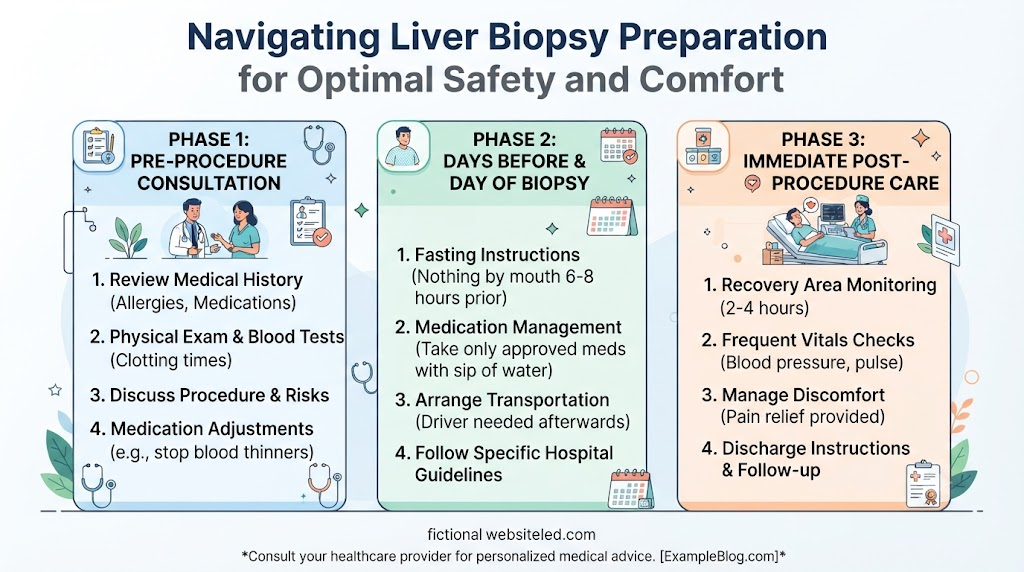
Preparation is a team effort between you and your medical team. Before the procedure, you will undergo a pre-biopsy evaluation.
The Preparation Checklist
| Preparation Step | Why It Matters |
| Blood Tests | Assess bleeding risk and clotting factors. |
| Medication Review | Improve procedure safety by adjusting medications. |
| Fasting | Prepare for the procedure if instructed. |
| Arrange Transportation | Support a safe return home after sedation. |
| Discuss History | Help personalize care based on your health. |
- Medication Note: Always tell your doctor about all medications, including over-the-counter supplements, blood thinners, aspirin, and herbal remedies. Some may need to be stopped several days in advance. Never stop a prescribed medication without your doctor’s explicit instructions.
What Happens During the Liver Biopsy?
On the day of your procedure, you will be admitted to the hospital or outpatient center. You will be positioned in a comfortable, safe manner, usually lying on your back or side.
- Anesthesia: You will likely receive local anesthesia to numb the biopsy site. In some cases, light sedation may be used to keep you relaxed.
- Guidance: Most modern hospitals use ultrasound or CT guidance to ensure the needle is placed exactly where it needs to be.
- Collection: The doctor inserts a thin needle through the skin to collect the sample. The procedure itself is typically quick, often taking less than an hour.
- Observation: You will be monitored closely by the healthcare team for several hours after the biopsy to ensure you are recovering well.
Possible Risks and Complications
While a liver biopsy is a routine procedure, it is important to be informed. Risks may include:
- Pain: Temporary soreness or discomfort at the biopsy site or in the right shoulder.
- Bleeding: A minor risk that is monitored during your observation period.
- Infection or Injury: While extremely rare, injury to nearby organs is a possibility that your medical team proactively works to prevent.
Your team at a facility like GastroHospitals is trained to monitor you closely, ensuring that any discomfort is managed promptly.
Recovery After a Liver Biopsy
Following the procedure, your recovery time is essential for allowing the biopsy site to heal.
- Rest: You will stay in an observation area until your medical team confirms you are stable.
- Activity: You will be advised to avoid heavy lifting or strenuous exercise for a specific period (usually a few days).
- Follow-up: Keep all scheduled follow-up appointments. This is when you will discuss the pathology results with your hepatologist or gastroenterologist.
Warning Signs
Contact your doctor immediately if you experience:
- Severe abdominal pain that does not improve.
- Signs of heavy bleeding or excessive bruising.
- Fever or chills.
- Difficulty breathing or dizziness.
Common Myths vs. Facts
- Myth: A liver biopsy is always very painful.
- Fact: Most patients report manageable discomfort rather than severe pain, thanks to local anesthesia and precise techniques.
- Myth: Every liver condition requires a biopsy.
- Fact: Many conditions can be monitored through blood work and non-invasive imaging.
- Myth: Recovery takes weeks.
- Fact: Most people resume light activities within a few days, though strenuous activity should be delayed longer.
Common Mistakes to Avoid
- Ignoring Fasting: Skipping fasting can lead to the postponement of your procedure.
- Not Disclosing Meds: Withholding information about blood thinners or herbal supplements can increase bleeding risks.
- Driving Alone: Do not plan to drive yourself home if you have received sedation.
- Returning to Work Too Soon: Give your body the time it needs to heal to avoid complications.
FAQs
- What is a liver biopsy?
A procedure to take a small tissue sample for laboratory analysis. - Is it painful?
Most feel only brief discomfort; anesthesia is used. - Is fasting required?
Usually, yes—your doctor will provide specific timing. - How long does it take?
The procedure itself is quite short, though observation takes longer. - What are the risks?
Mostly minor bleeding or site pain; severe complications are rare. - Can I eat after?
You can usually resume a light diet shortly after the procedure. - When do I get results?
Your doctor will coordinate when to discuss findings, usually within a week or two. - How do I choose a hospital?
Look for a facility with specialized hepatology/GI expertise. - Can I drive home?
Not if you have received sedation; you must arrange a ride. - How long is recovery?
Most resume normal light tasks within 24–48 hours. - Do I need a biopsy for cancer?
It is used for many things, not just diagnosing cancer. - What if I have an allergy?
Tell your doctor so they can use alternative anesthesia if needed. - Is it outpatient?
Most liver biopsies are performed on an outpatient basis. - How do I prevent infection?
Follow all post-procedure wound care instructions provided by your nurse. - What is image-guided biopsy?
Using ultrasound or CT to see the needle path, making the biopsy safer and more accurate.
Final Thoughts
A liver biopsy is a valuable diagnostic tool that provides the clarity needed to manage your digestive health effectively. By preparing in advance, following your doctor’s specific guidance, and choosing a facility known for its specialized gastroenterology expertise, you can approach the procedure with confidence.Your health journey is supported by professional care and proper information. To learn more about liver disease, biopsy services, and digestive health education, explore the resources available at GastroHospitals.