Introduction
The human digestive system is a vast and highly complex network. Running from the mouth to the colon, the gastrointestinal (GI) tract works continuously to break down nutrients, support immune function, and eliminate waste. When persistent symptoms like chronic abdominal pain, unexplained weight loss, recurring heartburn, or unusual changes in bowel habits occur, medical professionals need a direct, highly detailed look inside the body to find the cause.This comprehensive guide is designed to help you navigate the process of choosing an endoscopy facility, understand what to expect, and prepare for your procedure with peace of mind. To support your journey toward top-tier digestive health, GASTROHOSPITALS offers a trusted digital directory and educational resource to help you discover, evaluate, and connect with reputable medical centers specializing in comprehensive gastrointestinal endoscopy.
What Is Endoscopy?
At its core, an endoscopy is a medical procedure that uses a specialized tool called an endoscope to examine the interior surfaces of an organ or tissue cavity.
                          [ Digestive Symptoms ]
                  (Chronic reflux, pain, bleeding, etc.)
                                    │
                                    ▼
                        [ Endoscopy Evaluation ]
             Flexible tube with camera inserted into GI tract.
                                    │
         ┌──────────────────────────┴──────────────────────────┐
         ▼                                                     ▼
  [ Diagnostic Uses ]                                  [ Therapeutic Uses ]
  - High-def tissue viewing                             - Stop active bleeding
  - Biopsy of suspicious cells                          - Remove precancerous polyps
  - Identify ulcers and inflammation                    - Dilate narrow passages
The Biology of the Endoscope
An endoscope is a long, thin, highly flexible tube equipped with a bright light source and a high-definition, microscopic video camera at its tip. As the instrument is gently guided through the digestive tract, it transmits real-time, high-magnification color video to a monitor in the procedure room. This allows the gastroenterologist to inspect the mucosal lining of your digestive organs with exceptional clarity.
In addition to visual inspection, the endoscope features tiny, hollow channels through which microscopic instruments can be passed. If the specialist identifies an area of inflammation, an ulcer, or a suspicious growth, they can insert tiny forceps to gently collect a tissue sample (biopsy) without causing any discomfort.
Diagnostic and Therapeutic Versatility
Endoscopies are incredibly versatile clinical tools, serving both diagnostic and therapeutic purposes:
- Diagnostic Power: Identifying the precise cause of inflammation, detecting hidden bleeding sources, confirming celiac disease, diagnosing acid reflux damage (Gastroesophageal Reflux Disease or GERD), or screening for early-stage cancers.
- Therapeutic Action: During the same procedure, a gastroenterologist can treat a variety of conditions. They can cauterize bleeding blood vessels, widen narrow sections of the esophagus (dilation), or use a wire loop (snare) to remove precancerous polyps, often avoiding the need for more invasive open surgeries.
Types of Endoscopy
Different sections of the digestive system require specialized procedures and instruments to ensure an accurate evaluation.
Upper Gastrointestinal (Upper GI) Endoscopy
Also referred to as an esophagogastroduodenoscopy (EGD), this procedure focuses on the upper portion of your digestive tract. The endoscope is gently passed through the mouth and down the esophagus, stomach, and duodenum (the first part of the small intestine). It is commonly used to investigate persistent acid reflux, difficulty swallowing, upper abdominal pain, nausea, or unexplained anemia.
Colonoscopy
A colonoscopy is the gold standard for evaluating the lower digestive tract. A longer, highly flexible endoscope (colonoscope) is inserted through the rectum to examine the entire length of the large intestine (colon). It is highly effective for identifying polyps, investigating persistent diarrhea or constipation, detecting rectal bleeding, and screening for colorectal cancer.
Sigmoidoscopy
Similar to a colonoscopy, a sigmoidoscopy is a more focused examination that inspects only the lower-most part of the colon (the sigmoid colon) and the rectum. Because it covers a smaller area, it is typically a shorter procedure and often requires a less intensive bowel preparation than a full colonoscopy.
Endoscopic Ultrasound (EUS)
This advanced procedure combines endoscopy with high-frequency ultrasound. A specialized endoscope with an ultrasound probe at its tip is used to create detailed, close-up images of the walls of your digestive tract and nearby organs, such as the pancreas, liver, and gall bladder. It is a vital tool for evaluating cysts, tumors, and deep tissue layers.
Endoscopic Retrograde Cholangiopancreatography (ERCP)
ERCP is a highly specialized procedure that combines endoscopy and fluoroscopy (real-time X-ray) to diagnose and treat conditions of the bile ducts and pancreatic ducts. It is commonly used to locate and remove painful gallstones trapped in the bile ducts, treat tumors, or place tiny plastic tubes (stents) to restore normal digestive fluid flow.
Endoscopy Procedures Comparison Table
The following table summarizes the primary types of endoscopy procedures and their clinical uses:
| Procedure | Primary Purpose | Common Uses |
| Upper GI Endoscopy (EGD) | Examine the lining of the esophagus, stomach, and duodenum. | Investigating acid reflux, ulcers, difficulty swallowing, or bleeding. |
| Colonoscopy | Examine the interior lining of the entire large intestine (colon). | Colorectal cancer screening, polyp removal, and investigating bleeding. |
| Sigmoidoscopy | Examine the lower-most portion of the colon and rectum. | Evaluating rectal pain, bleeding, or localized bowel changes. |
| Endoscopic Ultrasound (EUS) | Capture detailed ultrasound images of deep tissues and adjacent organs. | Staging cancers, evaluating pancreatic cysts, and viewing deep layers. |
| ERCP | Diagnose and treat blockages in the bile and pancreatic ducts. | Removing gallstones, opening blocked ducts, and placing stents. |
Services Offered by Leading Endoscopy Hospitals
High-quality hospitals specializing in digestive health provide a complete, integrated spectrum of services to ensure your care is seamless:
- Gastroenterology Consultations: Comprehensive, pre-procedure evaluations where specialists thoroughly review your medical history, symptoms, and lifestyle to determine if an endoscopy is appropriate.
- Diagnostic Endoscopy Services: Precise, high-definition internal evaluations tailored to locate inflammation, infection, bleeding, or structural issues.
- Therapeutic Endoscopy Treatments: Active, minimally invasive interventions—such as polyp removal (polypectomy), tissue dilation, and stopping active bleeding.
- Comprehensive Colonoscopy Screenings: Routine and diagnostic screenings focused on the early detection and prevention of colorectal diseases.
- Advanced ERCP and EUS: High-level diagnostic and interventional services for complex biliary, pancreatic, and deep-tissue disorders.
- Biopsy and Pathology Services: On-site lab coordination to quickly process tissue samples, ensuring rapid and accurate results.
- Anesthesia and Sedation Support: Tailored sedation managed by trained professionals to ensure you remain comfortable, relaxed, and pain-free throughout the procedure.
- Post-Procedure Recovery Care: Comfortable, fully monitored recovery areas where nurses track your vitals as you gently wake up from sedation.
- Structured Follow-Up Programs: Clear, coordinated plans to discuss your results, review biopsy reports, adjust medications, and map out your next health steps.
Advanced Technologies Used
The integration of modern technology has transformed endoscopy, making procedures more comfortable, precise, and highly informative.
                      [ Advanced Endoscopy Suite ]
                                     │
         ┌───────────────────────────┼───────────────────────────┐
         ▼                           ▼                           ▼
  [ High-Definition Imaging ] [ Narrow Band Imaging (NBI) ] [ AI-Assisted Detection ]
  Captures clear mucosal      Uses specific light wavelengths Helps identify subtle,
  details for better viewing.  to highlight vascular patterns. precancerous lesions.
High-Definition (HD) Endoscopy Systems
Older analog scopes have been replaced by advanced high-definition systems that capture sharp, crystal-clear digital images. This enhanced visualization allows gastroenterologists to detect even microscopic mucosal changes, subtle inflammation, and tiny polyps that might have been missed in the past.
Narrow Band Imaging (NBI)
NBI is an optical filter technology that uses specific wavelengths of blue and green light to highlight the delicate blood vessels in the mucosal lining. Because blood vessels feed tumors and inflammatory tissue, NBI makes it much easier for specialists to distinguish between healthy, benign, and precancerous tissue without needing to use diagnostic dyes.
High-Resolution Endoscopic Ultrasound (EUS)
Modern EUS systems combine high-definition endoscopic video with ultra-precise ultrasound imaging. This allows doctors to capture detailed, high-resolution views of organs outside the GI tract wall, such as the pancreas and lymph nodes, without requiring surgery.
AI-Assisted Lesion Detection
Some leading digestive health centers utilize artificial intelligence (AI) software integrated directly with the endoscopy monitors. The AI acts as a second set of eyes, highlighting subtle mucosal changes or polyps in real-time to assist the gastroenterologist during the procedure.
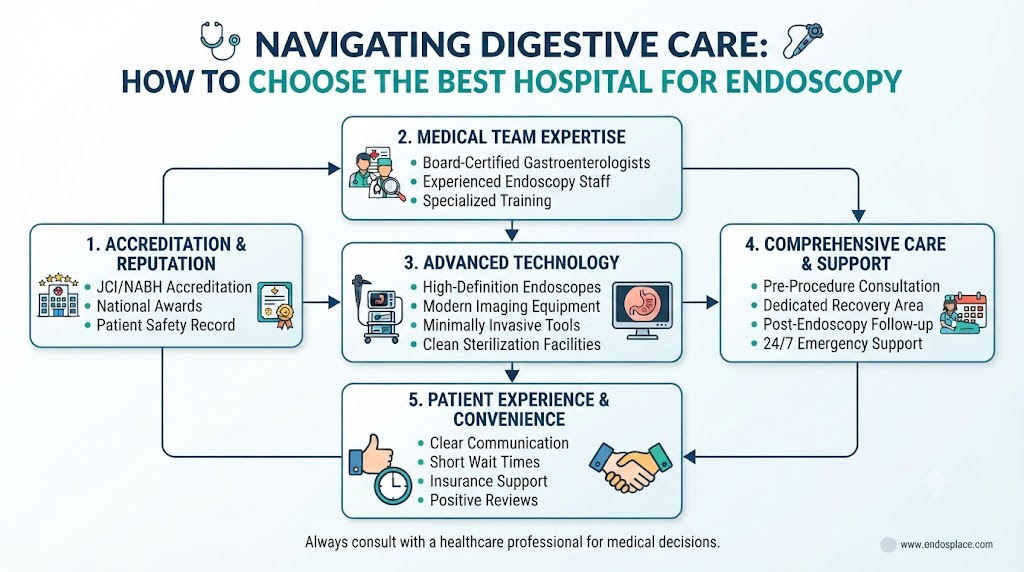
How to Choose the Best Hospital for Endoscopy
Finding the right hospital is a key step to ensuring your procedure is highly effective, safe, and comfortable. Keep these essential factors in mind during your search:
Look for Highly Experienced, Fellowship-Trained Gastroenterologists
An endoscopy is highly dependent on the skill of the physician performing it. Choose a hospital staffed by board-certified gastroenterologists who have completed advanced fellowship training in digestive health and have extensive experience performing the specific procedure you need.
Confirm Strict Infection Control and Sterilization Standards
Patient safety is paramount. High-quality endoscopy centers follow strict, multi-step protocols to thoroughly clean and sterilize all scopes and instruments between uses. Feel free to ask the hospital about their infection control and quality assurance standards.
Seek Advanced Diagnostic and Surgical Technology
Ensure the hospital’s endoscopy suites are equipped with modern, high-definition scopes, Narrow Band Imaging (NBI), and advanced monitoring equipment. Better technology translates directly to clearer visualization and more accurate diagnostic results.
Verify Dedicated Sedation and Anesthesia Services
A comfortable experience relies heavily on personalized sedation. High-quality hospitals feature dedicated anesthesiologists or nurse anesthetists who monitor your heart rate, breathing, and comfort levels throughout your procedure and recovery.
Look for a Multidisciplinary Care Network
An endoscopy is often just one part of your digestive health journey. Choose a hospital that offers an integrated network of pathologists, general surgeons, and nutritionists, ensuring that if a biopsy or further treatment is needed, your care is coordinated quickly and seamlessly.
Simplify Your Search: Navigating medical options can feel overwhelming. GASTROHOSPITALS is an independent, educational resource designed to help you discover reputable endoscopy centers, explore specialist credentials, and learn about digestive health procedures in a supportive, stress-free environment.
Hospital Selection Checklist
Use this checklist to evaluate and compare endoscopy hospitals to find the best fit for your needs:
| Feature | Why It Matters |
| Board-Certified Gastroenterologists | Ensures your procedure is performed by a highly trained digestive health specialist. |
| High-Definition (HD) Scopes | Provides the sharpest, clearest view of your mucosal lining for an accurate diagnosis. |
| Strict, Verifiable Sterilization Protocols | Protects your health by ensuring every scope is fully and safely sanitized between procedures. |
| Dedicated Sedation Professionals | Keeps you safe, comfortable, and completely relaxed throughout the procedure. |
| On-Site Pathology Laboratory | Supports rapid processing of biopsies, helping you get your results sooner. |
| Structured Follow-Up Communication | Provides a clear, supportive process for explaining results and planning your next health steps. |
Preparing for an Endoscopy
Proper preparation is essential to ensuring a safe, comfortable procedure and a clear, highly accurate examination.
Sharing Your Medical History
Before your procedure, your care team will review your complete medical history. It is important to disclose any allergies, past reactions to anesthesia, and whether you have any heart, lung, or kidney conditions.
Following Medication Instructions
You will receive clear instructions on which medications to take or temporarily pause before your procedure. It is particularly important to coordinate the use of:
- Blood thinners or anticoagulants.
- Diabetes medications or insulin.
- Aspirin or nonsteroidal anti-inflammatory drugs (NSAIDs).
Understanding Fasting and Diet Guidelines
For an upper GI endoscopy, your stomach must be completely empty. You will be instructed to stop eating solid foods and clear liquids several hours before the procedure to prevent complications under sedation.
Completing the Bowel Prep (For Colonoscopy)
If you are scheduling a colonoscopy, your doctor will prescribe a bowel preparation solution. This solution cleanses your colon completely, allowing the gastroenterologist to clearly view the mucosal lining. Be sure to follow the preparation instructions exactly as provided.
Arranging a Safe Ride Home
Because you will receive relaxing sedation for your comfort, you will not be allowed to drive, operate machinery, or make major decisions for the rest of the day. You must arrange for a responsible adult to drive you home after your procedure.
What Happens During the Procedure?
Knowing what to expect on the day of your endoscopy can help ease any anxiety and allow you to feel more comfortable and prepared:
[ Welcome & Check-In ] ──► [ Sedation Setup ] ──► [ Gentle Examination ] ──► [ Monitored Recovery ]
1. Welcome and Final Check-In
When you arrive, the nursing team will review your consent forms, check your vital signs, and place a small intravenous (IV) catheter in your arm to deliver fluids and sedation.
2. Settling into the Procedure Room
You will be guided to a comfortable procedure room, where you will lie on your left side. The team will place small monitors on your chest and finger to track your heart rate, blood pressure, and oxygen levels throughout the procedure.
3. Delivering Relaxing Sedation
A trained anesthesia professional will deliver a sedative through your IV. You will quickly feel deeply relaxed and sleepy. For an upper endoscopy, a gentle numbing spray may also be applied to the back of your throat to prevent any gag reflex.
4. Guided Insertion and Examination
Once you are fully relaxed, the gastroenterologist will gently insert the flexible endoscope. They will slowly guide it through your digestive tract, using air or water to gently inflate the pathway for a clear view, while carefully inspecting the lining on high-definition screens.
5. Biopsy and Treatment (If Needed)
If your doctor notices any areas of inflammation, an ulcer, or a polyp, they will pass tiny instruments through the endoscope to collect a biopsy or remove the polyp. This process is completely painless and takes only a few moments.
6. Monitored Recovery and Waking Up
After the scope is gently removed, you will be moved to a quiet, monitored recovery room. As the sedation wears off over 30 to 45 minutes, nurses will monitor your vitals and offer you a light beverage.
7. Results and Discharge
Your doctor will share a preliminary summary of the findings with you and your driver. You will receive written discharge instructions and can then go home to rest for the remainder of the day.
Recovery After Endoscopy
Recovering from an endoscopy is typically quick and straightforward, though there are a few simple tips to keep in mind for a smooth recovery:
- Rest and Relax: Plan to take it easy for the rest of the day. Avoid strenuous activities, driving, or returning to work until the next morning.
- Manage Mild Symptoms: It is normal to experience a slightly sore throat after an upper endoscopy, or mild bloating and gas after a colonoscopy. These temporary symptoms are common and usually resolve within 24 hours.
- Gradually Resume Eating: You can typically return to your normal diet shortly after leaving the hospital, starting with light, gentle foods and plenty of water.
- Follow Up on Biopsy Results: If tissue samples were taken, your hospital will send them to a pathology laboratory. These results are typically available in 3 to 7 days, and your doctor will discuss them with you during a follow-up call or visit.
- Monitor Your Health: Keep a close eye on how you feel. Contact your doctor or seek prompt medical attention if you experience any severe pain, persistent fever, difficulty swallowing, or unusual bleeding.
Possible Risks and Complications
Endoscopy is widely recognized as a safe, routine outpatient procedure. While serious complications are very rare, it is important to be aware of the possible risks:
- Minor Bleeding: This can occasionally occur at the site where a biopsy was taken or a polyp was removed. It is usually very mild and often stops on its own.
- Temporary Infection: While extremely rare due to strict modern sterilization standards, there is a very small risk of infection, which is quickly treated with antibiotics.
- Perforation (Tear): A highly uncommon complication where a small tear is made in the wall of the digestive tract. If a perforation occurs, it is typically repaired during the procedure or through a minor surgical procedure.
- Sedation-Related Reactions: Some patients may experience temporary nausea, dizziness, or a mild allergic reaction to the sedative, which is carefully managed by your anesthesia team.
- Temporary Muscle Discomfort: You may feel a bit of mild cramping or bloating from the air used to gently inflate your digestive tract during the procedure. This is common and naturally resolves quickly.
How GASTROHOSPITALS Helps Patients
Making informed decisions about your digestive health should be a supportive, straightforward experience. GASTROHOSPITALS is dedicated to helping families with clear, reliable educational resources:
- Hospital Discovery Directory: Find reputable, accredited hospitals and dedicated endoscopy centers in your area.
- Gastroenterologist Insights: Explore the clinical backgrounds, credentials, and specialties of board-certified gastroenterologists.
- Educational Digestive Resources: Access easy-to-read guides explaining common GI procedures, preparation steps, and recovery tips.
- Hospital Comparison Tools: Compare digestive health centers based on their diagnostic technology, patient comfort services, and safety standards.
- Empowering Confident Decisions: By providing independent educational information, GASTROHOSPITALS helps you make informed, comfortable choices for your digestive care.
Common Mistakes People Make
Avoiding these common pitfalls can help ensure your endoscopy is a smooth, highly effective, and stress-free experience:
- Choosing a Facility Based Only on Cost or Location: While convenience is helpful, choosing a facility that lacks advanced imaging technology or accredited safety standards can affect the accuracy and comfort of your procedure.
- Not Disclosing All Medications or Allergies: Failing to share your complete list of medications (especially blood thinners) can lead to avoidable scheduling delays or complications.
- Failing to Follow Preparation and Fasting Guidelines: Not following your diet or bowel prep instructions exactly can prevent your doctor from having a clear view, which may require you to reschedule the procedure.
- Attempting to Drive Home After Sedation: Trying to drive yourself home is highly unsafe and against hospital policy. Always arrange for a trusted friend or family member to take you home.
- Missing Scheduled Follow-Up Appointments: Assuming that “no news is good news” regarding your biopsy results can prevent you from receiving important guidance or lifestyle advice.
Common Myths vs. Facts
Let’s clear up some common misconceptions about endoscopy with accurate clinical facts:
| Myth | Fact |
| Endoscopy procedures are painful. | Most procedures are performed with gentle, relaxing sedation, ensuring you remain comfortable and pain-free throughout. |
| Every endoscopy requires an overnight hospital stay. | The vast majority of endoscopy procedures are quick, outpatient visits, allowing you to return home the same day. |
| Endoscopy is only necessary for older adults. | While colonoscopy screenings are recommended as we age, endoscopies are performed for patients of all ages to evaluate symptoms like pain, acid reflux, or swallowing issues. |
| If my initial endoscopy is normal, I will never need another one. | A normal result is great news, but future evaluations depend on your symptoms, lifestyle, and the preventive guidelines recommended by your doctor. |
Real-Life Educational Scenarios
Scenario 1: Finding Comfort and Care for Persistent Acid Reflux
A 38-year-old software engineer had struggled with worsening acid reflux and difficulty swallowing for several months. Concerned about his symptoms, he wanted to find a high-quality hospital with advanced technology. Using an educational directory, he chose a facility equipped with high-definition scopes and Narrow Band Imaging (NBI). His upper GI endoscopy was quick and comfortable, and the specialist was able to identify mild esophageal inflammation and recommend a targeted treatment plan that brought him much-needed relief.
Scenario 2: A Smooth, Stress-Free Colonoscopy Screening
A 45-year-old teacher knew it was time to schedule her first routine colonoscopy, but she felt nervous about the preparation and sedation. She selected an accredited endoscopy center known for its outstanding patient communication. The clinical team provided clear, supportive preparation instructions that were easy to follow. On the day of her procedure, her anesthesia team explained the sedation process clearly, and she slept comfortably through the entire colonoscopy. She returned home safely, happy to have completed this important health milestone.
Scenario 3: Coordinated Care for a Complex Bile Duct Blockage
A 62-year-old retired nurse developed sudden abdominal pain and jaundice. Her primary doctor referred her to a major gastroenterology hospital equipped with advanced diagnostic and therapeutic tools. The specialized team performed an ERCP to locate and safely remove a gallstone that had become trapped in her bile duct, instantly relieving her pain. Thanks to the hospital’s integrated, multidisciplinary care, her transition from diagnosis to treatment was seamless and highly successful.
Frequently Asked Questions (FAQs)
1. What is an endoscopy?
An endoscopy is a minimally invasive medical procedure that uses a thin, flexible tube with a camera (endoscope) to examine the inner lining of your digestive tract in real-time.
2. Why is an endoscopy performed?
Endoscopy is performed to investigate persistent digestive symptoms (such as pain, bleeding, or swallowing issues), take small tissue samples (biopsies), remove polyps, or treat blockages in the GI tract.
3. How do I choose the right hospital for an endoscopy?
Look for an accredited hospital with board-certified gastroenterologists, advanced high-definition imaging equipment, strict sterilization standards, and comprehensive, multidisciplinary care.
4. Is the endoscopy procedure painful?
Most patients experience no pain. The procedure is typically performed under conscious or deep sedation, which keeps you relaxed, comfortable, and sleeping throughout the examination.
5. How long does an endoscopy take?
The procedure itself is quite fast, usually taking only 15 to 30 minutes depending on the specific type of endoscopy and whether any biopsies or treatments are performed.
6. Will I need sedation for my procedure?
Yes, most hospitals recommend mild or moderate sedation to ensure you are completely comfortable and relaxed. A trained professional will monitor your vitals throughout.
7. What preparation is required before an endoscopy?
Preparation varies by procedure. An upper endoscopy requires several hours of fasting, while a colonoscopy requires a liquid diet and a prescribed bowel cleansing solution the day before.
8. What are the risks associated with an endoscopy?
Endoscopy is highly safe. Rare complications can include minor bleeding at a biopsy site, a small tear in the digestive lining (perforation), or a mild reaction to the sedative.
9. When can I return to my normal activities?
Most patients can resume light activities, eat normally, and return to work the morning after their procedure, once the effects of the sedative have completely worn off.
10. What happens if the doctor takes a biopsy?
If a biopsy is taken, the tissue sample is sent to a pathology lab for examination. This process is completely painless and helps diagnose conditions like inflammation, celiac disease, or precancerous cells.
11. What advanced technologies improve endoscopy accuracy?
Technologies like high-definition (HD) scopes, Narrow Band Imaging (NBI), and AI-assisted detection help doctors view the mucosal lining with exceptional detail and identify subtle changes early.
12. How important is hospital accreditation for endoscopy?
Hospital accreditation is highly important. It confirms that the facility meets strict national standards for patient safety, clinical quality, sterile equipment, and professional care.
13. When should I contact my doctor after an endoscopy?
Contact your doctor immediately if you experience severe abdominal pain, persistent fever, difficulty breathing, dizziness, or notice any unusual bleeding after returning home.
14. What follow-up care is recommended after the procedure?
Your doctor will provide a detailed summary of their findings and discuss any biopsy results within a few days, helping you plan any necessary treatments or lifestyle changes.
15. How does GASTROHOSPITALS help me find a quality hospital?
GASTROHOSPITALS offers a comprehensive digital directory and clear educational guides to help you locate leading endoscopy centers, research specialists, and make informed choices for your digestive health.
Final Thoughts
Your digestive health is central to your daily comfort and long-term wellness. Choosing a high-quality hospital for your endoscopy ensures that your procedure is managed with the highest standards of safety, accuracy, and patient comfort.By prioritizing experienced, board-certified gastroenterologists, advanced visualization technologies, and strict infection-prevention practices, you can approach your procedure with confidence and peace of mind. Proper preparation and keeping all follow-up visits are essential steps to achieving a clear diagnosis and supporting your health journey.