Introduction
Your digestive system is home to trillions of microscopic organisms, collectively known as the gut microbiome. While this ecosystem is hidden from view, its influence on your health is profound. From breaking down the food you eat to protecting your body from harmful pathogens, these microscopic allies play a critical role in your daily existence.Unfortunately, the fast-paced modern lifestyle—characterized by processed foods, chronic stress, and disrupted sleep—can challenge this delicate balance. Prioritizing your gut health is not just about avoiding indigestion; it is about fostering a foundation for a stronger immune system, better mood, and sustained energy. In this guide, we explore practical, science-backed habits to help you cultivate a thriving inner ecosystem. For reliable information on digestive health and expert care, we invite you to explore GastroHospitals.
What Is the Gut Microbiome?
The gut microbiome is a complex community of microorganisms, including bacteria, viruses, fungi, and other microbes, that reside primarily in your large intestine. Each person’s microbiome is as unique as a fingerprint, shaped by genetics, your birth environment, and your lifelong dietary habits.
These organisms work in harmony to aid digestion, synthesize essential vitamins, and communicate with your immune system. When the population of beneficial microbes flourishes, you generally feel your best. However, when the diversity of this community drops, it can lead to various digestive and systemic health concerns.
Why Gut Health Matters
A healthy gut is a cornerstone of overall wellness. Its functions extend far beyond simple digestion:
- Nutrient Absorption: Beneficial bacteria help break down complex fibers that your body cannot digest on its own.
- Immune System Support: A significant portion of your immune cells resides in the gut, relying on healthy bacteria to train them to distinguish between friend and foe.
- Gut-Brain Axis: The gut and brain are in constant communication via the nervous system. A balanced gut can influence your mood, stress levels, and cognitive focus.
- Metabolism: Certain bacteria play a role in regulating how your body stores fat and manages blood sugar.
Factors That Harm Gut Microbiome
Modern life often inadvertently disrupts your microbial balance:
- Processed Foods: High levels of sugar and artificial additives can starve good bacteria and feed harmful ones.
- Overuse of Antibiotics: While life-saving, antibiotics can also eliminate beneficial bacteria.
- Chronic Stress: Stress hormones alter the gut environment, potentially encouraging the growth of unwanted microbes.
- Inadequate Sleep: Your body needs rest to maintain a healthy microbial balance.
- Dehydration: Water is essential for the mucosal lining that houses your good bacteria.
Signs of an Unhealthy Gut
Your body often sends subtle—and sometimes not-so-subtle—signals when your microbiome is out of balance:
- Persistent bloating or gas.
- Irregular bowel movements.
- Unexpected food intolerances.
- Unexplained fatigue or low energy.
- Skin issues like eczema or unexplained rashes.
- Frequent infections.
Healthy Gut Microbiome Diet
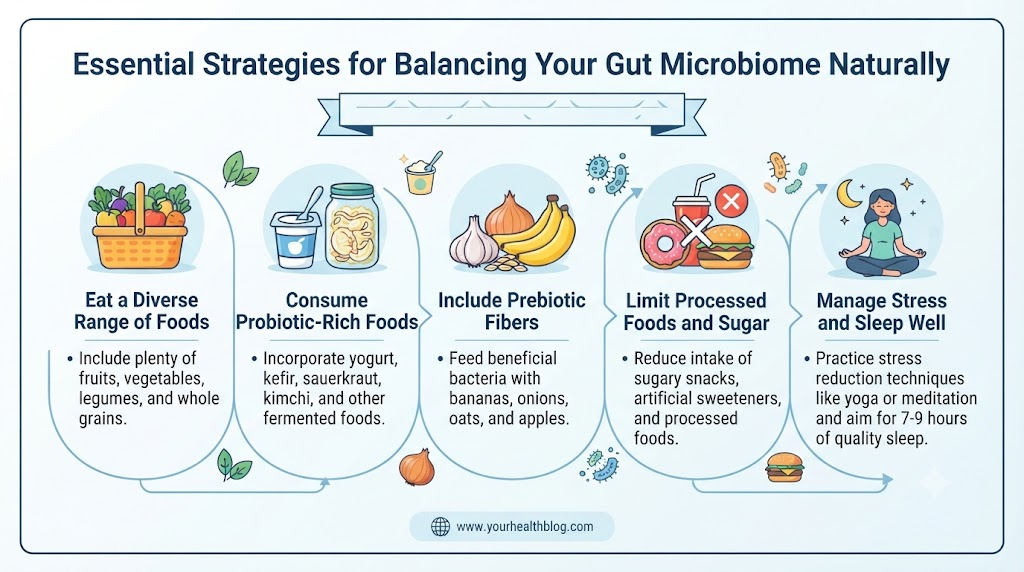
Your diet is the most powerful tool you have for shaping your microbiome. The goal is diversity. Aim to include a wide array of plant-based foods to ensure a broad variety of bacteria can flourish.
Gut-Friendly Foods Table
| Food Type | Benefit for Gut |
| Fiber-rich foods | Feed good bacteria and promote regularity |
| Yogurt & Kefir | Provide beneficial probiotics |
| Fruits & vegetables | Improve microbial diversity |
| Whole grains | Support long-term digestive health |
| Legumes | Produce healthy short-chain fatty acids (SCFAs) |
Probiotics vs. Prebiotics
Understanding these two concepts is key to a balanced gut:
- Probiotics: These are live, beneficial bacteria found in fermented foods like sauerkraut, kimchi, yogurt, and miso. They add to your population of “good” microbes.
- Prebiotics: These are non-digestible fibers that act as fuel for your good bacteria. You can find them in foods like garlic, onions, bananas, oats, and apples.
- The Partnership: Think of probiotics as the seeds and prebiotics as the fertilizer. You need both for a healthy gut garden.
Daily Habits for a Healthy Gut
- Mindful Eating: Chew your food thoroughly to start the digestive process correctly in the mouth.
- Hydration: Water keeps your digestion moving and supports the gut lining.
- Physical Activity: Regular movement promotes intestinal motility.
- Stress Management: Techniques like deep breathing or meditation can help calm the gut-brain axis.
- Consistency: Try to eat your meals around the same time each day to support your body’s internal clock.
Lifestyle Tips for Gut Microbiome Balance
- Sleep Hygiene: Maintain a consistent sleep schedule to allow your body to perform essential repair work.
- Avoid Smoking: Smoking negatively impacts the gut lining and bacterial balance.
- Limit Alcohol: Excessive alcohol can inflame the gut lining.
- Prioritize Movement: Even a daily brisk walk can positively influence microbial composition.
Gut Healing vs. Gut Maintenance
It is helpful to distinguish between healing a compromised gut and maintaining a healthy one. If you have significant symptoms, lifestyle changes may need to be paired with medical support to “restore” balance. Once balance is restored, the focus shifts to “maintenance”—keeping your habits consistent to prevent future issues.
Common Gut Health Mistakes
- Supplement Over-Reliance: Supplements cannot replace the fiber and nutrients found in whole foods.
- Sudden Fiber Increases: Adding too much fiber too quickly can cause bloating; increase your intake gradually.
- Ignoring Hydration: Fiber needs water to move through the system effectively.
- Over-Processing: Highly processed foods lack the nutrients required to keep your microbiome diverse.
How to Improve Gut Microbiome Naturally
- Start Slow: Add one new fiber-rich food to your diet each week.
- Diversify: Try to eat 30 different plant-based foods per week (including herbs and spices).
- Consistency: Focus on your habits daily, rather than perfect meals occasionally.
- Listen: Pay attention to how your body responds to different foods and adjust accordingly.
When to See a Doctor
Lifestyle changes are excellent for wellness, but they do not replace medical evaluation for persistent issues. Consult a gastroenterologist if you experience:
- Blood in your stool or dark, tarry stools.
- Unexplained or rapid weight loss.
- Chronic diarrhea or constipation.
- Severe or unrelenting abdominal pain.
- Persistent vomiting.
Gut Health Improvement Plan (Simple Guide)
- Morning: Drink a glass of water upon waking; include fermented foods like yogurt with breakfast.
- Meal Structure: Focus on colorful plates; aim for at least two types of vegetables per lunch and dinner.
- Hydration: Keep a water bottle handy and sip throughout the day.
- Evening: Engage in 10 minutes of gentle stretching or deep breathing before bed.
FAQs (15 Questions)
- What is gut microbiome?
The vast community of microbes living in your digestive tract. - How do I improve gut health naturally?
By eating diverse fiber, hydrating, and managing stress. - Which foods are best for gut bacteria?
Beans, berries, leafy greens, and fermented foods. - Are probiotics necessary?
Often useful, but a healthy, high-fiber diet is the most important factor. - Can stress affect gut health?
Yes, the gut-brain axis makes the gut highly reactive to stress. - How long does gut healing take?
It varies; noticeable changes often occur within weeks, but long-term health is a journey. - Is fiber good for gut bacteria?
Yes, it is the primary fuel for healthy bacteria. - What damages gut microbiome most?
Processed diets, antibiotics, and chronic stress. - Can gut health affect immunity?
Yes, a healthy microbiome is essential for immune function. - Do antibiotics harm gut bacteria?
They can, by reducing overall microbial diversity. - How important is hydration?
Vital for digestion and maintaining gut lining. - Can gut health affect mood?
Absolutely; much of our serotonin is produced in the gut. - What are signs of poor gut health?
Bloating, fatigue, and digestive irregularity. - Are fermented foods helpful?
Yes, they are excellent sources of probiotics. - When should I see a doctor?
For any persistent, severe, or worsening digestive concerns.
Final Thoughts
Cultivating a healthy gut microbiome is one of the most rewarding investments you can make for your long-term health. It is not about restrictive diets or perfection; it is about consistency and choosing foods and habits that support your microbial allies. By making gradual, intentional changes, you can transform your digestive wellness and enjoy a more vibrant, energized life.Remember that while these tips support overall wellbeing, your health is unique. If you have ongoing digestive concerns, never hesitate to seek professional medical advice. For more resources, hospital guidance, and expert support, explore GastroHospitals. Your journey toward better digestive health starts with the next bite you take.