Introduction
The digestive system is the engine that powers a child’s growth. From absorbing the nutrients necessary for brain development to supporting the immune system that keeps them healthy, digestive wellness is truly at the core of a child’s development. While most childhood digestive upsets are minor and temporary, establishing healthy habits early in life can set the stage for better long-term health.As a parent or caregiver, understanding how to support your child’s gut health is one of the most proactive steps you can take. By combining a balanced diet, proper hydration, and active routines, you can help minimize common discomforts and promote regular bowel habits. At GASTROHOSPITALS, we are dedicated to providing the educational resources you need to navigate these foundational years. In this guide, we will explore practical tips for healthy digestion, how to recognize when a concern might need a professional opinion, and how to build habits that your child will carry into adulthood.
Understanding the Digestive System in Children
A child’s digestive system is essentially a long, complex tube that transforms the food they eat into the fuel their body needs. It begins in the mouth, travels through the stomach and small intestine, where most nutrients are absorbed, and ends in the large intestine.
Beyond just processing food, the gut is home to a vast community of beneficial bacteria—often called the “gut microbiome.” These microbes play a vital role in training the immune system and helping to protect against harmful pathogens. A healthy gut in childhood is built on a diverse diet that “feeds” these good bacteria, ensuring the system functions smoothly.
Why Digestive Health Matters During Childhood
Healthy digestion is about much more than just avoiding stomachaches. It impacts nearly every aspect of a child’s life:
- Physical Growth: Proper nutrient absorption is essential for height, weight, and bone development.
- Immune Function: A significant portion of the immune system resides in the gut.
- Energy Levels: Efficient digestion ensures that children have the energy to learn, play, and explore.
- Cognitive Development: Recent research continues to highlight the “gut-brain axis,” showing how a healthy gut supports mood and cognitive function.
- Regularity: Establishing healthy habits early helps prevent the cycle of constipation and discomfort that can become chronic if ignored.
Common Digestive Problems in Children
It is common for children to experience occasional digestive issues, but knowing when to be concerned is key.
- Constipation: Characterized by infrequent or difficult bowel movements. It is often the result of low fiber, low water intake, or withholding behaviors.
- Diarrhea: Frequent, loose stools. It is often caused by viral infections, but it is important to watch for signs of dehydration.
- Stomach Pain: Common and often mild, but persistent or severe pain should always be evaluated.
- Acid Reflux: Sometimes seen as “spitting up” in infants or heartburn in older children.
- Food Intolerances: Digestive distress occurring after consuming specific foods like dairy (lactose) or gluten.
Common Digestive Problems Comparison Table
| Condition | Common Symptoms | When Medical Evaluation May Be Needed |
| Constipation | Hard stools, infrequent movements | Persistent symptoms or severe discomfort |
| Diarrhea | Frequent loose stools | Signs of dehydration or prolonged illness |
| Acid Reflux | Spitting up, heartburn, discomfort | Persistent symptoms affecting feeding/growth |
| Gas & Bloating | Abdominal fullness | Ongoing discomfort or severe pain |
| Food Intolerance | Digestive distress after specific foods | Recurrent symptoms requiring assessment |
Healthy Eating Habits for Better Digestion
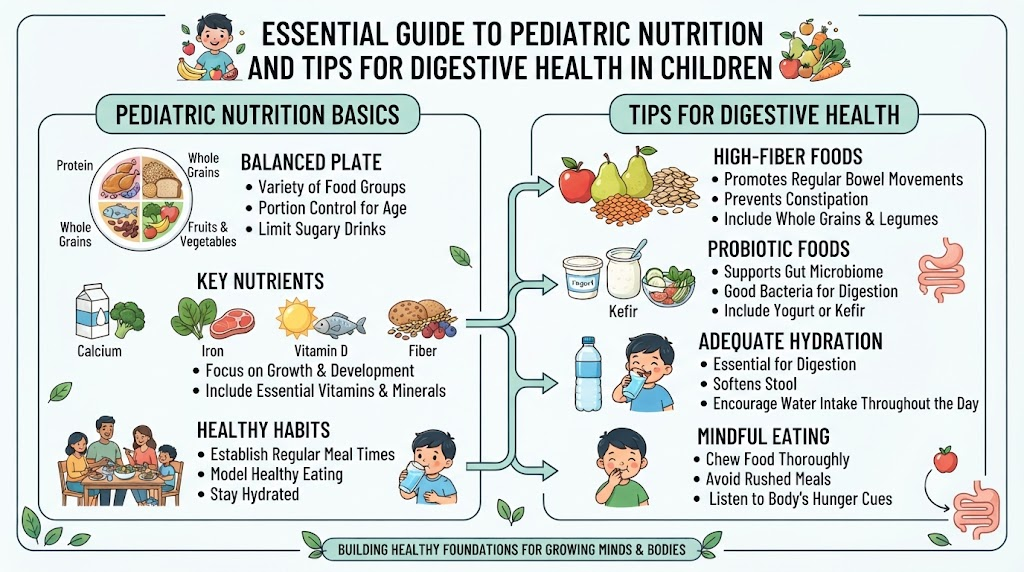
The most effective way to support digestion is through a diverse, fiber-rich diet.
- Fiber is Essential: Fiber acts as a “broom,” keeping the digestive tract clean and moving. Focus on whole grains, beans, lentils, and a variety of colorful fruits and vegetables.
- Probiotic-Rich Foods: Natural yogurts and kefir can introduce beneficial bacteria to the gut.
- Limit Processed Foods: Highly processed snacks and sugary beverages can be low in fiber and harder to digest, sometimes contributing to constipation.
- Balanced Plates: Aim for a mix of lean proteins, healthy fats (like those found in avocados and nuts), and complex carbohydrates at every meal.
Daily Habits That Promote Healthy Digestion
Diet is only one piece of the puzzle. The way a child moves and lives matters just as much.
- Regular Meal Schedules: Predictable mealtimes help the digestive tract develop a rhythm.
- Adequate Hydration: Water is necessary for fiber to work correctly. Without enough water, high-fiber diets can actually cause constipation.
- Physical Activity: Movement is a natural stimulant for the intestines. Playtime, sports, and running are all great for digestive health.
- Healthy Toilet Habits: Encourage children not to “hold it” when they feel the urge to go. Creating a relaxed atmosphere for bathroom time can help prevent withholding.
- Mindful Eating: Encourage children to chew their food thoroughly and eat at a measured pace.
Hydration and Children’s Digestive Health
Water is the foundation of digestion. It helps dissolve nutrients so they can be absorbed into the bloodstream and keeps stool soft and easy to pass.
If your child is a picky water drinker, try infusing it with slices of cucumber, lemon, or strawberries. Always prioritize water over sugary juices or sodas, as excessive sugar can disrupt the gut microbiome and cause digestive distress.
Healthy Digestion Checklist
| Healthy Habit | Benefit |
| Eating fruits and vegetables | Supports healthy digestion and fiber intake |
| Drinking enough water | Maintains regular bowel movements |
| Physical activity | Encourages healthy digestive function |
| Regular meal schedule | Promotes digestive rhythm |
| Good sleep habits | Supports overall health and gut recovery |
Signs Parents Should Not Ignore
While minor stomach upsets are normal, the following “red flags” warrant a visit to your pediatrician:
- Blood in the stool: Always needs a medical assessment.
- Persistent vomiting or diarrhea: Risk of dehydration.
- Poor weight gain: Could indicate a malabsorption issue.
- Ongoing or severe abdominal pain: Especially if it wakes the child from sleep.
- Chronic constipation: If dietary changes don’t help after a reasonable time.
The Role of Pediatric Gastroenterology Specialists
When digestive issues become chronic or complex, a pediatric gastroenterologist can provide specialized support. They are trained to:
- Diagnose underlying gastrointestinal conditions.
- Provide targeted nutritional plans.
- Perform diagnostic procedures (like endoscopies or motility tests) if necessary.
- Educate families on managing long-term digestive wellness.
Myths vs. Facts
| Myth | Fact |
| Stomach pain is always normal | Persistent pain should be medically evaluated |
| Fiber is only for adults | Children need adequate fiber for healthy bowel function |
| Children outgrow all digestive problems | Some conditions require long-term management |
| Digestion depends only on food | Hydration, sleep, and activity are equally critical |
FAQs
- Why is gut health important for kids?
It supports growth, immunity, and overall energy. - What foods promote healthy digestion?
High-fiber foods like vegetables, fruits, and whole grains. - How to prevent constipation?
Increase fiber, water, and daily physical activity. - What causes stomach pain?
It can range from constipation to viral bugs or sensitivities. - How much water for kids?
It varies by age; offer it consistently throughout the day. - Are probiotics helpful?
They can be, but consult your doctor first. - When to see a doctor?
If symptoms persist, are severe, or impact growth. - Can stress affect a child’s gut?
Yes, stress can lead to stomachaches or changes in bowel habits. - What foods to avoid?
Excessively processed foods and high-sugar drinks. - How does fiber help?
It adds bulk to stool and keeps things moving. - Signs of food intolerance?
Bloating, diarrhea, or gas after eating certain items. - Importance of exercise?
It stimulates the muscles in the digestive tract. - What do gastroenterologists do?
They specialize in complex digestive diseases. - How do routines help?
They help the body “anticipate” digestion and bathroom breaks. - How does GASTROHOSPITALS help?
We provide the educational information needed for informed care.
Final Thoughts
Supporting your child’s digestive health is a journey that starts with small, consistent habits. By focusing on fiber, hydration, and movement, you are doing more than just preventing stomachaches—you are building the foundation for a healthy life.Remember that digestive wellness is a marathon, not a sprint. If you find your child struggling with persistent symptoms, don’t hesitate to reach out to a professional. You can find more resources and information on pediatric digestive care by exploring GASTROHOSPITALS. Stay patient, keep the conversation open, and always keep your pediatrician in the loop regarding your child’s health.