Introduction
Occasional gas and bloating are among the most common digestive complaints, often affecting people of all ages. While they are usually harmless and temporary, the discomfort and physical fullness they cause can significantly impact your daily quality of life. Understanding why these symptoms occur—and how to manage them through simple lifestyle adjustments—is the first step toward reclaiming your comfort.Digestion is a complex process, and even minor changes in your eating habits, stress levels, or activity can influence how your gut functions. By identifying your unique triggers, you can take proactive steps to improve your digestive wellness. For those seeking expert insights and reliable information, GastroHospitals offers comprehensive resources to help you understand digestive disorders and promote long-term gut health.
Understanding Gas and Bloating
Intestinal gas is a natural byproduct of the digestive process, occurring when bacteria in your gut break down undigested food. Bloating, on the other hand, is the sensation of fullness, tightness, or pressure in the abdomen, often accompanied by visible swelling. While these two often occur together, they are distinct sensations.
GAS & BLOATING OVERVIEW TABLE
| Aspect | Description |
| Digestive Concern | Gas accumulation and abdominal distension |
| Common Causes | Dietary habits, swallowed air, food intolerances |
| Typical Symptoms | Fullness, cramping, flatulence, belching |
| When It Occurs | Often during or shortly after meals |
| Management Goal | Reduce discomfort and stabilize gut function |
Common Causes of Gas and Bloating
COMMON CAUSES TABLE
| Cause | Description | Possible Symptoms |
| Swallowed Air | Eating or drinking too quickly | Frequent burping |
| Overeating | Consuming large portions at once | Tightness, discomfort |
| Food Intolerance | Difficulty digesting specific components (e.g., lactose) | Bloating, gas |
| Constipation | Stool retention slowing down transit time | Abdominal fullness |
| Carbonated Drinks | Intake of carbon dioxide gas | Bloating, belching |
| Digestive Disorders | Conditions like IBS affecting motility | Cramping, chronic bloating |
Common Symptoms
SYMPTOMS TABLE
| Symptom | Possible Cause | Seek Medical Advice? |
| Bloating | Gas trapping or slow motility | If persistent/painful |
| Burping | Air swallowed during eating | Only if excessive |
| Gas | Bacterial breakdown of food | If accompanied by pain |
| Abdominal Pain | Muscle spasms or gas pressure | If severe/acute |
| Swelling | Abdominal distension | If sudden/unexplained |
| Cramping | Intense intestinal contractions | If worsening over time |
Foods That May Trigger Gas
FOOD TRIGGERS TABLE
| Food | Why It May Cause Gas | Helpful Tip |
| Beans | Contains complex sugars (oligosaccharides) | Soak before cooking |
| Broccoli | High in raffinose (a complex sugar) | Steam to soften |
| Milk | Lactose content (if intolerant) | Use lactose-free options |
| Soft Drinks | High carbonation content | Switch to water or herbal tea |
| Sweeteners | Sugar alcohols like sorbitol | Check ingredient labels |
| Fried Foods | High fat content slows digestion | Choose lean cooking methods |
Tips for Managing Gas and Bloating
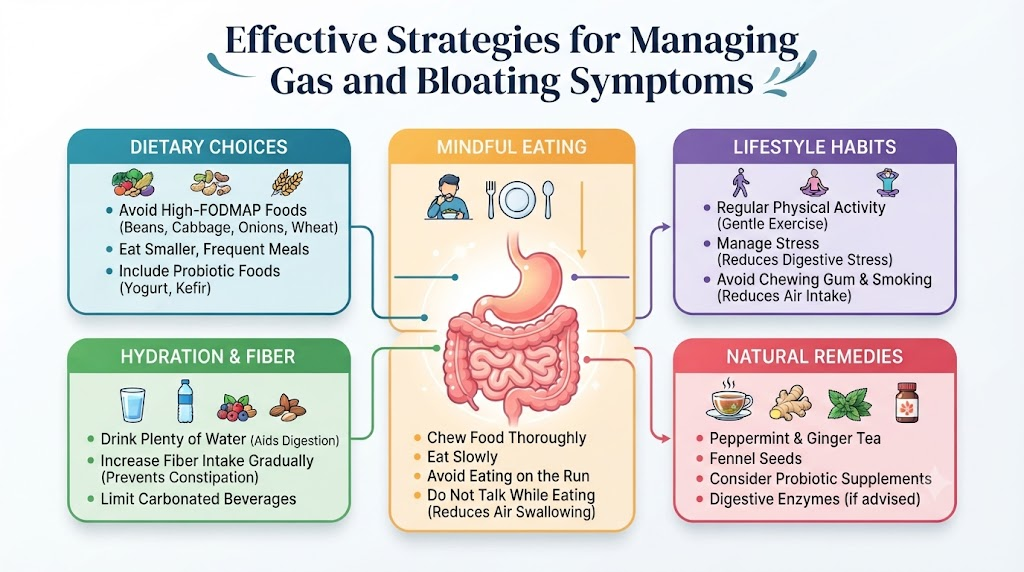
Managing digestive comfort is largely about pacing and awareness. Small changes in how you approach your meals can have a significant impact.
DAILY DIGESTIVE HEALTH TABLE
| Healthy Habit | Benefit |
| Eating Slowly | Reduces the amount of air swallowed |
| Drinking Water | Facilitates smooth digestion and prevents constipation |
| Walking After Meals | Helps move gas through the digestive tract |
| Balanced Diet | Prevents overloading the gut with hard-to-digest foods |
| Stress Reduction | Calms the “gut-brain” axis |
| Regular Exercise | Improves overall intestinal motility |
Natural Ways to Support Digestive Health
- Probiotic Foods: Incorporating yogurt or fermented foods can support a healthy gut microbiome.
- Adequate Water Intake: Essential for softening stool and keeping the digestive tract moving.
- Fiber Balance: Increase fiber intake gradually to give your gut time to adjust.
- Regular Meal Timing: Eating at consistent times helps regulate your body’s digestive rhythm.
When to See a Doctor
While most gas is benign, persistent or severe symptoms should be evaluated by a healthcare professional.
WARNING SIGNS TABLE
| Symptom | Why It Needs Medical Evaluation |
| Severe Pain | Could indicate acute issues like appendicitis |
| Blood in Stool | Can be a sign of inflammation or other disorders |
| Weight Loss | Needs investigation for malabsorption issues |
| Persistent Vomiting | May indicate a blockage or severe infection |
| Ongoing Bloating | Requires ruling out chronic digestive conditions |
Future of Digestive Health Care
FUTURE OF DIGESTIVE HEALTH TABLE
| Innovation | Potential Benefit |
| AI Digestive Analysis | Customizing food recommendations based on data |
| Personalized Nutrition | Tailored diets to prevent individual triggers |
| Gut Microbiome Testing | Targeted probiotics based on your unique flora |
| Telemedicine | Easier access to expert gastro consultation |
| Digital Monitoring | Wearable devices to track digestion trends |
Frequently Asked Questions (FAQs)
- What causes gas? Usually, it is a byproduct of bacterial fermentation in the colon.
- Is bloating normal? It is common, but persistent bloating should be checked.
- Which foods trigger gas? Beans, broccoli, dairy, and carbonated drinks are common.
- Can stress cause bloating? Yes, stress impacts digestion and gut sensitivity.
- How to reduce bloating naturally? Eat slowly, stay hydrated, and try gentle walking.
- When to see a doctor? If you have severe pain, bleeding, or unexplained weight loss.
- Are probiotics helpful? They can improve gut balance for many people.
- Does dehydration worsen bloating? Yes, it can lead to constipation, which increases bloating.
- What conditions cause chronic bloating? IBS, SIBO, and celiac disease are common examples.
- How to improve digestive health? Focus on balanced fiber, water, and regular movement.
- Should I avoid all fiber? No, fiber is essential; increase it slowly.
- Is burping normal? Yes, as a way to release swallowed air.
- Can medication cause gas? Some medications can have digestive side effects.
- How do I keep a food diary? Track what you eat and when symptoms occur.
- Is it related to my age? Digestion can change with age, but symptoms are manageable.
Final Thoughts
Gas and bloating are often signals from your body that your digestive system needs a little extra attention. By identifying your personal food triggers, slowing down your eating habits, and maintaining regular physical activity, you can significantly reduce discomfort and improve your overall well-being.However, if your symptoms are persistent, painful, or accompanied by warning signs, it is important to consult a professional. For ongoing education and expert care, explore GastroHospitals to find resources that support your digestive journey and help you maintain a healthy, comfortable gut.