Introduction
The human gastrointestinal tract is a highly complex biological system governed by precise chemical, metabolic, and anatomical mechanisms. Every day, the delicate tissues lining the stomach must withstand an incredibly harsh environment filled with powerful digestive acids and enzymes designed to break down food. To prevent these internal fluids from damaging the body itself, the stomach relies on a specialized mucosal barrier that constantly shields its delicate walls. However, if this natural shield is weakened or disrupted by environmental triggers, medications, or infections, the sensitive tissue underneath can become exposed to direct acid irritation, setting the stage for deep, painful structural sores.We will look at the leading causes of tissue irritation, outline vital screening methods, examine medication safety guidelines, and explore ways to minimize daily gut irritation. To discover trusted digestive health education tools, explore comprehensive gastroenterology insights, and access a wealth of diagnostic resources, you can visit GASTROHOSPITALS, a dedicated educational digestive health and gastroenterology guide designed to support your personal healthcare research journey.
What Are Stomach Ulcers?
Stomach ulcers, structurally known as gastric ulcers, belong to a broader category of digestive sores called peptic ulcer disease. A peptic ulcer is a deep sore or lesion that develops when the protective mucus layer that shields the digestive tract from corrosive stomach juices begins to break down. This structural breakdown allows strong hydrochloric acid and pepsin to directly irritate, erode, and inflame the underlying mucosal tissue.
[Corrosive Stomach Acid] ➔ [Erosion of Mucosal Layer] ➔ [Direct Tissue Damage] ➔ [Stomach Ulcer Development]
The Difference Between Gastric and Duodenal Ulcers
Peptic ulcers are categorized primarily by their precise anatomical location within the upper digestive tract:
- Gastric Ulcers: These sores form directly on the inner lining of the stomach wall. They often cause discomfort shortly after eating, as the stomach produces an influx of acid to digest food, which directly irritates the exposed lesion.
- Duodenal Ulcers: These lesions develop in the upper section of the small intestine, known as the duodenum. The pain from a duodenal ulcer often intensifies several hours after a meal when an empty stomach allows acid to flow directly into the intestinal tract, or it may wake a patient in the middle of the night.
The development of these sores is a highly dynamic process that varies significantly from person to person. Prevention tips and treatment paths depend entirely on an individual’s unique risk factors, medical history, and specific diagnostic findings. While the human body possesses remarkable tissue repair systems, maintaining long-term mucosal health requires minimizing external irritants and protecting the natural defensive layers of the stomach wall.
Common Causes of Stomach Ulcers
Gastroenterology research emphasizes that peptic ulcers develop from a clear disruption in the balance between aggressive digestive fluids and protective mucosal defenses. While many people believe that daily stress or eating habits are the main culprits, the vast majority of stomach ulcers are directly caused by specific biological and pharmaceutical factors.
The Role of Helicobacter pylori Infection
Helicobacter pylori (H. pylori) is a spiral-shaped bacterium that can colonize the protective mucus layer of the human stomach. This specialized pathogen produces an enzyme called urease, which neutralizes surrounding stomach acid, allowing the bacteria to survive in a harsh environment. As the infection persists, it triggers localized immune responses and produces toxic byproducts that gradually inflame the stomach lining, weakening its defenses and making it vulnerable to acid erosion.
Long-Term and High-Frequency NSAID Use
Nonsteroidal anti-inflammatory drugs (NSAIDs)—including common over-the-counter painkillers like ibuprofen, naproxen, and high-dose aspirin—are a leading cause of gastric ulcers. These medications work by blocking cyclooxygenase (COX) enzymes to reduce physical pain and inflammation. However, the COX-1 enzyme is also responsible for triggering the production of prostaglandins, which stimulate mucus secretion and support blood flow within the stomach lining. Blocking this enzyme systematically strips the stomach of its primary defense shield.
Lifestyle Choices and Medical Conditions
- Tobacco Use and Smoking: Nicotine and chemical toxins from smoking reduce the production of protective bicarbonate in the pancreas, limit natural blood flow to the gastric lining, and slow down the body’s natural tissue repair systems.
- Excessive Alcohol Consumption: High intakes of heavy alcohol directly irritate and erode the mucosal lining, increasing stomach acid production and worsening existing tissue inflammation.
- Severe Systemic Illnesses: Less common but highly critical causes include hypersecretory conditions like Zollinger-Ellison syndrome, where rare tumors trigger extreme overproduction of gastric acid, as well as severe physiological stress from major trauma or surgery.
Risk Factors for Developing Stomach Ulcers
Understanding your personal risk profile is an essential step toward protecting your digestive system and making informed choices about your long-term health.
Age and Medication Habits
As the human body matures, the natural mucosal lining of the stomach gradually thins, and localized blood flow can decrease, reducing the tissue’s capacity to repair itself quickly. This natural change is often compounded by the frequent use of painkillers to manage chronic conditions like arthritis. Taking NSAIDs daily, utilizing high doses, or combining them with prescription corticosteroids or blood thinners dramatically increases the risk of developing a gastric ulcer.
Personal History and Genetic Vulnerabilities
Individuals who have previously suffered from a peptic ulcer carry a significantly higher risk of experiencing a recurrence, particularly if the initial root cause was not completely resolved. Additionally, a strong family history of peptic ulcer disease can point to shared genetic sensitivities, such as an inherited vulnerability to H. pylori infections or a naturally lower production of protective mucosal cells.
Complicated Chronic Illnesses
Living with severe long-term health conditions—such as chronic liver disorders, advanced kidney disease, or severe chronic obstructive pulmonary disease (COPD)—can disrupt the body’s metabolic balance and impair microvascular circulation. These underlying health challenges make it harder for the stomach lining to maintain its defensive shield against everyday digestive acids.
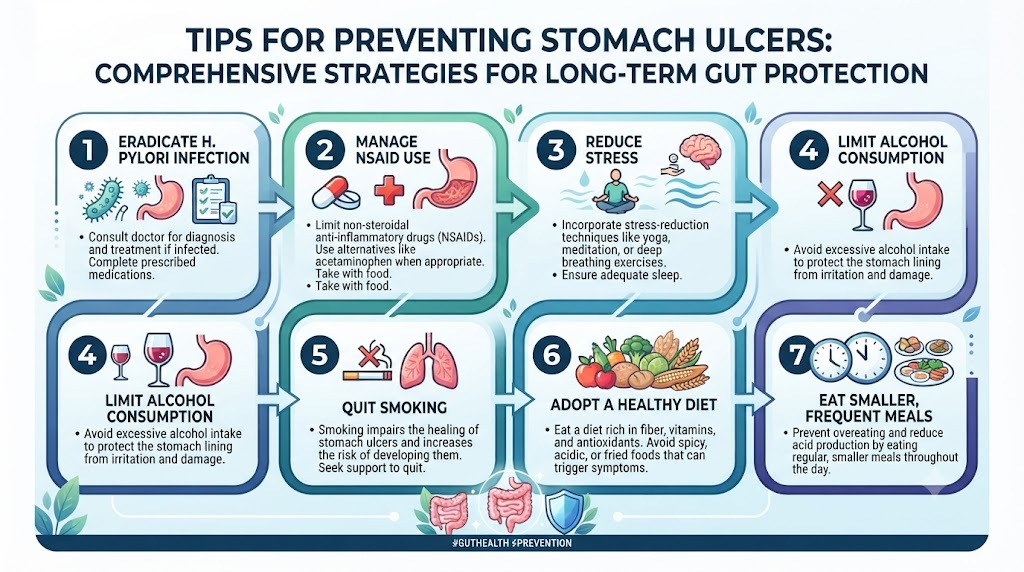
Prevention Tips Comparison Table
| Prevention Tip | Primary Benefit | Core Mechanism | Practical Daily Strategy |
| Use NSAIDs Carefully | Lowers the risk of medication-related gastric ulcers | Avoids blocking the vital enzymes that produce protective stomach mucus | Consult your physician about using alternative options like acetaminophen |
| Treat H. pylori Infection | Reduces ulcer recurrence and complex tissue complications | Eradicates harmful bacteria using targeted, evidence-based therapies | Complete the full course of prescribed antibiotics exactly as directed |
| Stop Smoking Completely | Supports natural tissue healing and lowers erosion risks | Restores healthy microvascular blood flow to the stomach wall | Participate in structured, medical smoking cessation programs |
| Limit Alcohol Intake | Minimizes direct mucosal irritation and inflammation | Prevents excessive spikes in corrosive hydrochloric acid production | Choose water, herbal teas, or non-alcoholic alternatives during meals |
| Practice Good Hand Hygiene | May reduce exposure to infectious H. pylori bacteria | Prevents the transmission of pathogens through contaminated food | Wash hands thoroughly with soap and water before handling food |
| Regular Medical Checkups | Helps identify hidden digestive problems early | Allows doctors to track symptoms and review medication safety | Keep a detailed log of any persistent abdominal discomfort |
Early Symptoms of Stomach Ulcers
Recognizing the early, subtle warning signs of a stomach ulcer allows individuals to seek timely medical attention before mild tissue erosion develops into a serious medical emergency.
Classic Abdominal Pain and Discomfort
The most common hallmark of a gastric ulcer is a burning or gnawing pain in the upper abdomen, typically between the breastbone and the navel. This discomfort can fluctuate significantly based on your meals; it may worsen when the stomach is empty or flare up shortly after eating, depending on the exact location of the sore. The pain can last from a few minutes to several hours and often comes and goes over days or weeks.
Common Indigestion and Digestive Disruptions
- Persistent Bloating and Fullness: Patients frequently report a uncomfortable sensation of distension in the upper stomach, accompanied by frequent burping or a feeling of being unusually full soon after starting a light meal.
- Nausea and Loss of Appetite: The localized tissue inflammation can disrupt normal digestive movements, triggering mild nausea, persistent heartburn, acid reflux, and a gradual decline in interest in eating.
Warning Signs of a Medical Emergency
While many ulcers cause mild or manageable symptoms initially, a deep sore can suddenly erode through an internal blood vessel or breach the stomach wall completely. Seek immediate emergency medical care if you experience any of the following severe symptoms:
- Sudden, sharp, or unbearable abdominal pain that spreads rapidly.
- Vomiting blood, or bringing up material that looks like dark coffee grounds.
- Passing stools that are dark, sticky, tarry, or contain visible blood.
- Sudden dizziness, severe lightheadedness, confusion, or fainting spells.
Healthy Habits That Support Digestive Health
Building positive, simple lifestyle habits into your daily routine is an excellent way to support your body’s natural defense systems and promote overall gut health.
[Balanced Whole-Food Nutrition] ➔ [Consistent Hydration] ➔ [Active Stress Reduction] ➔ [Restorative Sleep Cycles]
Eat Balanced, Whole-Food Meals
Focus on fueling your body with a colorful variety of fiber-dense vegetables, fresh fruits, whole grains, and lean proteins. It is important to clarify that no single diet has been scientifically proven to prevent or cure stomach ulcers on its own. However, eating balanced meals rich in natural vitamins (especially Vitamins A and C) supports optimal cellular turnover and helps keep your immune system strong.
Stay Physically Active and Maintain a Healthy Weight
Engage in regular, moderate physical activities—such as brisk walking, swimming, or cycling—to stimulate healthy muscle movement throughout your digestive tract and improve systemic circulation. Keeping your body at a healthy weight reduces mechanical pressure on your abdomen, which helps minimize acid reflux and supports smooth, comfortable digestion.
Manage Chronic Stress and Prioritize Restorative Sleep
Practice proven relaxation techniques daily—such as deep breathing exercises, mindfulness meditation, or gentle yoga—to keep your nervous system balanced. High levels of chronic emotional stress can alter local blood flow to the gut and stimulate extra acid production, making stress management vital. Pair these relaxation habits with seven to eight hours of high-quality sleep each night to give your body the time it needs to repair cells and recover.
Diagnosis of Stomach Ulcers
When a patient presents with persistent upper abdominal symptoms, gastroenterologists utilize advanced diagnostic tools to pinpoint the exact cause of the discomfort and confirm the presence of an ulcer.
Detailed Medical Histories and Targeted Lab Tests
Your physician will begin with a thorough review of your symptoms, everyday lifestyle choices, and medication habits, paying close attention to how frequently you use over-the-counter painkillers. If an ulcer is suspected, doctors perform specialized tests to check for H. pylori bacteria. These include simple breath tests (urea breath test), stool antigen tests, or targeted blood panels to confirm if the pathogen is present in your digestive system.
Advanced Visualization with Upper Endoscopy
The definitive gold standard for diagnosing a stomach ulcer is an upper endoscopy, also known as an esophagogastroduodenoscopy (EGD). During this safe, outpatient procedure, a gastroenterologist gently guides a thin, flexible tube equipped with a high-definition camera down the esophagus and into the stomach and duodenum. This allows the specialist to view the entire mucosal lining clearly, measure the exact size of any sores, and collect tiny tissue samples (biopsies) to rule out more serious conditions and double-check for bacterial infections.
Treatment Options
Once a stomach ulcer is accurately diagnosed, medical teams design an evidence-based treatment plan tailored to the root cause of the sore, focusing on neutralizing acid and giving the tissue the environment it needs to heal completely.
Targeted Acid-Suppression Medications
- Proton Pump Inhibitors (PPIs): Medications such as omeprazole, lansoprazole, and pantoprazole work by temporarily turning down the tiny acid-producing pumps within your stomach cells. This significantly lowers acid levels, giving the raw mucosal tissue a safe window to heal.
- H2-Receptor Blockers: Drugs like famotidine reduce the chemical signals that trigger acid production, providing another reliable layer of protection for your stomach lining.
Antibiotic Regimens and Cytoprotective Agents
If diagnostic tests confirm an H. pylori infection, patients are prescribed a comprehensive multi-drug regimen. This typically combines a powerful PPI with a targeted course of two or more antibiotics (such as amoxicillin and clarithromycin) taken strictly for 10 to 14 days to eliminate the bacteria completely. Additionally, doctors may utilize cytoprotective medications like sucralfate or bismuth subsalicylate, which act like a liquid bandage, coating the raw sore to shield it from direct acid irritation.
The Importance of Completing Care and Follow-Up
A critical aspect of successful ulcer recovery is completing your full course of prescribed medications exactly as directed by your physician, even if your physical pain disappears within the first few days. Stopping your treatments early can leave underlying bacterial infections unresolved or allow acid levels to spike suddenly, which can cause the sore to return. Your specialist will often schedule a follow-up endoscopy a few weeks after treatment to verify that the tissue has healed cleanly.
Possible Complications if Left Untreated
Neglecting persistent digestive symptoms or failing to complete your prescribed ulcer treatment can allow localized tissue damage to develop into serious, life-threatening complications.
- Internal Gastrointestinal Bleeding: As an ulcer erodes deeper into the stomach wall, it can damage nearby blood vessels. This can cause slow, hidden blood loss that leads to iron-deficiency anemia and constant fatigue, or it can trigger a sudden, severe hemorrhage that requires immediate medical intervention.
- Gastrointestinal Perforation: A severe, unmanaged ulcer can eat completely through the muscular wall of the stomach or duodenum. This creates a hole that allows digestive juices and partially digested food to spill into the sterile abdominal cavity, causing a dangerous condition called peritonitis that requires emergency surgery.
- Gastric Outlet Obstruction: Sures located near the narrow pathway connecting the stomach to the small intestine can trigger chronic inflammation and build up thick scar tissue over time. This scarring can narrow the passage, blocking the normal flow of food and causing persistent vomiting and severe weight loss.
- Long-Term Bacterial Risks: Leaving an H. pylori infection untreated causes continuous, low-grade inflammation throughout the gastric lining. Over decades, this persistent irritation can increase the risk of developing more serious gastric conditions, making early eradication essential.
How GASTROHOSPITALS Helps Patients
Navigating complex gastrointestinal symptoms and evaluating treatment options can feel overwhelming for patients and families. GASTROHOSPITALS serves as an objective, educational platform engineered to simplify your search for high-quality digestive healthcare.
Verified Gastroenterology Center Discovery
The platform provides a comprehensive directory of accredited medical centers, specialized endoscopy suites, and dedicated digestive health clinics. Users can explore facility locations, review the clinical capabilities of practicing gastroenterologists, and find expert care close to home without needing to sort through unverified online sources.
Transparent Center Comparison and Educational Libraries
Through easy-to-read guides and comprehensive facility overviews, the platform allows you to evaluate medical centers based on objective quality markers, such as advanced endoscopic imaging tools, board-certified medical staff, and comprehensive patient safety rates. This helps clarify complex medical procedures, ensuring you know exactly what options to discuss with your specialist.
Direct Access to Practical Resources
Beyond serving as a trusted educational library, the platform allows users to easily request treatment overviews and facility profiles. By helping families connect smoothly with accredited digestive health systems, the platform empowers you to manage the planning and scheduling aspects of your care journey with complete confidence from home.
Common Mistakes People Make
Avoiding common behavioral errors during your daily routine can protect your stomach lining from preventable irritation and help you avoid complex digestive complications.
Ignoring Persistent or Recurring Stomach Pain
Assuming that chronic abdominal burning is just everyday indigestion that can be ignored or covered up with over-the-counter antacids prevents you from identifying and treating the actual root cause early.
Taking Over-the-Counter NSAIDs Carelessly
Using high doses of ibuprofen or naproxen for everyday headaches or minor muscle aches without medical guidance can quietly weaken your stomach’s natural mucosal protection over time.
Continuing to Smoke After a Diagnosis
Continuing to use tobacco products after experiencing stomach irritation introduces constant toxins that reduce localized blood flow, slow tissue recovery, and make treatments less effective.
Stopping Prescribed Medications Too Early
Discontinuing your acid-suppressants or antibiotic course the moment your physical pain improves allows hidden bacterial infections to survive and significantly increases the risk of the ulcer returning.
Delaying Evaluation of Severe Warning Symptoms
Waiting to see if severe symptoms like dark, tarry stools or persistent vomiting clear up on their own instead of seeking immediate emergency care exposes you to dangerous medical risks.
Common Myths vs. Facts
Myth: Eating spicy foods, highly acidic citrus fruits, or living a high-stress lifestyle is the direct cause of most stomach ulcers.
Fact: Spicy foods and daily stress can certainly irritate a pre-existing sore and worsen your discomfort, but they do not cause ulcers on their own. The vast majority of ulcers are caused by H. pylori bacterial infections or frequent NSAID use.
Myth: Drinking a cold glass of milk is an effective way to cure a stomach ulcer.
Fact: Milk can provide a brief, temporary coating effect that slightly soothes abdominal burning for a few minutes. However, the proteins and calcium in milk actually stimulate your stomach to produce even more acid shortly afterward, which can worsen tissue irritation.
Myth: Stomach ulcers always present with severe, unmistakable, and agonizing abdominal pain.
Fact: Some ulcers develop silently, producing only mild, vague symptoms like standard indigestion, or causing no noticeable pain at all until a sudden complication like internal bleeding occurs.
Myth: Once a stomach ulcer heals completely, you never have to worry about developing one again.
Fact: Ulcers can return if the underlying root cause is not completely resolved. If an H. pylori infection is not fully cleared, or if a patient returns to high-dose NSAID habits, new sores can form.
Real-Life Educational Scenarios
Scenario A: Eradicating a Hidden Bacterial Infection
A patient suffered from recurring, burning abdominal discomfort that frequently woke them up in the middle of the night. After consulting a gastroenterologist, a simple breath test confirmed an H. pylori infection, and an upper endoscopy revealed a small duodenal ulcer. The patient completed a tailored multi-drug antibiotic and PPI regimen, completely clearing the bacteria and allowing the raw tissue to heal cleanly.
Scenario B: Balancing Chronic Pain Management Safely
An individual who took daily over-the-counter ibuprofen to manage chronic knee discomfort began experiencing persistent stomach bloating and mild nausea. Their physician recognized the risk of NSAID-related tissue irritation and safely adjusted their care plan. By switching to alternative pain-relief methods and adding a temporary protective medication, they successfully guarded the stomach lining against deeper ulceration.
Scenario C: Supporting Mucosal Recovery Through Lifestyle Choices
A patient diagnosed with a gastric ulcer committed to making positive lifestyle shifts to support their medical treatments. They stopped smoking completely to restore healthy blood flow to their digestive tract and focused on eating regular, balanced meals. These healthy choices lowered overall irritation, allowing their prescribed acid-suppression therapies to work effectively and support complete tissue recovery.
Scenario D: Recognizing Warning Signs for Prompt Treatment
A senior citizen noticed their stools had become unusually dark, sticky, and tarry over a couple of days, and they felt increasingly lightheaded when standing up. Recognizing these clear warning signs of internal gastrointestinal bleeding, their family took them directly to an accredited medical center. The emergency care team quickly performed an outpatient endoscopy, safely sealing a bleeding vessel and preventing further complications.
FAQs (Frequently Asked Questions)
1.What exactly is a stomach ulcer?
A stomach ulcer is a deep sore or lesion that forms on the inner lining of the stomach wall when your natural, protective mucus layer is damaged and exposed to corrosive digestive acids.
2.What are the primary leading causes of stomach ulcers?
The vast majority of peptic ulcers are directly caused by an infection from Helicobacter pylori (H. pylori) bacteria, or from the frequent, long-term use of NSAID painkillers like ibuprofen.
3.Can stomach ulcers always be completely prevented?
While you cannot guarantee prevention in every single case, you can dramatically lower your risks by using NSAIDs carefully under medical guidance, treating H. pylori infections promptly, and avoiding tobacco.
4.What are the most common early symptoms of a gastric ulcer?
The most frequent warning signs include a burning upper abdominal pain, persistent indigestion, bloating, mild nausea, heartburn, and a feeling of being unusually full soon after starting a meal.
5.Does eating highly spicy food directly cause stomach ulcers to form?
No. Spicy foods do not cause ulcers to develop on their own, though they can certainly irritate a sore that is already present and make your physical symptoms feel worse.
6.How do doctors accurately diagnose the presence of an H. pylori infection?
Physicians can reliably detect the bacteria using non-invasive methods like simple urea breath tests, targeted stool antigen tests, or by collecting tiny tissue samples during a routine upper endoscopy.
7.How exactly do common NSAID painkillers increase my ulcer risk?
NSAIDs block the vital COX enzymes responsible for triggering the production of prostaglandins, which are essential compounds that maintain your stomach’s protective mucus shield and support healthy blood flow.
8.What types of foods are generally easier on a sensitive stomach?
Patients recovering from an ulcer often find comfort in soft, non-irritating options like plain oatmeal, brown rice, lean poultry, steamed vegetables, and non-citrus fruits, while avoiding heavy, greasy meals.
9.When should I consult a doctor about my stomach pain?
Schedule a visit with a gastroenterologist if you experience persistent abdominal pain, recurring indigestion, or nausea that lasts more than a few days, or if you rely heavily on over-the-counter antacids.
10.How are standard stomach ulcers treated by medical professionals?
Treatment typically involves taking Proton Pump Inhibitors (PPIs) to lower stomach acid levels, combined with targeted antibiotics to clear out H. pylori infections when they are present.
11.Is it possible for a stomach ulcer to return after treatment?
Yes. Ulcers can recur if the underlying cause is not completely cleared, such as an incomplete course of antibiotics leaving bacteria behind, or if a patient returns to high-dose NSAID habits.
12.What serious complications can occur if an ulcer is left untreated?
Untreated ulcers can lead to severe medical complications, including internal gastrointestinal bleeding, complete perforation of the stomach wall, gastric outlet obstructions, and chronic iron-deficiency anemia.
13.How does smoking tobacco affect the stomach’s natural healing process?
Smoking reduces the production of protective bicarbonates in your digestive system, impairs localized blood flow to the stomach wall, and slows down the body’s natural cellular repair mechanisms.
14.How do I choose the right hospital for gastroenterology care?
Look for accredited medical centers that feature dedicated endoscopy suites, employ board-certified gastroenterologists, utilize modern diagnostic imaging, and provide transparent follow-up care.
15.How does GASTROHOSPITALS support patients dealing with digestive concerns?
The platform serves as a trusted educational guide, offering comprehensive hospital directories, listing specialist credentials, sharing easy-to-read health guides, and simplifying the process of requesting care profiles.
Final Thoughts
Prioritizing healthy digestive habits and understanding individual risk factors are among the most valuable choices you can make to prevent stomach ulcers and protect your long-term gastrointestinal health. Modern medical treatments provide highly effective, evidence-based solutions to lower stomach acid and heal damaged tissue, but keeping your mucosal lining strong relies heavily on your everyday choices. By managing your medication use carefully, stopping tobacco habits, and addressing bacterial infections early, you create a healthy, stable environment for your entire digestive system.