Introduction
The liver is one of the most hardworking organs in the human body, performing hundreds of essential functions, including detoxification, metabolism, and the production of vital proteins. Despite its importance, liver disease is often referred to as a “silent” condition because it frequently progresses without causing noticeable symptoms in its earliest stages.At GastroHospitals, we believe that patient education is the foundation of preventive healthcare. In this guide, we will explore the early and progressive warning signs of liver disease, why these symptoms appear, and the importance of professional medical evaluation.
Understanding Liver Disease
Liver disease encompasses any condition that damages the liver and prevents it from functioning effectively. Because the liver acts as a processing plant for everything you ingest, it is susceptible to damage from viruses, toxins, excess fat, and chronic lifestyle factors.
The liver is incredibly resilient and often compensates for damage for a long time before symptoms become apparent. This is why liver disease is often diagnosed at a later stage. By the time symptoms like jaundice or swelling appear, the liver may have already sustained significant stress, underscoring the need for awareness and routine screening.
LIVER DISEASE OVERVIEW TABLE
| Aspect | Description |
| Organ Affected | Liver |
| Main Function | Detoxification, digestion, metabolism, energy storage |
| Common Disorders | Fatty liver, Hepatitis, Cirrhosis, Liver failure |
| Risk Level | High (if left undiagnosed and untreated) |
| Early Detection Importance | Crucial for reversing or managing underlying causes |
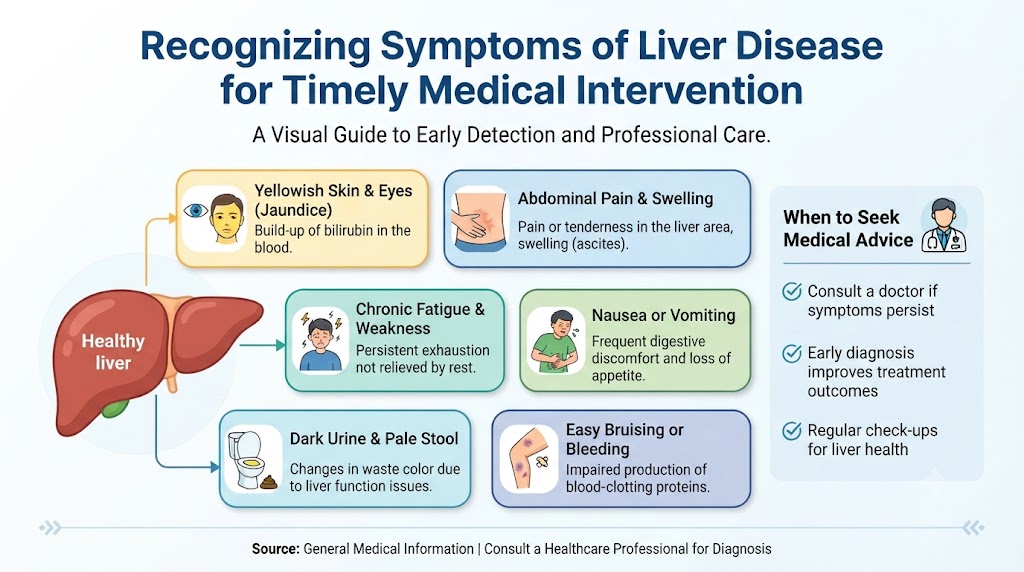
Early Symptoms of Liver Disease
In the early stages, the signs of liver stress are often vague and can be easily confused with other common ailments.
- Persistent Fatigue and Weakness: An overwhelming feeling of tiredness that doesn’t improve with rest.
- Loss of Appetite: A noticeable decline in the desire to eat.
- Nausea or Vomiting: Occasional bouts of unexplained nausea, particularly after eating fatty foods.
- Pain in Upper Right Abdomen: A dull ache or feeling of fullness in the area where the liver resides.
- Unexplained Weight Changes: Sudden weight loss or gain without changes to diet or exercise.
- Itchy Skin: Pruritus, or intense itching, without a visible rash, can sometimes be an early sign.
EARLY WARNING SIGNS TABLE
| Symptom | Possible Meaning | Severity Level |
| Fatigue | Liver struggling with energy processing | Mild |
| Loss of Appetite | Digestive system slowing down | Mild |
| Nausea | Accumulation of toxins | Moderate |
| Abdominal Pain | Liver inflammation or enlargement | Moderate |
| Itching | Bile salt buildup beneath the skin | Moderate |
Progressive (Moderate to Severe) Symptoms
As liver damage progresses, the liver’s ability to filter blood and produce essential proteins declines, leading to more distinct physical symptoms.
- Jaundice: A yellowing of the skin and the whites of the eyes caused by a buildup of bilirubin.
- Dark Urine: Urine may appear tea-colored or dark amber due to excessive bilirubin being excreted.
- Pale Stool: Stools may become clay-colored or pale if bile is not reaching the intestines properly.
- Swelling (Ascites): Fluid buildup in the abdomen, causing a distended or “bloated” look.
- Leg Swelling: Edema or swelling in the feet and ankles.
- Easy Bruising or Bleeding: The liver is responsible for producing clotting factors; when damaged, the body bruises or bleeds easily.
ADVANCED SYMPTOMS TABLE
| Symptom | What It Indicates | Urgency Level |
| Jaundice | Significant liver or bile duct dysfunction | High |
| Dark Urine | High levels of bilirubin in the blood | Moderate |
| Swelling | Significant fluid imbalance and pressure | High |
| Bruising | Clotting factor deficiency | Moderate |
| Pale Stool | Bile obstruction or production issue | High |
Causes of Liver Disease
Liver disease can stem from a variety of sources. Understanding these helps in adopting a targeted preventive approach.
- Fatty Liver Disease: Often linked to metabolic syndrome, obesity, and diabetes.
- Viral Hepatitis: Infections like Hepatitis A, B, and C that cause inflammation.
- Alcohol-Related Damage: Long-term excessive consumption causing inflammation and scarring.
- Autoimmune Disorders: When the immune system mistakenly attacks liver cells.
- Drug-Induced Injury: Damage caused by certain medications, supplements, or toxins.
CAUSES & RISK FACTORS TABLE
| Cause | Description | Risk Level |
| Fatty Liver | Excess fat accumulation in liver cells | Moderate to High |
| Hepatitis | Viral-induced inflammation | High |
| Alcohol Use | Toxic injury from frequent intake | High |
| Obesity | Metabolic strain on the liver | Moderate |
| Medications | Chemical toxicity | Variable |
When to Seek Medical Attention
You should consult a healthcare professional at GastroHospitals if you notice:
- Persistent, unexplained fatigue lasting more than two weeks.
- Any visible yellowing of the skin or the whites of the eyes.
- Significant, unexplained abdominal swelling or rapid weight gain in the midsection.
- Frequent bruising or bleeding that occurs without major trauma.
- Mental confusion, disorientation, or extreme personality changes.
Diagnosis of Liver Disease
Doctors use a combination of physical exams, laboratory tests, and imaging to assess liver health.
DIAGNOSTIC TESTS TABLE
| Test | Purpose | What It Detects |
| LFT (Liver Function Tests) | Blood work measuring enzymes/proteins | Liver inflammation or damage |
| Ultrasound | Non-invasive sound wave imaging | Fat accumulation or structural changes |
| FibroScan | Specialized ultrasound (elastography) | Stiffness or scarring (fibrosis) |
| CT Scan | Advanced cross-sectional imaging | Tumors or structural abnormalities |
| Biopsy | Small tissue sample analysis | The specific cause and stage of damage |
Treatment Overview
Treatment focuses on removing the underlying cause and managing symptoms to prevent further progression.
TREATMENT APPROACH TABLE
| Approach | Purpose | Benefit |
| Medical Treatment | Target specific causes (e.g., antivirals) | Halts disease progression |
| Lifestyle Management | Diet/exercise/abstinence | Allows the liver to repair |
| Cause Control | Removing toxins or fat | Prevents ongoing injury |
| Monitoring | Frequent LFTs and imaging | Early detection of changes |
| Advanced Care | Managing complications (e.g., transplant) | Improves survival in end-stage cases |
Prevention of Liver Disease
Prevention is the most effective strategy for liver health.
PREVENTION TABLE
| Preventive Step | Benefit |
| Healthy Diet | Reduces fat accumulation |
| Exercise | Manages metabolic health |
| Avoid Alcohol | Eliminates primary toxic strain |
| Vaccination | Protects against Hepatitis A and B |
| Regular Screening | Detects issues before they become severe |
Common Mistakes People Make
- Ignoring Early Signs: Thinking fatigue or mild pain will “go away on its own.”
- Self-Medicating: Using pain relievers or herbal supplements that may be toxic to the liver.
- Delaying Consultation: Waiting until jaundice appears before seeing a doctor.
- Poor Lifestyle Habits: Neglecting diet and weight management until damage occurs.
Real-Life Awareness Scenarios
- Fatty Liver Detection: An individual discovered they had early fatty liver disease during a routine checkup, allowing them to reverse it with diet and exercise before any scarring occurred.
- Jaundice as a Warning: A patient noticed slight yellowing of their eyes and sought care immediately, leading to the successful management of an underlying viral condition.
Future of Liver Disease Management
The future of hepatology is shifting toward non-invasive, high-precision diagnostics and regenerative treatments.
FUTURE OF LIVER CARE TABLE
| Innovation | Benefit |
| AI Diagnosis | Quicker, more accurate image analysis |
| FibroScan Advances | Better tracking of fibrosis progression |
| Regenerative Therapy | Potential to repair damaged liver cells |
| Smart Monitoring | Better tracking of home-based health metrics |
| Personalized Treatment | Targeted therapies based on genetics |
FAQs
- What are early signs of liver disease? Fatigue, mild abdominal pain, and nausea.
- Is fatty liver reversible? Yes, in its early stages, it is often reversible with lifestyle changes.
- What causes liver damage? Alcohol, viruses, fat, medications, and autoimmune factors.
- Can liver disease be silent? Yes, the liver often functions well even when damaged.
- When should I see a doctor? If you have jaundice, persistent pain, or swelling.
- What tests diagnose liver disease? Blood tests, ultrasounds, and FibroScan.
- Is jaundice always serious? It is always a sign that requires medical assessment.
- Can diet improve liver health? Yes, a low-fat, high-fiber diet is beneficial.
- Is alcohol the only cause? No, metabolic and viral factors are equally common.
- How often should liver tests be done? Annually, or as recommended by your doctor.
- Do herbal supplements help? Only under medical advice, as some can damage the liver.
- Can obesity cause liver issues? Yes, it is a primary risk for fatty liver.
- What is cirrhosis? It is the final stage of permanent liver scarring.
- Is it genetic? Some conditions like hemochromatosis are genetic.
- Can vaccines prevent liver disease? Yes, for Hepatitis A and B.
Final Thoughts
Recognizing the symptoms of liver disease is a vital skill for anyone dedicated to maintaining their health. While the liver is a silent worker, it eventually communicates when it is under stress. By paying attention to fatigue, digestive changes, and other physical shifts, you can take control of your health and seek the right support at the right time.For more information, educational resources, and professional guidance on your liver health journey, explore GastroHospitals. Your liver health is an essential component of your total well-being—don’t wait for symptoms to worsen before you take action.