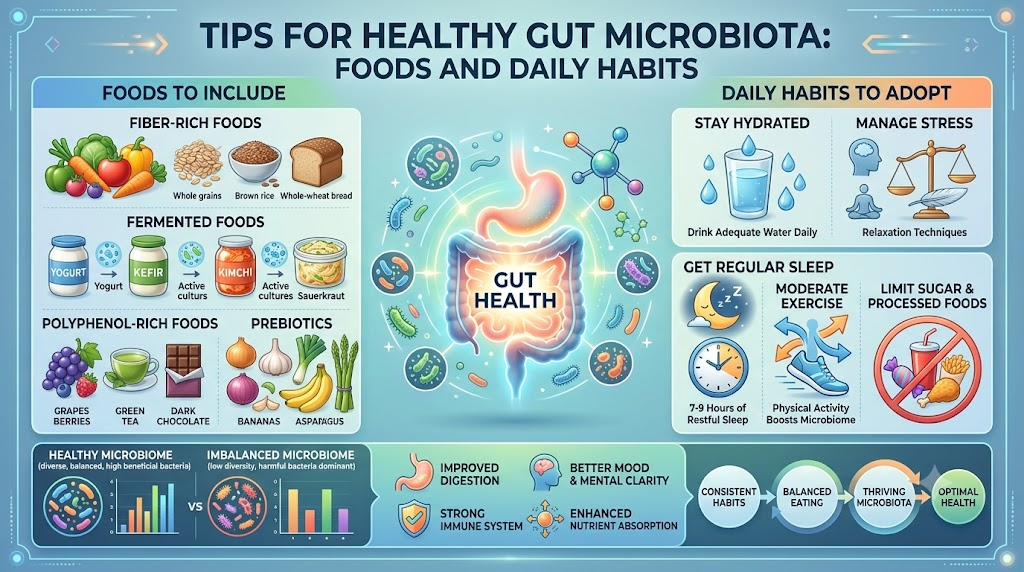
Your digestive system is home to many tiny living organisms. Together, they are called the gut microbiota. These organisms include bacteria, fungi, and other microbes that help break down certain foods and support normal digestion and immune function.
The foods you eat, how much you move, your sleep, stress levels, medicines, and health conditions can all affect your gut microbiota. There is no single food or supplement that can instantly make it healthy. Instead, simple, steady habits can help support gut microbiome health over time.
This article from GASTROHOSPITALS explains practical tips for healthy gut microbiota, including everyday food choices, hydration, movement, and knowing when to seek medical advice.
What Is Gut Microbiota?
Gut microbiota refers to the community of tiny living organisms found in your digestive tract, especially your large intestine. These organisms include bacteria, fungi, and other microbes. Many are helpful or harmless, while some may cause problems under certain conditions.
The gut microbiome usually refers to the microbes’ genetic material and the wider environment in which they live. Although people often use the two terms in similar ways, they have slightly different meanings.
Gut microbes help process parts of food that your body cannot fully digest on its own. For example, certain bacteria break down dietary fiber and produce substances that help support the lining of the intestine.
These microbes also interact with the gut lining and immune system. Their activity can help maintain a healthy balance in the digestive tract.
A healthy gut does not need to be free of every unwanted microbe. What matters is the overall balance and activity of the microbial community, along with the condition of the gut and the person’s health.
Gut microbiota differs from person to person. Age, diet, environment, medicines, and health conditions can all play a role. There is no single ideal microbiome that everyone must have.
Why Is Healthy Gut Microbiota Important?
Gut microbes have several roles in normal digestive health. They help break down some parts of food, including fibers that human digestive enzymes cannot fully process.
When microbes use certain fibers, they produce substances called short-chain fatty acids. These substances can help nourish cells in the colon and support the gut lining.
Gut microbes also interact with the immune system and help shape the environment in which different microorganisms live. These activities may support normal bowel function and help maintain the gut’s natural defenses.
Researchers are also studying links between the gut microbiome and conditions that affect other parts of the body. However, many of these links are still being explored. A change in gut microbes does not automatically mean it caused a disease, and changing the microbiome is not a proven cure for complex health conditions.
Eat a Variety of Fiber-Rich Foods
Dietary fiber is one of the most useful foods for many gut microbes. It is found in plant foods and helps support bowel regularity. Some types of fiber can also be used by gut bacteria during fermentation.
Try to eat a range of plant foods rather than relying on just one source. Different foods contain different types of fiber and other nutrients.
Good choices include:
- Whole grains: Oats, whole-wheat bread, barley, and brown rice.
- Beans and lentils: Chickpeas, kidney beans, peas, and other legumes.
- Fruits: Apples, pears, berries, and other fruits you enjoy.
- Vegetables: Carrots, broccoli, leafy greens, and seasonal vegetables.
- Nuts and seeds: Chia seeds, flaxseeds, and nuts, when suitable for you.
- Other plant foods: Choose a variety of locally available vegetables, grains, fruits, and pulses.
Increase fiber gradually, especially if you currently eat very little. A sudden increase can cause gas, cramps, or bloating. Drinking enough fluid can also help fiber support normal bowel movements.
People with conditions such as irritable bowel syndrome, inflammatory bowel disease, or bowel narrowing may need individual dietary advice. Some high-fiber foods can worsen symptoms for certain people, so personal tolerance matters.
Include Prebiotic Foods in Your Diet
Prebiotics are substances that certain helpful gut microbes can use. Many are specific types of dietary fiber found in everyday plant foods.
Prebiotic foods include onions, garlic, oats, beans, lentils, asparagus, and slightly green bananas. Other plant foods can also provide fibers that gut microbes use.
You do not need to eat every food on this list. Choose options that fit your usual meals and that your digestive system tolerates well.
Some prebiotic fibers can increase gas or bloating, particularly in people with sensitive digestion. Start with small amounts and adjust based on how you feel. Prebiotic foods can support a varied diet, but they do not cure digestive disorders or work the same way for everyone.
Consider Fermented Foods
Fermentation is a process in which microorganisms change food. Some fermented foods contain live microbes when eaten, but others may not. Heating, processing, and storage can affect whether live cultures remain in a product.
Examples of fermented foods include:
- Yogurt with live cultures.
- Kefir, a fermented milk drink.
- Kimchi, a fermented vegetable dish.
- Sauerkraut, made from fermented cabbage.
- Other safely prepared fermented foods familiar in your culture.
Read food labels if live cultures are important to you. Choose foods that have been safely prepared and stored. Some fermented products contain high amounts of salt or added sugar, so check the label when needed.
Fermented foods can be part of a balanced eating pattern. However, not every fermented food has proven probiotic benefits, and these foods are not a guaranteed treatment for bloating, constipation, or other gut problems.
Understand Probiotics and Their Limits
Probiotics are live microorganisms that provide a health benefit when taken in suitable amounts. Some are found in foods, while others are sold as capsules, powders, or drinks.
Some probiotic strains have evidence for specific uses. Their effects depend on the strain, dose, product, and condition being studied. A product that helps with one problem may not help with another.
Keep these points in mind:
- Not every product labeled “probiotic” has proven benefits.
- A higher number of live microbes does not automatically mean better results.
- Probiotic supplements are not necessary for every healthy person.
- Food and supplement labels may not tell you whether a product will help with your specific symptoms.
People with serious illnesses, weakened immune systems, or complex medical conditions should seek professional advice before using probiotic supplements. Do not use them as a replacement for prescribed treatment or medical assessment.
Drink Enough Water
Water supports normal digestion and helps fiber work effectively. Suitable fluid intake can soften stool and make bowel movements easier for many people.
Drink water regularly throughout the day. Your needs depend on your activity level, climate, diet, health, and medicines. You may need more fluid in hot weather or when you are physically active.
You do not need to force yourself to drink excessive amounts. Extra water does not remove toxins or directly balance gut bacteria. If a clinician has told you to limit fluids because of a heart, kidney, or other health condition, follow that advice.
Stay Physically Active
Regular movement supports general health and can help maintain regular bowel habits. It may also support well-being, sleep, and stress management.
Choose activities that fit your ability and routine, such as:
- Walking outdoors or indoors.
- Cycling at a comfortable pace.
- Dancing to music.
- Swimming, if suitable for you.
- Gentle stretching or other light movement.
If you have been inactive, begin with short sessions and increase gradually. Even small amounts of movement can be a useful starting point.
There is no single exercise routine proven to create the ideal gut microbiome for everyone. Focus on an activity you can enjoy and continue safely.
Get Enough Sleep and Manage Stress
Sleep, stress, and digestive symptoms can affect one another. Stress may change how the digestive system feels and works, while ongoing digestive problems may make it harder to sleep or relax.
Helpful habits include keeping a regular sleep schedule, allowing time to wind down before bed, and taking short breaks during busy days. Gentle breathing exercises, quiet hobbies, and spending time with supportive people may also help.
If stress feels difficult to manage, consider speaking with a qualified health professional. Stress can contribute to digestive symptoms, but it is not the only possible cause. Relaxation can support well-being, but it does not replace treatment for a digestive disease.
Limit Habits That May Affect Gut Health
Everyday choices can support digestive health without requiring a strict diet. Try to eat highly processed foods less often when they replace fiber-rich foods such as vegetables, fruits, whole grains, and legumes.
Limit excessive added sugar and avoid smoking. Limit or avoid alcohol according to your health needs, medicines, and personal circumstances.
Pay attention to foods that seem to trigger symptoms, but avoid removing whole food groups without a clear reason. A food that causes discomfort for one person may be well tolerated by another.
If a food repeatedly causes symptoms, keep a simple food and symptom record and discuss it with a clinician. Avoid extreme cleansing diets, unnecessary food restrictions, or products that promise to reset your microbiome.
How Antibiotics Can Affect Gut Microbiota
Antibiotics treat certain bacterial infections. They can also affect helpful gut bacteria, sometimes causing temporary changes in bowel habits or the balance of gut microbes.
Use antibiotics only when prescribed or otherwise directed by a qualified healthcare professional. Take them as instructed, and never share them or save leftover tablets for another illness. Do not skip doses or stop or change a prescribed course without contacting the prescribing clinician.
Ask a healthcare professional about persistent diarrhea or other symptoms during or after antibiotic use. Antibiotic-associated diarrhea can have different causes and may sometimes need prompt assessment.
Gut microbiota may recover over time after antibiotics, but the speed and extent of recovery vary. Probiotics are not a guaranteed way to prevent antibiotic-related problems, so ask a clinician whether one is appropriate for your situation.
A Simple Daily Routine for Gut Health
You do not need to change every habit at once. A manageable routine can help you build consistency while allowing you to notice what suits your body.
For example, you could:
- At breakfast: Eat oats or another whole grain, with fruit if you enjoy it.
- During meals: Add vegetables and include beans, lentils, or other fiber-rich foods when tolerated.
- Throughout the day: Drink suitable amounts of water according to your needs.
- For movement: Take a walk, cycle, or choose another activity that fits your ability.
- With snacks or meals: Include fermented foods if you like them and tolerate them.
- In the evening: Make time to relax and keep a steady sleep schedule.
You do not have to follow a perfect schedule. Consistent habits that fit your life are more useful than strict rules that are hard to maintain.
Foods That Can Support Gut Microbiota
| Food Group | Examples | How It May Help |
|---|---|---|
| Fiber-rich plant foods | Apples, pears, carrots, broccoli, leafy greens | Provide fiber and nutrients that support digestion and can feed gut microbes. |
| Whole grains | Oats, barley, whole-wheat bread, brown rice | Supply fiber that can support bowel regularity and microbial activity. |
| Legumes | Beans, peas, chickpeas, lentils | Provide fiber and plant protein; some fibers can be used by gut bacteria. |
| Prebiotic foods | Onions, garlic, asparagus, slightly green bananas | Contain fibers or other substances that certain gut microbes can use. |
| Fermented foods | Yogurt with live cultures, kefir, kimchi, sauerkraut | Some contain live microbes; benefits vary by food and preparation. |
Daily Habits for Digestive Health
| Habit | Practical Example | Helpful Reminder |
|---|---|---|
| Increase fiber gradually | Add oats, fruit, vegetables, or lentils over time. | A sudden increase may cause gas or bloating. |
| Drink suitable amounts of water | Keep water available and drink regularly. | Follow medical advice if you need to limit fluids. |
| Move regularly | Walk, cycle, swim, or stretch. | Start at a comfortable level and build gradually. |
| Get enough sleep | Keep a regular bedtime and wake-up time. | Sleep needs vary, and a steady routine may help. |
| Manage stress | Take breaks, breathe slowly, or connect with others. | Seek support if stress becomes difficult to manage. |
| Use antibiotics responsibly | Take prescribed antibiotics as directed. | Do not share, save, stop, or change them without medical advice. |
When Should You Seek Medical Advice?
Digestive symptoms can have many causes. Do not assume that ongoing discomfort means you have an unhealthy microbiome. Symptoms may be related to food intolerance, medicines, infections, or other medical conditions.
Speak with a healthcare professional if you have persistent diarrhea or constipation, ongoing abdominal pain or bloating, blood in your stool, unexplained weight loss, difficulty swallowing, or repeated vomiting. You should also seek advice if digestive symptoms interfere with work, sleep, eating, or daily activities.
Severe abdominal pain, significant bleeding, fainting, or signs of severe dehydration may require urgent medical care. Seek prompt help rather than trying to treat these symptoms with dietary changes or supplements.
A clinician can review your symptoms, medicines, and health history and decide whether tests or treatment are needed. Do not try to diagnose a microbiome disorder based on symptoms alone.
Frequently Asked Questions About Healthy Gut Microbiota
1. What is gut microbiota?
Gut microbiota is the community of microorganisms living in your digestive tract. It includes bacteria, fungi, and other microbes. Many help process certain foods, support the gut lining, and interact with the immune system. The types and amounts of microbes vary between people, so there is no single ideal microbiota for everyone.
2. Why is gut microbiota important for digestive health?
Gut microbes help break down some types of dietary fiber that the body cannot fully digest. They also produce substances that support the gut lining and interact with the immune system. A balanced microbial community contributes to normal digestive function, but it does not prevent every illness or guarantee freedom from digestive symptoms.
3. Which foods support healthy gut microbiota?
Fiber-rich foods such as oats, whole grains, beans, lentils, fruits, vegetables, nuts, and seeds can support gut microbes. Yogurt with live cultures and certain other fermented foods may also be suitable choices. Eating a variety of plant foods is generally more useful than relying on one special food or supplement.
4. What are prebiotic foods?
Prebiotic foods contain substances that certain gut microbes can use. Examples include onions, garlic, oats, beans, lentils, asparagus, and slightly green bananas. These foods can be part of a varied diet, but tolerance differs. If they cause gas or bloating, try smaller amounts and ask a healthcare professional for advice if symptoms persist.
5. Are fermented foods good for gut health?
Some fermented foods, including yogurt with live cultures, kefir, kimchi, and sauerkraut, may contribute to a balanced diet. However, not all fermented foods contain live microbes when eaten, and benefits vary. Choose safely prepared products and check labels for salt, added sugar, and live cultures when these details matter to you.
6. Do probiotic supplements improve gut microbiota?
Some probiotic supplements may help with specific conditions, but their effects depend on the strain, dose, product, and health concern. Not every supplement has proven benefits, and more microorganisms do not automatically mean better results. Healthy people do not necessarily need supplements. Seek medical advice before using them if you have a serious illness or weakened immune system.
7. How does fiber help gut bacteria?
Certain gut microbes use dietary fiber that the body cannot fully digest. During this process, they produce substances, including short-chain fatty acids, that can help support cells in the colon. Fiber also helps maintain bowel regularity. Increase fiber gradually and drink suitable amounts of fluid to reduce the chance of discomfort.
8. Can stress affect digestive health?
Yes. Stress can affect how the digestive system works and how strongly you notice symptoms such as pain, bloating, or changes in bowel habits. Sleep and digestive symptoms can also influence one another. Relaxation, regular sleep, and social support may help, but persistent or severe symptoms still need medical assessment.
9. Do antibiotics change gut microbiota?
Yes. Antibiotics treat certain bacterial infections but may also affect helpful gut bacteria. Microbial communities may recover over time, although recovery varies between people. Take antibiotics only as directed by a qualified healthcare professional. Contact your clinician if you develop persistent diarrhea during or after treatment, and do not assume probiotics will prevent every complication.
10. When should I see a doctor about digestive symptoms?
Seek medical advice for persistent diarrhea or constipation, ongoing abdominal pain or bloating, blood in your stool, unexplained weight loss, difficulty swallowing, or repeated vomiting. Get urgent care for severe abdominal pain, significant bleeding, fainting, or signs of severe dehydration. Do not rely on diet changes or supplements to manage serious or unexplained symptoms.
Conclusion
A varied diet, suitable hydration, regular movement, adequate sleep, and practical stress management can support general digestive health. There is no single diet or supplement that works for everyone, and gut microbiota naturally differs from person to person. Build manageable habits over time, and seek medical assessment for persistent or concerning digestive symptoms.