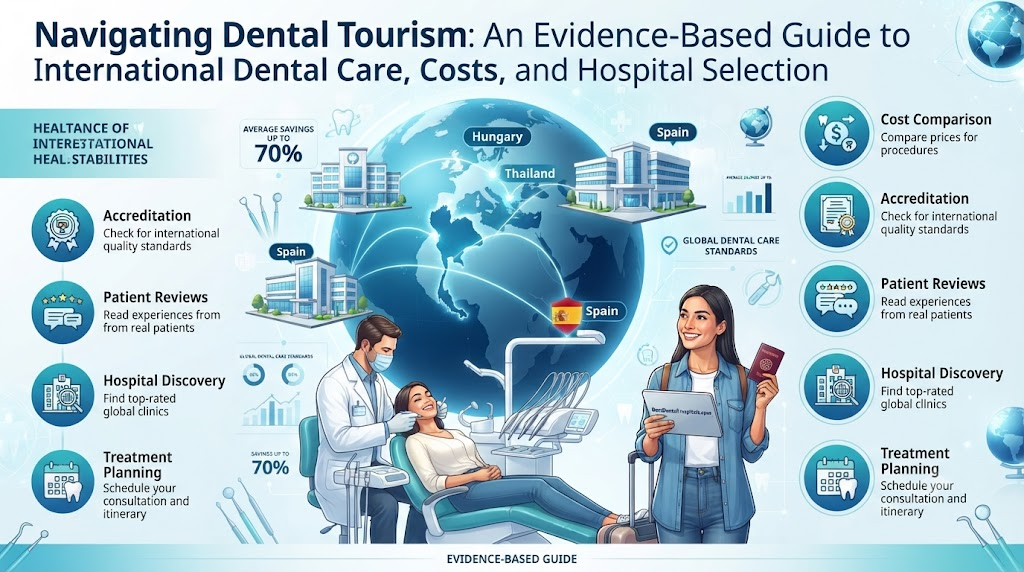
Navigating the landscape of international healthcare can feel overwhelming, especially when balancing clinical safety against significant financial savings. Over the past two decades, cross-border dental care—widely known as Dental tourism—has evolved from an unconventional alternative into a mainstream medical model for millions of patients worldwide. Driven by escalating domestic healthcare expenses, lack of comprehensive dental insurance coverage, and prolonged wait times in countries like the United States, the United Kingdom, Canada, and Australia, patients are actively seeking high-quality dental treatment abroad.This comprehensive guide serves as an independent resource to help you evaluate international dental care options objectively. Below, we break down treatment protocols, comparative destination dynamics, realistic cost factors, risk-mitigation strategies, and practical checklists to empower you to make informed decisions for your oral health.
What Is Dental Tourism?
Dental tourism refers to the practice of traveling outside one’s home country or domestic healthcare network to receive dental care. This cross-border movement encompasses a broad spectrum of services, ranging from routine preventive maintenance to complex surgical reconstructions.
+-------------------------------------------------------------------+
|                     SPECTRUM OF DENTAL TOURISM                     |
+--------------------------+----------------------------------------+
| Category                 | Scope of Treatment                     |
+--------------------------+----------------------------------------+
| Routine Dental Travel    | Cleanings, fillings, simple extractions|
| Cosmetic Dental Tourism  | Veneers, crowns, professional whitening|
| Implant Tourism          | Single or multiple dental implants     |
| Complex Reconstruction   | All-on-4, full-mouth rehabilitation    |
+--------------------------+----------------------------------------+
The Continuum of Care Abroad
- Routine Dental Travel: Short visits for basic preventive or restorative work. While less common as standalone journeys due to flight costs, these are frequently integrated into leisure travel.
- Cosmetic Dental Tourism: Travel specifically intended for aesthetic enhancements, such as porcelain veneers, composite bonding, or full-arch crown placements.
- Implant Tourism: Highly specialized travel focusing on titanium or zirconia dental implant placements, bone augmentation, and sinus lifting.
- Full-Mouth Rehabilitation & Complex Restorative Treatment: Advanced, multi-disciplinary care involving extensive surgical, periodontic, and prosthodontic interventions to rebuild broken-down oral structures.
Advantages and Inherent Limitations
The primary driver of international dental travel is financial accessibility. Patients can often access care from specialists utilizing state-of-the-art facilities at a fraction of domestic costs. Furthermore, many international centers streamline care into dedicated treatment windows, eliminating months of waiting lists.Conversely, the limitations must be acknowledged. Cross-border travel compresses treatment timeframes, which can limit the observation period required between surgical phases. Distance also introduces logistical challenges for follow-up care or managing immediate post-operative complications once the patient returns home.
Why Do People Seek Dental Treatment Abroad?
The decision to travel for healthcare is rarely based on a single factor. It usually stems from a combination of economic, structural, and access-related variables in the patient’s home country.
                      ┌──────────────────────────────┐
                      │    DRIVER FOR SEEKING CARE   │
                      └──────────────┬───────────────┘
                                     │
         ┌───────────────────────────┼───────────────────────────┐
         ▼                           ▼                           ▼
┌──────────────────┐        ┌──────────────────┐        ┌──────────────────┐
│  Cost Deficits   │        │ Access Bottlenecks│       │ Quality & Comfort│
│  High domestic   │        │ Long wait times  │        │ Advanced tech,   │
│  out-of-pocket   │        │ for specialist   │        │ resort-like care │
│  expenses        │        │ appointments     │        │ environments     │
└──────────────────┘        └──────────────────┘        └──────────────────┘
- Significant Cost Differences: In many Western nations, restorative and implant dentistry is classified as elective or specialized care, carrying high out-of-pocket fees. Operating costs, malpractice insurance premiums, and administrative overhead directly influence these domestic prices. International destinations often maintain lower operational overhead and living costs, allowing clinics to offer identical technology and materials at reduced prices.
- Specialist Availability and Technology: Top-tier international facilities often operate as integrated medical centers housing oral surgeons, prosthodontists, periodontists, and endodontists under one roof. Coupled with in-house CAD/CAM dental laboratories and 3D Cone Beam Computed Tomography (CBCT) scanners, these centers can execute complex diagnostics and treatment planning efficiently.
- Streamlined Timelines: Where public or private systems at home may require month-long delays between initial consultation, surgical placement, and prosthodontic fitting, specialized international centers structure concentrated appointment schedules designed for traveling patients.
- Combining Treatment with Travel: Many patients find value in recovering in comfortable, peaceful environments before returning to their daily routines.
Clinical Reality Check: A lower cost structure should never be the sole metric for selecting a provider. High-quality clinical standards, practitioner training, sterilization protocols, and long-term aftercare support must always take priority over initial cost savings.
How to Choose the Best Dental Hospital
Selecting an international treatment center requires thorough, objective research. Patients must evaluate facilities using strict healthcare criteria rather than relying on promotional brochures or social media marketing.
             ┌──────────────────────────────────────────────┐
             │         HOSPITAL SELECTION CHECKLIST         │
             └──────────────────────┬───────────────────────┘
                                    │
   ┌────────────────────────────────┼────────────────────────────────┐
   ▼                                ▼                                ▼
[Credentials & Staff]      [Facility & Technology]         [Administrative Safety]
 • Specialist Degrees       • Class-B Autoclaves            • Transparent Pricing
 • Professional Board       • In-house CBCT Scanning        • Documented Warranties
   Registrations            • Certified Implant Systems     • Direct Communication
1. Dentist Qualifications and Credentials
Verify that attending clinicians hold post-graduate specializations in their respective fields (e.g., Oral and Maxillofacial Surgery, Prosthodontics, Periodontics) from recognized universities. General dentistry degrees alone are insufficient for complex surgical reconstructions or advanced cosmetic designs.
2. Hospital and Clinic Experience
Examine the facility’s historical volume regarding your specific procedure. High-volume centers that regularly perform complex bone grafts, sinus lifts, and full-arch restorations typically possess more refined clinical workflows and emergency protocols.
3. Treatment Specialization
Ensure the center operates multi-disciplinary teams. A successful full-mouth reconstruction requires collaboration between surgical specialists (for implant placement) and prosthodontic specialists (for functional and aesthetic bite design).
4. International Accreditations
Look for accreditation from recognized international and national healthcare bodies. These may include Joint Commission International (JCI), ISO certifications (such as ISO 9001 for quality management and ISO 13485 for medical devices), or national health ministry accreditations.
5. Infection Control and Sterilization Protocols
Inquire directly about sterilization standards. Top-tier facilities utilize Class-B autoclave sterilizers, biological indicator testing, surgical suite air-filtration systems (HEPA), and strict single-use protocol policies for surgical consumables.
6. Advanced Diagnostic Technology
The facility must feature on-site 3D Cone Beam Computed Tomography (CBCT) imaging, digital intraoral scanners, and computer-guided implant planning software. Diagnostic accuracy relies on viewing 3D bone volume and nerve pathways prior to any surgical intervention.
7. Authentic Implant Systems and Material Traceability
Ensure the center works exclusively with globally recognized, peer-reviewed implant systems (e.g., Straumann, Nobel Biocare, Zimmer Biomet, Dentsply Sirona). Demand documentation that includes the specific brand, model, and serial batch numbers for any medical implants used.
8. Emergency Support and Surgical Safety
Confirm the availability of medical emergency infrastructure, including crash carts, oxygen supply, monitoring equipment, and established transfer protocols with nearby full-service acute care hospitals.
9. Transparent Pricing and Guarantee Policies
Reputable clinics provide clear, itemized pricing structures prior to travel and outline written policies regarding component replacement or corrective care in the event of mechanical or biological complications.
Best Countries for Dental Tourism: A Comparative Analysis
Choosing the right destination involves balancing travel distance, overall budget, regulatory environments, and specific clinical needs. Rather than relying on subjective rankings, evaluate prospective countries based on their structural advantages and operational considerations.
| Country | Popular Treatments | Cost Considerations | Specialist Availability | Travel Convenience | Important Considerations |
| Mexico | Implants, Crowns, All-on-4, Veneers | 60%–75% savings vs. US/Canada | Highly accessible in border hubs and major resort cities | Direct drive-in access for US border states; abundant flights | High variability between small border clinics and accredited medical hospitals |
| Turkey | Veneers, Smile Makeovers, Implants, Full Arch | 60%–70% savings vs. UK/Europe | Large pool of cosmetic specialists and oral surgeons | Excellent European and Middle Eastern flight connections | Ensure treatment plans prioritize conservative tooth preservation over heavy crowning |
| Hungary | Complex Restorative, Implants, All-on-4 | 50%–65% savings vs. Western Europe | Exceptionally high density of university-trained prosthodontists | Short flights across Europe; dedicated dental travel infrastructure | Strict adherence to European Union clinical regulations and protocols |
| Thailand | Cosmetic Dentistry, Implants, Restorative | 50%–65% savings vs. US/Australia | World-class JCI-accredited private hospital departments | Major international hub for Asian and Australasian travelers | Requires longer flight times for Western patients; plan healing around climate factors |
| India | Full-Mouth Rehabilitation, Implants, Zirconia | 70%–80% savings globally | Extensive network of highly educated, English-speaking specialists | Direct flights from major global cities | Variable local infrastructure; focus on accredited tertiary hospitals in major metros |
| Spain / Poland / Croatia | Implants, All-on-4, General Dentistry | 40%–60% savings vs. UK/Nordics | European-certified clinicians adhering to strict EU directives | Easy budget-airline connectivity within Europe | Excellent options for European patients seeking shorter travel times and familiar regulatory frameworks |
The optimal destination depends on your geographical location, required procedures, personal comfort with travel, and the total cost including flights and lodging.
Dental Implants Abroad: Clinical Pathways and Timelines
Understanding the clinical process of receiving dental implants abroad helps set realistic expectations and prevents costly scheduling mistakes.
PHASE 1: Diagnostic & Planning (Remote & Day 1)
 ├── Submission of 2D/3D X-rays remotely
 └── On-site 3D CBCT Scan, Intraoral Scan, & Surgical Planning
       │
       ▼
PHASE 2: Surgical Placement (Days 2 - 5)
 ├── Tooth Extraction & Bone Grafting (if required)
 ├── Titanium Fixture Insertion into Jawbone
 └── Placement of Immediate Healing Abutment or Temporary Prosthesis
       │
       ▼
HEALING PERIOD: Osseointegration (3 to 6 Months - Home Rest)
 └── Bone fuses to the titanium implant surface
       │
       ▼
PHASE 3: Prosthodontic Loading (Second Visit: 7 - 10 Days)
 ├── Uncovering Implant & Final Impression / 3D Digital Scan
 ├── Custom Abutment Fabrication & Crown / Bridge Fitting
 └── Final Occlusal Adjustment & Bite Verification
Step 1: Initial Comprehensive Evaluation and 3D Imaging
Before any surgery, the team performs a detailed clinical examination alongside 3D CBCT imaging. This scan evaluates bone density, height, and width, while mapping critical anatomy such as the inferior alveolar nerve and maxillary sinuses.
Step 2: Surgical Fixture Placement
Under local anesthesia or intravenous sedation, the oral surgeon prepares the bone site and inserts the titanium or zirconia implant fixture. If the existing bone structure is insufficient, supplementary procedures like bone grafting or sinus lifts are performed simultaneously.
Step 3: Osseointegration (The Healing Phase)
Osseointegration is the physiological process where living bone cells fuse directly to the surface of the implant fixture. This critical healing period typically takes:
- Mandible (Lower Jaw): 3 to 4 months
- Maxilla (Upper Jaw): 4 to 6 months
- Grafted Bone Sites: 6 to 9 months
During this period, patients wear a temporary protective prosthesis. Flying home during this phase is standard practice, provided initial surgical recovery is confirmed.
Step 4: Abutment Placement and Final Prosthodontic Loading
Once osseointegration is complete, the patient returns for the final phase. The surgeon uncovers the top of the implant, attaches a custom abutment, and takes a final digital impression. The dental laboratory then crafts the permanent ceramic, porcelain, or zirconia crown, bridge, or full-arch restoration, which is then securely fitted and checked for proper bite alignment.
Dental Implant Cost Comparison
Understanding international dental costs requires looking at total treatment expenses rather than just headline prices. Below is a comparative overview of single dental implant fees (implant fixture, abutment, and standard ceramic crown) across major international destinations compared to average domestic rates.
| Country | Estimated Single Implant Cost Range (USD) | What Typical Packages May Include | Potential Additional Expenses |
| United States | $3,500 – $6,000 | Basic fixture, abutment, crown | Diagnostics, CBCT, extractions, bone grafts, temporary crown |
| United Kingdom | $2,800 – $5,000 (£2,200 – £3,900) | Basic fixture, abutment, crown | Initial consultation fees, 3D scans, sinus lifts, sedations |
| Mexico | $800 – $1,800 | Fixture, abutment, standard crown, basic X-rays | Bone grafting, premium implant brands, temporary teeth |
| Turkey | $600 – $1,500 | Fixture, abutment, crown, local transfers | CBCT scans, premium zirconia upgrades, sinus lifting |
| Hungary | $900 – $2,000 | Fixture, abutment, crown, consultation | Extensive bone augmentation, specialized sedation, hotel packages |
| Thailand | $1,200 – $2,200 | Fixture, abutment, high-grade crown | Specialized hospital fees, night guards, diagnostic imaging |
| India | $500 – $1,200 | Fixture, abutment, basic crown | Digital surgical guides, complex bone regeneration, extractions |
Disclaimer: Cost ranges are operational estimates based on general global averages. Actual costs vary significantly based on patient anatomy, surgical complexity, required structural grafts, choice of implant system, surgeon expertise, and currency fluctuations.
How to Compare Dental Implant Quotes
A common mistake in medical travel is evaluating treatment options based on brief single-line quotes. A headline price of “$500 per implant” can easily double or triple once necessary surgical and restorative steps are factored in.
+-----------------------------------------------------------------------+
|                    ANATOMY OF A COMPREHENSIVE QUOTE                   |
+-----------------------------------------------------------------------+
|  [SURGICAL COMPONENTS]   [PROSTHODONTIC ELEMENTS]   [DIAGNOSTICS & EXTRA]|
|  • Implant Fixture       • Custom Abutment          • 3D CBCT Scans      |
|  • Surgical Placement    • Permanent Crown          • Local Anesthesia   |
|  • Bone Graft / Sinus    • Temporary Teeth          • Prescription Meds  |
|    Membranes (if needed) • Digital Bite Fitting     • Post-op Care Check |
+-----------------------------------------------------------------------+
When comparing quotes from different clinics, ensure every estimate includes the following breakdown:
- Diagnostic Imaging: Are 3D CBCT scans, digital intraoral scans, and panoramic X-rays included, or billed separately?
- Surgical Stage: Does the quote cover the implant fixture, soft tissue management, surgical guide, local anesthesia, and surgeon fees?
- Restorative Stage: Is the abutment prefabricated or custom-milled? Is the crown made of basic porcelain-fused-to-metal (PFM), lithium disilicate (E-Max), or solid monolithic zirconia?
- Supplementary Procedures: If bone grafting, sinus lifts, tooth extractions, or soft-tissue membranes are needed, are their costs clearly outlined?
- Temporary Restorations: Is a temporary crown or bridge provided while the implant fuses with the bone?
- Auxiliary and Support Services: Are airport transfers, local transportation, prescription medications, and translation services included?
Always ask for an itemized breakdown to avoid surprise costs during treatment.
Evaluating the Best Dental Implant Hospitals
When searching for top-tier implant centers, look beyond basic marketing claims. Highly capable facilities share specific clinical characteristics that ensure consistent surgical outcomes:
                      ┌──────────────────────────────┐
                      │    FACILITY EVALUATION FRAME │
                      └──────────────┬───────────────┘
                                     │
         ┌───────────────────────────┼───────────────────────────┐
         ▼                           ▼                           ▼
┌──────────────────┐        ┌──────────────────┐        ┌──────────────────┐
│ Clinical Setup   │        │ Material Trace   │        │ Digital Workflow │
│ On-site CBCT,    │        │ Top-tier global  │        │ Computer-guided  │
│ sterile surgical │        │ implant brands   │        │ placement, CAD/  │
│ suites           │        │ with passports   │        │ CAM diagnostics  │
└──────────────────┘        └──────────────────┘        └──────────────────┘
- Specialized Surgical Infrastructure: Look for dedicated surgical suites equipped with hospital-grade sterilization systems rather than standard multi-purpose dental operatories.
- Tier-1 Implant Brand Portfolios: Reputable hospitals exclusively use globally recognized implant systems (e.g., Straumann, Nobel Biocare, Dentsply Sirona). These brands provide lifetime component availability, ensuring that local dentists can easily obtain matching parts for maintenance years down the line.
- Integrated CAD/CAM and Guided Surgery: The center should utilize computer-assisted design (CAD) and computer-assisted manufacturing (CAM) alongside 3D-printed surgical guides. Guided implant placement significantly improves accuracy, reduces post-operative swelling, and lowers surgical risk.
- In-House Dental Laboratories: Hospitals with integrated dental laboratories maintain direct quality control over shade matching, material density, and structural fit, allowing for faster adjustments and reduced turnaround times.
All-on-4 Dental Implants Abroad: Indications and Realities
The All-on-4 dental implants technique, developed by Dr. Paulo Malo in partnership with Nobel Biocare, is a specialized treatment designed for fully edentulous (toothless) patients or those with severely broken-down dental arches.
                        Maxillary / Mandibular Arch
           ┌──────────────────────────────────────────────────┐
           │                                                  │
       Straight                                            Straight
       Implant                                             Implant
       (Anterior)                                         (Anterior)
          │        Tilted Implant      Tilted Implant        │
          │          (Posterior)        (Posterior)          │
          │         [30°- 45° Angle]   [30°- 45° Angle]       │
          ▼                ▼                  ▼              ▼
   └──────┴────────────────┴──────────────────┴──────────────┴──────┘
   ══════════════════════════════════════════════════════════════════
                      Full Fixed Bridge Prosthesis
How the Treatment Works
Instead of replacing every missing tooth root individually, the surgeon places four strategically positioned implants per arch:
- Two Front Implants: Inserted vertically into the dense anterior bone.
- Two Back Implants: Placed at an angle (typically between 30° and 45°) to avoid anatomical structures like the maxillary sinus or mental nerve. This angled placement maximizes contact with existing bone, often eliminating the need for complex bone grafts.
The Two-Stage Process
- Immediate Provisional Phase: On the day of surgery (or within 24 to 72 hours), a full acrylic provisional bridge is screwed into the four implants. This non-removable temporary bridge provides functional tooth replacement during healing.
- Final Prosthodontic Phase: After 4 to 6 months of osseointegration, the temporary bridge is replaced with a permanent full-arch restoration reinforced with titanium or zirconia.
Key Clinical Considerations
While highly effective, All-on-4 is not suitable for every patient. Success depends on adequate foundational bone density, healthy soft tissue, and strictly controlled bite forces. Patients with severe bruxism (teeth grinding) or unmanaged metabolic conditions like uncontrolled diabetes require customized treatment modifications.
Full Mouth Dental Implants Abroad
“Full mouth rehabilitation” is a broad medical term that encompasses various customized treatment approaches rather than a single standardized procedure.
                      ┌──────────────────────────────┐
                      │ FULL MOUTH RESTORATION PATHS │
                      └──────────────┬───────────────┘
                                     │
         ┌───────────────────────────┼───────────────────────────┐
         ▼                           ▼                           ▼
┌──────────────────┐        ┌──────────────────┐        ┌──────────────────┐
│ Fixed Arch       │        │ Extended Fixed   │        │ Implant-Retained │
│ Restorations     │        │ Restorations     │        │ Overdentures     │
│ All-on-4 /       │        │ 6 to 8 Implants  │        │ Removable, snap- │
│ All-on-6 bridges │        │ per arch         │        │ on bridge designs│
└──────────────────┘        └──────────────────┘        └──────────────────┘
- All-on-6 / All-on-8 Fixed Bridges: For patients with higher bone volume, placing 6 or 8 implants per arch provides additional support and distributes chewing forces more evenly.
- Implant-Retained Overdentures: A removable option where a complete denture snaps securely onto two to four implant locator attachments, offering improved stability compared to traditional loose dentures at a lower cost than fully fixed bridges.
- Segmented Fixed Implant Bridges: Individual multi-unit implant bridges distributed across different sections of the jaw. This approach restores natural dental spacing and makes long-term maintenance easier.
Every full-mouth reconstruction plan requires a personalized diagnostic design that factors in facial symmetry, phonetics, jaw joints (TMJ), and long-term functional stability.
Cosmetic Dentistry Abroad
Cosmetic dental treatments range from conservative surface enhancements to comprehensive aesthetic restructurings. Working with dedicated cosmetic specialists helps ensure safe, predictable, and natural-looking outcomes.
   CONSERVATIVE APPROACH                      INVASIVE APPROACH
┌──────────────────────────┐             ┌──────────────────────────┐
│ • Composite Bonding      │             │ • Full-Coverage Crowns   │
│ • Minimal-Prep Veneers   │     VS.     │ • Substantial Enamel     │
│ • In-Office Whitening    │             │   Reduction              │
│ • Gum Contouring         │             │ • Root Canal Risk        │
└──────────────────────────┘             └──────────────────────────┘
Core Cosmetic Modalities
- Porcelain Veneers: Thin, custom-milled ceramic shells bonded to the front surface of teeth. They require precise, minimal enamel reduction and are ideal for correcting discoloration, minor gaps, and light misalignments.
- Full-Coverage Dental Crowns: Used when a tooth is structural compromised or severely broken down. Avoid excessive reduction of healthy, intact teeth purely for cosmetic enhancement, as aggressive enamel removal can permanently damage natural tooth structure and lead to nerve complications.
- Digital Smile Design (DSD): Modern aesthetic centers use digital simulation tools to model final tooth proportions, lip dynamics, and facial alignment before any preparation begins, allowing patients to preview and approve their expected results.
Dental Treatment Abroad: Complete Step-by-Step Process
Following a clear, methodical path helps ensure clinical safety and keeps your treatment timeline on track.
[Phase A: Preparation] ──► [Phase B: Travel & Care] ──► [Phase C: Recovery]
 1. Remote Assessment       5. In-person Diagnostic      8. Surgical Recovery
 2. Records Transfer        6. Informed Consent          9. Final Fitting
 3. Secondary Opinions      7. Clinical Execution       10. Home Aftercare
 4. Logistics & Travel                                  11. Local Follow-up
Step 1: Documenting Your Dental History
Obtain recent panoramic X-rays, 3D CBCT scans (if available), and digital photos of your teeth and gums from a local provider.
Step 2: Preliminary Remote Consultations
Send your diagnostic files to shortlisted international hospitals. Request a preliminary assessment outlining prospective treatment options, total projected costs, required travel stays, and necessary healing periods.
Step 3: Comparative Analysis and Provider Verification
Review treatment plans based on clinical detail rather than price alone. Verify clinician credentials, national board registrations, and hospital safety accreditations.
Step 4: Finalizing Travel Planning
Book flexible travel arrangements that allow for extra days in destination in case adjustments or extended recovery are needed. Confirm your booking directly with the clinic’s international patient coordinator.
Step 5: On-Site Diagnostic Evaluation
Upon arrival, undergo an in-person clinical exam and fresh 3D CBCT imaging to confirm that your jawbone, soft tissues, and bite alignment match the initial remote plan.
Step 6: Reviewing Informed Consent
Review detailed consent documents outlining expected treatment outcomes, alternative options, potential complications, and specific post-operative care instructions.
Step 7: Clinical Execution
Undergo your planned procedures, keeping communication open with your clinical team regarding comfort, pain management, and healing progress.
Step 8: Initial On-Site Recovery and Final Fitting
Remain near the hospital for the mandatory observation period. Ensure any provisional or permanent restorations are thoroughly checked for fit, comfortable biting alignment, and natural function before departing.
Step 9: Returning Home and Long-Term Care
Follow all post-treatment home care instructions, complete prescribed antibiotic or anti-inflammatory regimens, and schedule routine maintenance checks with a cooperative local dentist.
Risks, Complications, and Risk Mitigation in Dental Tourism
All medical procedures carry potential risks. Understanding these possibilities allows you to take proactive steps to minimize complications.
+-------------------------------------------------------------------------+
|                  RISK FACTOR & MITIGATION MATRIX                        |
+--------------------------+----------------------------------------------+
| Risk Identified          | Prevention / Mitigation Action               |
+--------------------------+----------------------------------------------+
| Early Implant Failure    | Mandate 3D CBCT bone assessment; avoid smoking|
| Malocclusion (Bite Errors)| Insist on digital bite-mapping prior to exit|
| Infection                | Verify Class-B autoclave sterilization      |
| Communication Gaps       | Work with dedicated multilingual coordinators|
| Domestic Continuity Loss | Secure complete surgical records & component ID|
+--------------------------+----------------------------------------------+
Potential Risks
- Biological Complications: Infection at surgical sites, delayed bone integration, nerve paresthesia, or sinus inflammation following maxillary surgery.
- Mechanical Complications: Micro-fractures in ceramic materials, screw loosening, or incorrect bite alignment (malocclusion) that creates strain on jaw joints.
- Travel-Related Stress: Flying shortly after major oral surgery can exacerbate swelling or discomfort due to cabin pressure changes.
- Continuity of Care Challenges: Finding local dentists willing to service unfamiliar or non-standard implant components after you return home.
Practical Risk Reduction Strategies
- Never Rush Healing Timelines: Allow adequate time for bone integration. Avoid clinics that offer to compress multi-month surgical healing phases into a few days.
- Insist on Major Implant Brands: Choosing globally supported implant platforms ensures local practitioners can easily source compatible drivers, abutments, and replacement screws if adjustments are needed later.
- Bring Home Complete Documentation: Secure copies of your 3D CBCT scans, treatment summary reports, surgical notes, and official implant passport documentation detailing lot numbers and component dimensions.
Comprehensive Aftercare After Dental Treatment Abroad
A successful clinical outcome depends heavily on rigorous post-operative care and long-term oral hygiene.
                  POST-TREATMENT RECOVERY TIMELINE
┌────────────────────────┬────────────────────────┬────────────────────────┐
| Days 1 - 7: Acute Phase| Days 8 - 30: Healing   | Months 2+: Long-term   |
├────────────────────────┼────────────────────────┼────────────────────────┤
| • Soft/liquid diet     | • Gradual soft food    | • Return to normal diet|
| • Prescribed rinses    | • Gentle brushing      | • Dedicated flossing   |
| • Ice pack application | • Avoid heavy lifting  | • Local hygiene visits |
└────────────────────────┴────────────────────────┴────────────────────────┘
Immediate Post-Operative Management (Days 1 to 14)
- Dietary Protocol: Stick to cold or room-temperature liquid and soft foods (e.g., smoothies, pureed soups, scrambled eggs) to protect surgical sites from mechanical pressure.
- Infection Prevention: Use prescribed chlorhexidine antiseptic rinses as instructed, avoiding aggressive spitting or sucking through straws, which can dislodge blood clots.
- Swelling and Pain Control: Apply cold ice packs externally in 15-minute intervals during the first 48 hours to minimize facial swelling. Take all prescribed medications as directed.
Long-Term Maintenance
Implant restorations require the same meticulous care as natural teeth. Bacterial buildup around implants can cause peri-implantitis—an inflammatory condition that leads to bone loss and potential implant failure. Maintain your results with daily interdental cleaning, water flossing, non-abrasive brushing, and routine professional cleanings every six months.
Dental Tourism Travel Checklist
Proper travel preparation reduces stress and helps keep your recovery period comfortable and safe.
               TRAVEL & LOGISTICAL CLEARANCE DOCKET
┌─────────────────────────────────────────────────────────────────┐
│ [ ] Passport valid for 6+ months beyond return date             │
│ [ ] Medical/Dental travel insurance with complication coverage  │
│ [ ] Physical & digital copies of 2D/3D dental records           │
│ [ ] Written treatment quote and signed treatment plan           │
│ [ ] Adequate supply of routine personal medications             │
│ [ ] Soft-food meal plan and recovery arrangements               │
└─────────────────────────────────────────────────────────────────┘
- Travel Documents: Passport valid for at least 6 months, required travel visas, and clear confirmation of hotel and flight bookings.
- Medical Records Portfolio: Physical and digital copies of your dental records, baseline X-rays, 3D CBCT scans, medical history summaries, and current medication lists.
- Specialized Travel Insurance: Secure a travel insurance policy that explicitly includes medical and dental coverage, as well as provisions for unexpected travel disruptions or emergency returns.
- Financial Arrangements: Notify your banks of upcoming foreign transactions to prevent card holds, and confirm accepted payment methods (e.g., credit card, wire transfer, local cash) with your clinic beforehand.
- Post-Operative Essentials: Pack comfortable button-down clothing (to avoid pulling shirts over surgical areas), travel ice packs, soft neck pillows, and recommended post-op oral care supplies.
Dental Tourism Cost Checklist
Calculating the true cost of cross-border care requires accounting for travel expenses alongside clinical fees. Use this formula to estimate your total outlay:
$$\text{Total Cost} = \text{Dental Procedures} + \text{Diagnostics} + \text{Flights} + \text{Lodging} + \text{Local Travel} + \text{Medications} + \text{Contingency Fund}$$
+-------------------------------------------------------------------+
|                  TOTAL COST BUDGET WORKSHEET                      |
+------------------------------------+------------------------------+
| Expense Line Item                  | Estimated Outlay             |
+------------------------------------+------------------------------+
| Clinical Procedures & Surgery      | $___________________________ |
| Diagnostic CBCT / X-rays / Scans   | $___________________________ |
| Roundtrip Airfare / Transport      | $___________________________ |
| Hotel / Lodging (Primary & Return) | $___________________________ |
| Daily Meals & Soft-Food Supplies   | $___________________________ |
| Travel & Complications Insurance   | $___________________________ |
| Emergency / Contingency Reserve    | $___________________________ |
+------------------------------------+------------------------------+
| ESTIMATED GRAND TOTAL              | $___________________________ |
+------------------------------------+------------------------------+
Including a 10%–15% contingency reserve ensures you are financially prepared if additional diagnostics, extra recovery days, or unexpected prescription needs arise.
Dental Tourism: Balancing Price vs. Quality
Seeking savings on dental care should never mean compromising on clinical safety. The safest, most cost-effective path is finding a high-quality provider operating in a favorable economy—not choosing the lowest bidder.
       HIGH PRICE                                    LOW PRICE
┌──────────────────────────┐             ┌──────────────────────────┐
│  Domestic Overhead       │             │  Aggressive Bargains     │
│  • Malpractice insurance │     VS.     │  • Unnamed implants      │
│  • Real estate fees      │             │  • Compressed timelines  │
│  • High labor costs      │             │  • Unclear warranties    │
└─────────────┬────────────┘             └─────────────┬────────────┘
              │                                        │
              └───────────────────┬────────────────────┘
                                  ▼
                    OPTIMAL DENTAL TOURISM ZONE
              ┌──────────────────────────────────────┐
              │  • Internationally accredited center │
              │  • Documented Tier-1 implants        │
              │  • Favorable foreign exchange rates  │
              │  • Verified specialist expertise     │
              └──────────────────────────────────────┘
Focus your decision on overall value rather than price alone. A deeply discounted quote may reflect lower-grade implant systems, omitted diagnostic scans, rushed surgical appointments, or lack of structured follow-up care. True value comes from combining experienced specialists, advanced facility standards, top-tier materials, and transparent pricing.
Key Evaluation Metrics Summary Table
Use this reference table to evaluate prospective dental hospitals, surgical teams, and treatment proposals before committing to care.
| Evaluation Metric | What to Look For | Clinical Significance | Key Warning Signs |
| Clinician Credentials | University post-graduate specialization in Oral Surgery or Prosthodontics | Ensures advanced training for complex bone and restoration work | General dentistry degree alone attempting multi-unit surgical reconstructions |
| Facility Accreditation | International (JCI, ISO) or recognized national health ministry standards | Verifies compliance with global hygiene, safety, and operational protocols | Lack of verifiable institutional licensing or refusal to detail sterilization standards |
| Diagnostic Setup | On-site 3D CBCT, digital intraoral scanners, computer-guided software | Essential for mapping nerves, sinus cavities, and precise implant positioning | Reliance solely on basic 2D panoramic X-rays for surgical planning |
| Material Traceability | Tier-1 global implant brands (e.g., Straumann, Nobel Biocare) with passports | Guarantees long-term material safety and global component availability | Unbranded or generic implants without official manufacturer documentation |
| Cost Transparency | Itemized quotes covering diagnostics, surgery, abutments, crowns, and medicine | Prevents unexpected fees and allows for accurate side-by-side comparisons | Lump-sum “all-inclusive” quotes that lack detailed breakdowns of individual components |
| Aftercare Structure | Written follow-up protocols, emergency contacts, and clear warranty terms | Ensures continuity of care and support in the event of post-op complications | Absence of written post-operative care plans or failure to outline warranty terms |
Identifying Trustworthy Dental Providers vs. Red Flags
Distinguishing between reliable medical providers and unsafe commercial operators is critical when planning care abroad.
   POSITIVE SIGNALS                        WARNING FLAGS
┌──────────────────────────┐             ┌──────────────────────────┐
│ Clear, itemized plans    │             │ Unrealistic guarantees   │
│ Full 3D CBCT diagnostics │     VS.     │ Pressure to book fast    │
│ Verified credentials     │             │ Vague material brands    │
│ Written aftercare terms  │             │ No medical history check │
└──────────────────────────┘             └──────────────────────────┘
Positive Signals
- Provides clear, itemized treatment quotes detailing each step and component.
- Insists on reviewing 3D CBCT imaging before confirming surgical plans.
- Employs specialists with verifiable board certifications and international memberships.
- Maintains open, direct communication with attending clinical staff.
- Features clear, written policies regarding post-operative support and warranties.
Critical Red Flags
- Promises “100% guaranteed, lifetime success” on complex surgical procedures.
- Pressures you to make immediate deposits through aggressive sales tactics.
- Refuses to disclose specific implant brands, materials, or laboratory sources.
- Promotes extreme cosmetic preparation (e.g., filing down healthy teeth into pegs) over conservative care.
- Avoids answering detailed questions regarding sterilization methods or emergency protocols.
Tailoring Dental Tourism to Specific Patient Needs
Different clinical situations require different approaches to planning cross-border care.
                      ┌──────────────────────────────┐
                      │ CLINICAL CASE STRATIFICATION │
                      └──────────────┬───────────────┘
                                     │
         ┌───────────────────────────┼───────────────────────────┐
         ▼                           ▼                           ▼
┌──────────────────┐        ┌──────────────────┐        ┌──────────────────┐
│ Single Tooth     │        │ Cosmetic Arch    │        │ Full Reconstruct │
│ Short stay, 2    │        │ High aesthetic   │        │ Multi-stage, 3D  │
│ surgical phases  │        │ lab focus, DSD   │        │ guided, grafting │
└──────────────────┘        └──────────────────┘        └──────────────────┘
- Single or Multiple Missing Teeth: Typically straightforward. Treatment involves two short visits spaced 3 to 6 months apart to allow for proper bone integration before final crown placement.
- Full Arch or Full Mouth Restoration: Complex and multi-staged. Requires comprehensive surgical, prosthodontic, and bite evaluation, often with extended healing windows between visits.
- Aesthetic Smile Redesigns: Focuses heavily on conservative preparation, material selection, and mock-up trials to ensure natural-looking results before final porcelain bonding.
- High-Risk / Medically Compromised Patients: Individuals with controlled diabetes, cardiovascular conditions, or histories of bisphosphonate medication require extra medical coordination between their local physician and the treating surgeon.
Common Mistakes to Avoid
Avoiding these frequent missteps will help keep your treatment plan on track and protect your long-term health:
- Selecting Facilities Based Solely on the Lowest Price: Extremely cheap quotes often come at the expense of material quality, practitioner experience, or diagnostic thoroughness.
- Booking Non-Refundable Travel Too Early: Always confirm your preliminary treatment plan with the clinical team before finalizing non-flexible flights or hotel reservations.
- Underestimating Required Recovery Time: Scheduling active sightseeing or packed travel itineraries during acute surgical recovery can compromise healing and increase infection risks.
- Failing to Identify Local Follow-Up Care: Before traveling, secure a cooperative local dentist who is willing to perform routine hygiene and checkups once you return home.
- Overlooking Implant Component Compatibility: Choosing rare or obscure regional implant brands can make sourcing replacement parts difficult if maintenance is needed later.
Expert Tips for International Dental Patients
- Request a Digital Copy of Your 3D CBCT Scans: Keep your raw DICOM scan files on a USB drive or cloud storage so you can easily share them with future care providers.
- Ask for an Implant Passport: Ensure your surgeon completes an official implant passport detailing the exact brand, model, diameter, length, and batch lot numbers for every placed fixture.
- Verify Bite Comfort Before Leaving: Pay close attention to your bite alignment during final fittings. Speak up immediately if a crown or bridge feels uneven—it is much easier for the laboratory to make fine adjustments while you are still at the clinic.
- Keep Communication Open: Maintain direct contact with your international patient coordinator after returning home, and send regular photo updates during your healing period.
Frequently Asked Questions (FAQs)
1. What is dental tourism?
Dental tourism involves traveling across international borders to receive dental care, ranging from routine treatments to specialized implant surgeries and complex cosmetic work.
2. Is receiving dental treatment abroad safe?
Yes, provided you carefully research and select accredited hospitals, verify specialist qualifications, and confirm strict infection-control standards. Safety depends on provider quality rather than geography.
3. How much can I realistically save through dental tourism?
Depending on the destination and procedure complexity, total savings typically range from 50% to 75% compared to domestic costs in the US, UK, Canada, or Australia, even after accounting for travel expenses.
4. Why are dental procedures so much cheaper in certain countries?
Lower prices are primarily driven by lower regional operating overhead, reduced real estate costs, lower malpractice insurance premiums, and favorable currency exchange rates—not lower clinical standards.
5. Can I complete dental implants in a single trip?
While provisional temporary teeth can sometimes be placed immediately, permanent implants usually require two visits spaced 3 to 6 months apart to allow time for proper bone integration (osseointegration).
6. What is the difference between All-on-4 and traditional implants?
All-on-4 uses four strategically angled implants to support a full arch bridge, often eliminating the need for bone grafting. Traditional full-arch approaches may use 6 to 8 vertical implants per arch.
7. What happens if I experience complications after returning home?
Reputable international hospitals provide clear warranty terms, post-operative guidance, and remote consultation support. It is also important to maintain a relationship with a cooperative local dentist for routine care.
8. How do I verify an international dentist’s credentials?
Check that the practitioner holds post-graduate clinical degrees from recognized universities and is registered with their national dental board or medical council.
9. What diagnostic imaging should I get before traveling?
A 3D Cone Beam Computed Tomography (CBCT) scan is the gold standard for implant planning, as it provides a clear 3D view of bone volume, density, and surrounding nerve pathways.
10. Are international dental hospital accreditations important?
Yes. Accreditations from organizations like Joint Commission International (JCI) or ISO verify that a facility meets strict international benchmarks for patient safety, clinical quality, and hygiene.
11. What is an implant passport and why do I need one?
An implant passport is an official document provided by your surgeon that records the brand, system, model, lot number, and dimensions of your implants. It ensures any dentist worldwide can source compatible parts for future care.
12. Is cosmetic dentistry abroad safe for my natural teeth?
Cosmetic procedures are safe when performed by experienced specialists who prioritize conservative treatment approaches (such as thin porcelain veneers) over unnecessary tooth reduction.
13. What should I look for in a dental implant quote?
Ensure your quote is fully itemized, breaking down costs for diagnostic imaging, surgical placement, abutments, crowns, temporary teeth, medications, and any required bone grafting or sinus lifting.
14. Should I purchase special travel insurance for dental care abroad?
Yes. Look for dedicated medical travel policies that cover health emergencies, travel disruptions, and potential treatment revisions.
15. How long do I need to stay in destination for dental implants?
Initial surgical visits usually require 5 to 10 days for diagnostic work, surgery, and initial recovery observation. The second visit for final crown or bridge fitting typically lasts 7 to 10 days.
Conclusion
Dental tourism offers a practical, high-value path for patients seeking accessible, high-quality dental treatment. However, achieving a successful clinical outcome requires moving beyond headline savings and approaching your care with research, clear safety criteria, and realistic expectations.By carefully evaluating prospective hospitals, verifying specialist qualifications, insisting on high-quality materials, and budgeting for the complete travel process, you can navigate international care with confidence. Prioritize patient safety, thorough diagnostics, and long-term aftercare over short-term savings—and always consult with qualified healthcare professionals to ensure your treatment plan is tailored to your unique needs.