Introduction
Colorectal cancer is one of the most preventable forms of cancer when caught early, yet many individuals feel hesitant or overwhelmed by the screening process. Knowing what to expect and understanding the preparation steps can significantly reduce anxiety and ensure a smooth experience. Colorectal cancer screening helps detect precancerous polyps and early-stage cancer before symptoms develop. Proper bowel preparation is one of the most important factors in ensuring an effective colonoscopy because it allows doctors to clearly examine the lining of the colon (Gastroenterology Association).This comprehensive educational guide explores why screening matters, the different types of tests available, detailed preparation instructions, and how to select a quality facility. For reliable educational resources, hospital comparisons, and patient guidance, readers can explore GASTROHOSPITALS.
What Is Colon Cancer Screening?
Colon cancer screening encompasses a series of medical tests used to examine the large intestine (colon and rectum) for signs of abnormalities, precancerous growths, or malignancy.The primary purpose of screening is prevention and early detection. Unlike diagnostic testing, which is performed when a patient presents with active gastrointestinal symptoms, screening is intended for individuals who feel completely healthy and have no obvious warning signs.Detecting precancerous growths—known as polyps—during routine screening allows doctors to remove them before they have any chance to develop into cancer. This proactive approach makes colorectal screening uniquely effective compared to many other types of medical evaluations.
Who Should Consider Colon Cancer Screening?
Screening guidelines are designed to catch potential issues early across various risk categories.
Average-Risk Adults
Many organizations recommend regular screening beginning at age 45 for adults at average risk, while some people at higher risk may need earlier screening based on medical history (American Cancer Society).
People with a Family History of Colorectal Cancer
Individuals who have a parent, sibling, or child diagnosed with colorectal cancer often require earlier and more frequent evaluations.
Individuals with Inflammatory Bowel Disease
Conditions such as Crohn’s disease or ulcerative colitis increase long-term risks, necessitating specialized screening schedules.
Patients with Genetic Risk Factors
Inherited syndromes, such as Lynch syndrome or familial adenomatous polyposis, require tailored surveillance protocols.
People with Certain Digestive Symptoms
Persistent changes in bowel habits, unexplained weight loss, or rectal bleeding warrant prompt diagnostic evaluation rather than routine screening alone.
Types of Colon Cancer Screening Tests
Different screening modalities offer varying levels of invasiveness and diagnostic precision.
Colonoscopy
Considered the gold standard, this procedure examines the entire colon using a flexible, lighted tube equipped with a camera, allowing physicians to detect and remove polyps during the same session.
Fecal Immunochemical Test (FIT)
A non-invasive home stool test that checks for hidden, microscopic blood originating from the lower digestive tract.
Stool DNA Test
Analyzes stool samples for abnormal DNA biomarkers alongside hidden blood, serving as another convenient home-based option.
CT Colonography
Also known as a virtual colonoscopy, this procedure utilizes advanced X-ray imaging and computerized tomography to generate 3D views of the colon.
Flexible Sigmoidoscopy
Examines the rectum and lower portion of the colon using a short, lighted scope.
A positive non-invasive screening test often requires a follow-up colonoscopy to investigate findings further (U.S. Food and Drug Administration).
Colon Cancer Screening Comparison Table
| Screening Test | Purpose | Patient Benefit |
| Colonoscopy | Examine the entire colon | Detects and removes polyps during the same procedure |
| FIT | Detect hidden blood in stool | Non-invasive screening |
| Stool DNA Test | Detect abnormal DNA and blood | Home-based screening option |
| CT Colonography | Imaging of the colon | Minimally invasive evaluation |
| Flexible Sigmoidoscopy | Examine lower colon | Useful for selected patients |
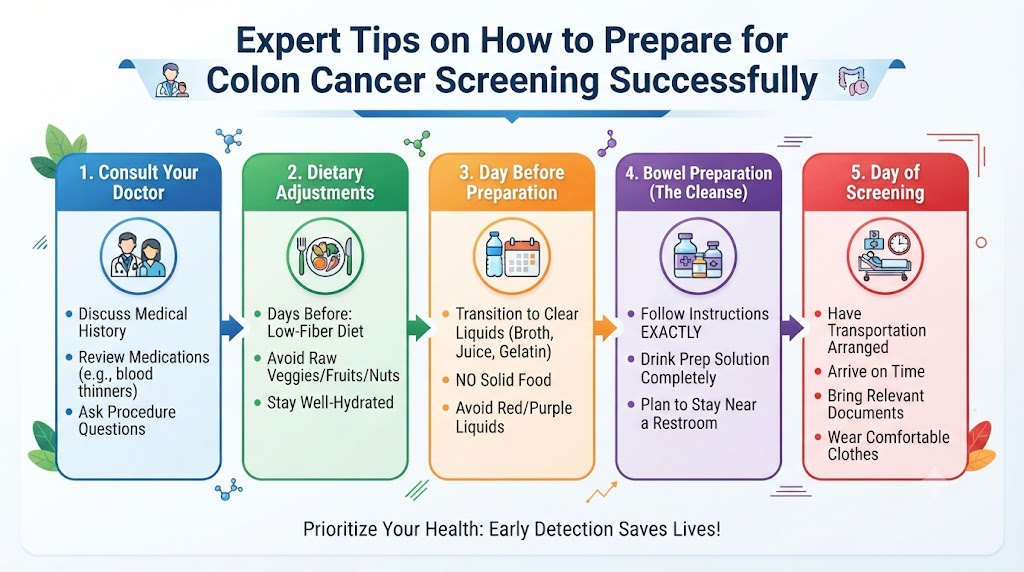
How to Prepare for a Colonoscopy
Achieving a successful, clear examination depends heavily on meticulous preparation in the days leading up to the appointment.
- Follow Dietary Instructions: Gradually transition to a low-fiber diet several days before the procedure, avoiding seeds, nuts, and raw vegetables.
- Switch to a Clear Liquid Diet: On the day before the procedure, consume only clear liquids such as broth, clear juices, tea, and water—no red or purple dyes.
- Take Bowel Preparation Medication Exactly as Directed: Follow your physician’s schedule for drinking the prescribed cleansing solution to completely empty the colon.
- Stay Hydrated: Drink plenty of approved clear liquids throughout the preparation process to maintain hydration.
- Discuss Medications with Your Doctor: Inform your care team about all prescription drugs, especially blood thinners or diabetes medications, well in advance.
- Arrange Transportation Home: Because sedation impairs reflexes, ensure a responsible adult is available to drive you home after the procedure.
- Follow Appointment Instructions Carefully: Arrive at the facility on time with all required paperwork and insurance documents.
A clean bowel is essential for a successful colonoscopy because it allows the doctor to clearly view the colon lining and detect polyps or abnormalities. Split-dose bowel preparation is commonly recommended for better cleansing (Gastroenterology Association).
What Happens During the Screening?
Knowing the step-by-step clinical process helps demystify the day of the procedure.
- Registration and Preparation: Checking in at the facility, reviewing medical history, and changing into a gown.
- Sedation (If Required): An intravenous line is placed by the anesthesia team to administer relaxing medications, ensuring comfort.
- Colonoscopy Procedure: The gastroenterologist gently guides the flexible colonoscope through the rectum and colon while monitoring high-resolution screens.
- Polyp Removal (If Needed): Special instruments passed through the scope allow painless removal of any discovered polyps or tissue samples.
- Recovery Area: Patients are wheeled to a quiet recovery bay where vital signs are monitored as the sedation wears off.
- Receiving Initial Results: The physician discusses initial findings with the patient and their accompanying driver before discharge.
What to Expect After the Procedure
Post-procedure recovery is generally straightforward, but specific guidelines ensure safety.
- Recovery from sedation: Mild drowsiness may persist for a few hours as the sedative medications clear your system.
- Mild bloating or gas: Air introduced during the procedure can cause temporary cramping, which resolves quickly with normal gas passage.
- Returning to normal eating: Most patients can resume a regular diet shortly after leaving the facility, unless instructed otherwise.
- Follow-up instructions: Adhere to all activity restrictions, such as avoiding driving or operating machinery for the rest of the day.
- When biopsy results may be available: Final pathology reports from removed polyps typically take several days to process.
- Warning signs that require medical attention: Contact your doctor immediately if you experience severe abdominal pain, high fever, or heavy rectal bleeding.
Choosing the Right Gastroenterology Hospital
Selecting an appropriate healthcare facility ensures access to high standards of clinical safety and diagnostic accuracy.
- Experienced Gastroenterologists: Board-certified specialists with extensive training in endoscopic procedures.
- Modern Endoscopy Units: Facilities equipped with advanced high-definition imaging scopes and sterile processing systems.
- Advanced Imaging Equipment: State-of-the-art technology that enhances polyp detection rates.
- High-Quality Bowel Preparation Guidance: Clear, patient-friendly instructions that optimize cleansing outcomes.
- Patient Safety Protocols: Strict adherence to infection control, monitoring, and emergency preparedness standards.
- Comfortable Recovery Facilities: Calm, supportive environments designed for post-procedure rest.
- Follow-Up Care: Structured pathways for communicating biopsy results and scheduling future intervals.
Hospital Selection Checklist
| Feature | Why It Matters |
| Experienced Gastroenterologists | Accurate evaluation |
| Modern Endoscopy Equipment | High-quality imaging |
| Patient Education | Better preparation |
| Safe Sedation Services | Improved comfort and safety |
| Pathology Support | Accurate biopsy analysis |
| Follow-Up Care | Ongoing digestive health management |
Benefits of Early Colon Cancer Screening
Proactive participation in recommended screening schedules offers profound health advantages.
- Detecting polyps before they become cancerous: Removing benign growths stops cancer before it ever starts.
- Finding cancer at an earlier stage: Early detection drastically increases the success rate of treatment options.
- Supporting timely treatment: Streamlines medical interventions when conditions are most manageable.
- Reducing the risk of advanced disease: Lowers overall mortality rates associated with colorectal malignancies.
- Improving long-term digestive health: Fosters greater awareness and proactive management of gut wellness.
How GASTROHOSPITALS Helps Patients
Navigating digestive health information requires dependable, expert-backed resources. Platforms like GASTROHOSPITALS support individuals by offering:
- Digestive Health Education: Providing clear, accessible guides on gastrointestinal conditions and preventive care.
- Hospital Discovery: Helping users locate specialized gastroenterology centers and screening clinics nearby.
- Colon Cancer Screening Awareness: Promoting community understanding of why regular screening saves lives.
- Gastroenterology Resources: Offering structured insights to evaluate procedural standards and hospital capabilities.
- Patient Guidance: Equipping readers with effective questions to ask their healthcare providers.
- Helping readers make informed digestive healthcare decisions: Empowering individuals to take charge of their long-term health.
Common Mistakes People Mistakes
- Not completing bowel preparation: Stopping the prep early or failing to finish the solution, resulting in an unclear view that requires a repeat procedure.
- Ignoring dietary instructions: Eating heavy or high-fiber foods too close to the procedure, which compromises colon cleanliness.
- Waiting until symptoms appear: Delaying screening under the assumption that feeling fine means zero risk.
- Missing scheduled screenings: Postponing appointments out of fear or forgetfulness.
- Not discussing medications before the procedure: Failing to review blood thinners or chronic prescriptions with the doctor.
Practical Solutions: Follow all written bowel preparation instructions precisely, schedule procedures well in advance, and maintain open communication with your clinical care team regarding medications.
Common Myths vs Facts
| Myth | Fact |
| Colonoscopy is only needed when symptoms appear | Screening helps detect problems before symptoms develop |
| Bowel preparation is optional | Proper bowel preparation is essential for accurate examination |
| Colon cancer only affects older adults | Adults at average risk are generally advised to begin screening from age 45 |
| Screening always means cancer is present | Most screening tests are preventive and many results are normal |
Real-Life Educational Scenarios
Scenario 1: An Average-Risk Adult Completing a First Screening Colonoscopy
An individual reaching age 45 discusses screening options with their primary care physician and chooses a screening colonoscopy. Following clear prep instructions, the procedure goes smoothly, no polyps are found, and the patient receives peace of mind along with a recommendation for a ten-year follow-up.
Scenario 2: A Patient with a Family History Starting Screening Earlier
Knowing their parent was diagnosed with colorectal cancer at a younger age, a patient consults a gastroenterologist at age 35. The specialist establishes a customized surveillance schedule, ensuring timely screenings that protect the patient’s long-term health.
Scenario 3: Benefiting from the Removal of a Precancerous Polyp
During a routine screening colonoscopy for an asymptomatic adult, the gastroenterologist discovers and safely removes a small precancerous polyp. Pathology confirms the removal was complete, preventing future malignant transformation.
Scenario 4: Following Proper Bowel Preparation for a Successful Examination
A patient carefully follows split-dose bowel preparation instructions and maintains a clear liquid diet the day prior. During the procedure, the gastroenterologist praises the excellent visualization, allowing a thorough and efficient examination.
FAQs (15 Questions)
1. What is colon cancer screening?
Colon cancer screening involves medical tests used to examine the large intestine for precancerous polyps or early signs of cancer in people without symptoms.
2. Who should get screened?
Adults at average risk should begin screening at age 45, while those with family history or specific risk factors may need screening earlier.
3. When should screening begin?
Current guidelines generally recommend starting routine screening at age 45 for average-risk individuals.
4. What is a colonoscopy?
A colonoscopy is a diagnostic and preventive procedure where a flexible scope is used to examine the entire colon and remove polyps.
5. How do I prepare for a colonoscopy?
Preparation involves dietary adjustments, consuming a clear liquid diet, taking prescribed bowel cleansing medications, and arranging transportation.
6. Can I eat before the procedure?
You must follow strict dietary rules, transitioning to clear liquids the day before and fasting as instructed on the day of the test.
7. Why is bowel preparation important?
A completely clean colon is vital for the doctor to clearly see the mucosal lining and detect small polyps or abnormalities.
8. Is colonoscopy painful?
No, the procedure is performed under sedation, ensuring patients sleep comfortably and feel no pain during the examination.
9. How long does the procedure take?
The actual colonoscopy typically takes between 30 to 45 minutes, though the entire visit includes prep and recovery time.
10. What happens if a polyp is found?
The gastroenterologist will painlessly remove the polyp during the procedure and send it to a laboratory for analysis.
11. When can I return to normal activities?
Most patients resume normal diet and activities the day after the procedure, once the effects of sedation have fully worn off.
12. Are there alternatives to colonoscopy?
Yes, alternatives include FIT tests, stool DNA tests, CT colonography, and flexible sigmoidoscopy, though positive results require follow-up colonoscopy.
13. How do I choose the right gastroenterology hospital?
Look for board-certified gastroenterologists, accredited endoscopy units, strong safety records, and clear patient education support.
14. How often should screening be repeated?
For a normal colonoscopy with no polyps, screening is typically repeated every 10 years, while other tests have shorter intervals.
15. How does GASTROHOSPITALS help patients learn about colon cancer screening?
GASTROHOSPITALS provides reliable educational resources, hospital comparison guides, and health insights to support informed patient choices.
Final Thoughts
Preparing for a colon cancer screening is a proactive and empowering step toward safeguarding your long-term health. While the preparation process requires commitment, the ability to detect and remove precancerous polyps makes it one of the most effective preventive measures in modern medicine. Selecting experienced gastroenterology hospitals and following preparation instructions carefully ensures a smooth, successful diagnostic experience.