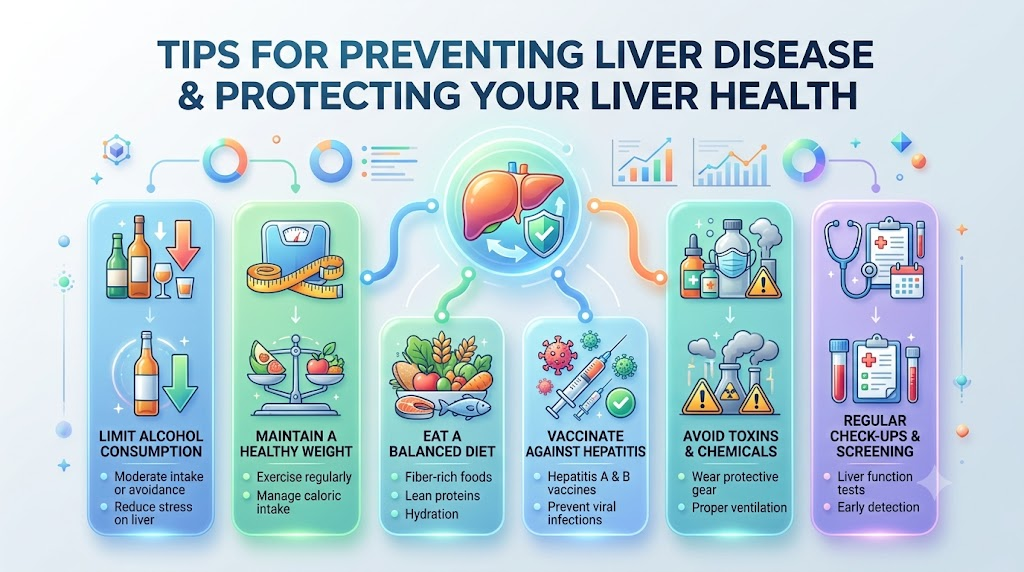
Your liver works hard every day to keep your body healthy. It helps process food, break down medicines, and remove harmful substances. Liver disease can affect these important jobs. Some liver problems develop slowly without clear warning signs.
The good news is that healthy habits can lower some risks. Good food choices, regular activity, safe medicine use, and vaccines can help protect liver health. These steps may also lower the risk of fatty liver disease and some viral infections.
This article shares practical tips for preventing liver disease. It explains what you can do at home and when to seek medical advice. You can also learn more about liver care through Gastrohospitals.com at Gastrohospitals.
What Does the Liver Do?
The liver is a large organ in the upper right part of your belly. It performs many jobs that help your body work well.
The liver helps your body:
- Process nutrients from food.
- Break down many medicines and chemicals.
- Make bile, which helps digest fats.
- Store energy for later use.
- Remove certain harmful substances from the blood.
- Make proteins that help blood clot.
A healthy liver supports digestion, energy use, and many other body functions. Liver damage can affect these jobs and harm overall health. That is why protecting your liver matters.
What Is Liver Disease?
Liver disease means a problem that harms how the liver works. Some conditions cause swelling, while others lead to fat buildup or scars.
Common types include:
- Fatty liver disease: Too much fat builds up inside liver cells. It can occur with metabolic problems or heavy alcohol use.
- Viral hepatitis: A virus causes swelling in the liver. Some types can lead to long-term liver damage.
- Alcohol-related liver disease: Alcohol harms liver cells, especially with heavy or repeated use.
- Cirrhosis: Long-term damage creates scars in the liver. These scars make it harder for the liver to work.
Liver damage may build up over many years. Some people feel well during the early stages. Others may notice tiredness or other changes later.
Different liver diseases have different causes. They also need different prevention steps and treatments. Healthy habits can help, but they cannot prevent every liver condition.
Common Causes and Risk Factors
Many factors can raise the risk of liver disease. Some relate to daily habits, while others depend on health or family history.
Common risk factors include:
- Heavy or repeated alcohol use.
- Too much fat stored in the liver.
- Excess body weight.
- Type 2 diabetes.
- Some viral infections, including hepatitis B and C.
- Certain medicines taken incorrectly.
- Some herbal products and supplements.
- Inherited conditions that affect the liver.
- Immune system problems that harm liver tissue.
Having a risk factor does not mean you will develop liver disease. People can develop liver problems even when they follow healthy habits. Your personal risk depends on many factors, including your medical history.
Eat a Balanced Diet
Healthy food choices can support liver health. They can also help manage blood sugar and body weight. These factors matter because they can affect the risk of fatty liver disease.
Try to include a range of foods in your meals.
- Eat vegetables and fruits: Choose different colors and types when possible.
- Choose whole grains: Oats, brown rice, and whole-wheat bread provide useful fiber.
- Include protein: Beans, lentils, eggs, fish, and other suitable foods can help.
- Limit added sugar: Cut back on sugary drinks, sweets, and sweet snacks.
- Eat fewer highly processed foods: These foods may contain high amounts of salt, sugar, or unhealthy fats.
- Watch portion sizes: Eat amounts that suit your needs and hunger.
- Drink water often: Choose water or unsweetened drinks more often.
You do not need a perfect diet to support your liver. Small changes can be easier to keep over time. Try adding one healthy food choice at a time.
No single food can prevent all liver disease. Special drinks, cleanses, and detox diets cannot remove liver toxins. Your liver already handles many waste products as part of its normal work.
Maintain a Healthy Weight
Excess body fat can raise the risk of fatty liver disease. Fat may build up in the liver even before clear symptoms appear. Type 2 diabetes and other metabolic problems can raise this risk too.
If weight management is right for you, focus on gradual changes. Eat balanced meals and build activity into your routine. Avoid crash diets and extreme plans that are hard to maintain.
People with existing liver disease may need different weight goals. Ask a healthcare professional what is safe for your health. They can help you choose realistic steps without making your condition worse.
Stay Active
Regular physical activity supports heart health and helps the body use sugar. It can also help manage weight and lower some metabolic risks.
Choose activities that suit your health and ability. You might try walking, cycling, swimming, dancing, or gentle home exercises. Start at a comfortable level and increase activity slowly.
If you have a health condition or find exercise difficult, ask a clinician for advice. They can help you choose suitable activities. Exercise supports liver health, but it cannot prevent or reverse every type of liver disease.
Limit or Avoid Alcohol
Alcohol can harm liver cells. Heavy drinking and repeated alcohol use can raise the risk of liver inflammation and scarring. The level of risk varies between people.
Avoiding alcohol is the safest choice if you have liver disease. It may also be important if you take certain medicines or have other health risks. Ask your healthcare professional what is safest for you.
Occasional heavy drinking is not harmless. It can cause harm and may lead to other health problems.
People who depend on alcohol may need medical support to stop safely. Sudden withdrawal can be dangerous for some people. A healthcare professional can help plan safe support.
Prevent Viral Hepatitis
Hepatitis is swelling of the liver. Several viruses can cause it, and each spreads in different ways. Some types can cause long-term liver damage.
These steps can help lower your risk of infection.
- Ask about vaccines: Vaccines can prevent hepatitis A and B.
- Wash your hands: Use soap and clean water, especially after using the toilet.
- Choose safe food and water: This is important when traveling to places with unsafe water.
- Never share needles: Use sterile injection equipment.
- Avoid sharing razors or toothbrushes: These items may carry small amounts of infected blood.
- Choose safe tattoo services: Make sure staff use sterile tools and clean practices.
- Ask about testing: A clinician can explain whether hepatitis testing is right for you.
Hepatitis A often spreads through contaminated food or water. Hepatitis B and C can spread through infected blood. Hepatitis B can also spread through sex or during birth.
Vaccines are available for hepatitis A and B. There is no approved vaccine for hepatitis C. Ask a healthcare professional which vaccines and tests you may need.
Use Medicines and Supplements Safely
Some medicines can harm the liver when used incorrectly. Certain vitamins, herbal products, and supplements can also cause liver injury. A product labeled “natural” is not always safe.
Protect yourself by following these steps:
- Follow medicine labels and professional advice.
- Never take more than the recommended amount.
- Check before mixing medicines or supplements.
- Tell your doctor about every product you use.
- Avoid unproven liver detox products.
- Ask a pharmacist if you are unsure about a product.
Some products may contain hidden ingredients or harmful amounts of certain substances. Mixing several products can also increase risk.
Never stop prescribed medicine without medical advice. If you notice a possible side effect, contact your healthcare professional. They can help you decide what to do next.
Get Health Checks When Needed
Some people may need liver health checks because of their health or medical history. These may include people with diabetes, excess body weight, viral hepatitis, or a history of heavy alcohol use.
A clinician may ask about your symptoms, medicines, alcohol use, and family history. They may order blood tests to check liver health. They may also use imaging tests, such as an ultrasound.
The right tests depend on your personal risks and symptoms. Not every healthy adult needs the same liver tests. Your clinician can explain whether testing would help you.
If you have a condition that can harm the liver, keep up with recommended care. Early assessment can help identify problems before they become more serious.
Daily Habits That Support Liver Health
| Habit | Practical Step | How It May Help |
|---|---|---|
| Balanced eating | Choose varied, less processed foods | Supports metabolic health |
| Physical activity | Move regularly in ways you can manage | Helps support weight and blood sugar |
| Alcohol choices | Avoid alcohol, especially with liver disease | Reduces alcohol-related liver harm |
| Infection prevention | Follow vaccine and hygiene advice | Lowers risk from some hepatitis viruses |
| Safe medicine use | Check medicines and supplements with a professional | Helps prevent avoidable liver injury |
Know the Warning Signs
Early liver disease may cause no clear symptoms. Some people discover a problem during tests for another reason. Knowing possible warning signs can help you seek care sooner.
Possible signs include:
- Yellow skin or eyes.
- Dark urine.
- Swelling in the belly or legs.
- Ongoing tiredness.
- Unexplained weight loss.
- Ongoing pain in the upper right belly.
- Easy bruising or bleeding.
These signs can have several causes. Symptoms alone cannot confirm liver disease. Arrange prompt medical advice if you notice possible signs of a liver problem.
Seek emergency medical care if you have confusion, vomit blood, or pass black stools. Get urgent help for severe or rapidly worsening symptoms. Do not wait for symptoms to pass on their own.
Liver Health Risks and When to Seek Advice
| Risk or Sign | Helpful Action | When to Get Medical Help |
|---|---|---|
| Diabetes or excess weight | Discuss liver risk with a clinician | Ask whether assessment is needed |
| Possible hepatitis exposure | Seek prompt professional advice | Do not delay testing or prevention advice |
| Yellow skin or eyes | Arrange urgent medical assessment | Seek prompt care |
| Vomiting blood or confusion | Get emergency medical help | Treat as an emergency |
| Medicine or supplement concerns | Review products with a clinician or pharmacist | Seek advice before making changes |
Can Liver Disease Be Prevented?
Some liver disease risks can be reduced, but not every condition can be prevented. Healthy eating, regular activity, and safer alcohol choices can lower certain risks.
Vaccines and safe hygiene practices can help prevent some hepatitis infections. Safe medicine use can also lower the chance of avoidable liver injury. Regular medical care may help find problems early.
Some liver conditions result from inherited or immune-related causes. These conditions may develop even when a person follows healthy habits. That does not mean the person has done anything wrong.
If you already have liver disease, you can still take steps to protect your health. Follow your care plan and ask your clinician about suitable food, activity, medicines, and tests.
Simple Steps to Start Today
You do not need to change every habit at once. Start with small steps that fit your daily life.
- Eat balanced meals with a range of foods.
- Drink water regularly.
- Stay active in ways that suit your health.
- Avoid alcohol if you have liver disease.
- Ask whether you need hepatitis vaccines.
- Use medicines and supplements safely.
- Discuss personal risk factors with a clinician.
Choose one or two steps to begin with. Add more as they become part of your routine. If you have a health condition, ask your clinician which changes are best for you.
Frequently Asked Questions
1. What are the best tips for preventing liver disease?
Eat balanced meals, stay active, and avoid harmful alcohol use. Follow vaccine advice and use medicines safely. Discuss your personal risks with a healthcare professional.
2. Can a healthy diet help protect the liver?
Yes. A balanced diet supports metabolic health and may lower the risk of fatty liver disease. No single food can prevent every type of liver disease.
3. Does alcohol increase the risk of liver disease?
Yes. Alcohol can damage liver cells, especially with heavy or repeated use. Avoiding alcohol is safest for people with liver disease.
4. Can exercise help reduce the risk of fatty liver disease?
Regular activity supports weight management and blood sugar control. These benefits may lower some fatty liver risks. Exercise alone cannot prevent every liver condition.
5. How can I protect myself from viral hepatitis?
Ask about vaccines, wash your hands, and use safe food and water. Never share needles or personal items that may carry blood. Ask about testing after possible exposure.
6. Are hepatitis vaccines available?
Yes. Vaccines can prevent hepatitis A and B. There is no approved vaccine for hepatitis C. A clinician can advise which vaccines you need.
7. Can medicines and supplements harm the liver?
Yes. Some medicines, vitamins, and herbal products can cause liver injury. Follow instructions and ask a professional before combining products.
8. Does liver disease always cause early symptoms?
No. Liver disease may cause no clear symptoms in its early stages. Some people learn they have a problem through medical tests.
9. Who may need liver health checks?
People with certain risks may need checks. These include people with diabetes, viral hepatitis, excess body weight, or heavy alcohol use. A clinician can assess individual needs.
10. When should I see a doctor about liver health?
Seek prompt advice for yellow skin, dark urine, swelling, or ongoing belly pain. Get emergency care for confusion, vomiting blood, or black stools.
Conclusion
Protecting your liver starts with healthy habits and suitable medical care. Balanced meals, regular activity, safe medicine use, and hepatitis prevention can lower some risks. They cannot prevent every liver condition, but they can support better health.
Talk with a qualified healthcare professional about your risks, vaccines, tests, and concerns. Seek help early if you notice possible warning signs. This article offers general health education and does not replace advice from a qualified healthcare professional.