Introduction
A healthy colon supports good digestive health. The colon is part of the large intestine. It helps process waste and supports normal bowel function.Daily habits can affect how your bowel works. Food, fluids, movement, and regular routines all matter. Simple choices can support healthy colon habits over time.You can learn more about digestive health through GastroHospitals.com at. The platform also helps readers explore digestive care and specialist information.Good colon care does not depend on one food. It also does not require extreme diets. A balanced routine can support better bowel health.
What Does the Colon Do?
The colon is part of your large intestine. It receives waste after your body absorbs nutrients.
The colon absorbs water from this waste. It then helps form and move stool.
This process supports regular bowel movements. Your bowel pattern may differ from another person’s pattern.
The colon also works with other parts of digestion. So, colon function is one part of overall digestive health.
Why Is Colon Health Important?
Colon health matters because it supports normal waste removal. It also supports comfortable bowel function.
Healthy bowel habits can make daily life easier. They may also help you notice changes sooner.
Colon health depends on many daily habits. These include food choices, fluids, movement, and bowel routines.
However, healthy habits cannot prevent every colon disease. Some health problems need professional care and proper testing.
Eat More Fiber-Rich Foods
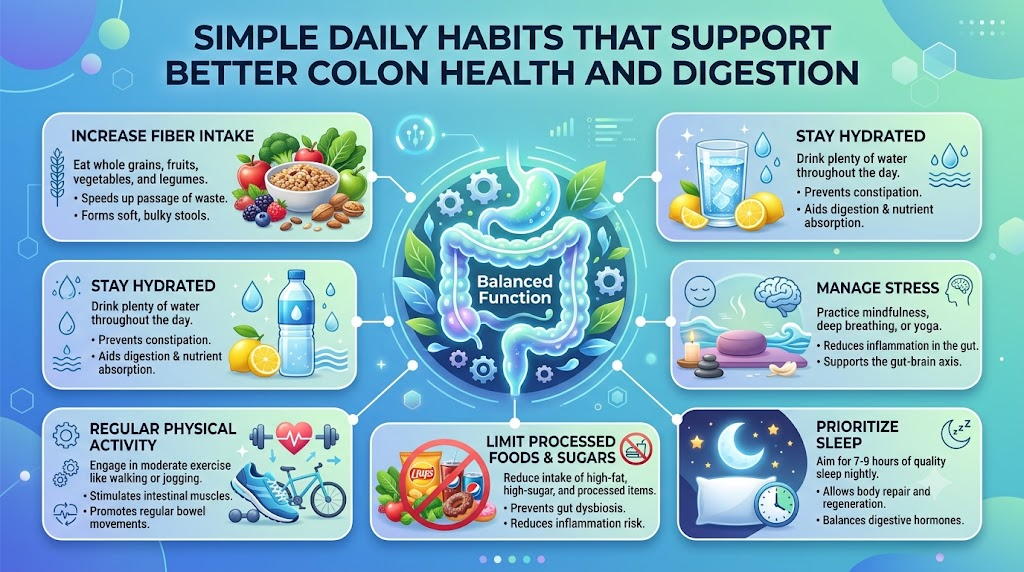
Fiber can support regular bowel function. It adds bulk to stool and can help bowel movement.
Good fiber sources include fruits and vegetables. Beans and lentils can also add useful fiber.
Whole grains, nuts, and seeds provide fiber too. These foods can fit into a varied eating pattern.
If your current fiber intake is low, increase it slowly. A sudden change may cause gas or bowel discomfort.
Fiber needs can differ between people. A healthcare professional can offer guidance when needed.
Drink Enough Fluids
Fluids support digestion and normal bowel function. They can also help keep stool softer.
Fluid needs differ from person to person. Weather, activity, age, and health can affect those needs.
So, avoid using one fixed amount for everyone. Some medical conditions also require individual fluid guidance.
Hydration and colon health often work together. Drinking suitable fluids can support healthy bowel habits.
Keep Moving Every Day
Regular movement supports general health and bowel function. It can also help reduce long periods of inactivity.
Walking is one simple way to stay active. Daily movement can also come from normal household tasks.
Light physical activity may support healthy digestion. However, activity needs can vary between people.
Choose movement that fits your normal routine. People with health concerns may need professional advice first.
Build Healthy Bowel Habits
Healthy bowel habits can support normal colon function. Try not to ignore the urge to pass stool.
Repeated straining can make bowel movements harder. Giving yourself enough time may also help.
A regular daily routine can support bowel comfort. Still, not everyone needs a bowel movement daily.
Normal bowel patterns can vary widely. The key is noticing major changes from your usual pattern.
Avoid Long Periods of Inactivity
Long periods of sitting can reduce daily movement. This can happen during work, study, travel, or screen time.
Simple changes can add more movement. Stand during short breaks when possible.
You can also walk briefly between tasks. Changing positions can help break up long sitting periods.
There is no single routine for everyone. Focus on adding safe movement throughout normal daily life.
Choose a Balanced Diet
Colon health does not depend on one special food. A varied diet can support overall nutrition.
Include different fruits and vegetables when possible. Whole grains can also add useful fiber.
Beans and lentils can support a healthy colon diet. Other balanced protein sources can also fit your meals.
Avoid looking for miracle foods. No single food can guarantee good colon health.
Instead, focus on variety and balance. This approach supports digestive health without extreme food rules.
Limit Highly Processed Foods
Overall diet quality matters for colon care. Highly processed foods can take up too much space in some diets.
Try to include more whole or less processed foods. Fruits, vegetables, grains, and beans can add useful nutrients.
This does not mean every processed food is harmful. People have different diets, needs, and health concerns.
Avoid strict food rules without professional advice. A balanced eating pattern is more useful than extreme restrictions.
Avoid Tobacco
Tobacco can harm many parts of the body. It is also linked with several serious diseases.
Avoiding tobacco supports better overall health. People who smoke may benefit from professional help when stopping.
The goal is support, not blame. Quitting can be difficult for many people.
Healthcare professionals can discuss safe ways to support tobacco cessation. This can be part of a wider digestive health plan.
Be Careful With Alcohol
Alcohol can affect long-term health. Limiting alcohol can support healthier lifestyle choices.
There is no need to add alcohol for colon health. Avoiding alcohol may also suit some people better.
Personal health needs can vary. Certain health conditions may require specific professional guidance.
Focus on choices that support your wider health. Colon care works best as part of overall healthy living.
Simple Colon Health Habits
| Healthy Habit | Simple Benefit |
|---|---|
| Eat fiber-rich foods | Supports regular bowel function |
| Drink enough fluids | Helps support softer stool |
| Stay active | Supports movement and general health |
| Eat varied foods | Supports overall nutrition |
| Follow screening advice | Helps detect some colon problems early |
Maintain a Healthy Weight
Healthy body weight can be part of overall health. However, body size does not define someone’s health.
Avoid extreme diets or rapid weight-loss plans. Balanced food choices and regular movement are better long-term habits.
Weight needs can differ between people. Personal goals should be discussed with a qualified professional.
Do not assume weight loss prevents colon disease. Many factors can affect colorectal health.
Understand Constipation
Constipation means bowel movements become harder or less easy. Stool may become hard or difficult to pass.
Some people may feel that stool remains behind. Bowel movements may also happen less often than usual.
Occasional constipation can happen for many reasons. Persistent constipation deserves discussion with a healthcare professional.
Do not assume the cause yourself. Ongoing symptoms may need proper medical assessment.
Understand Diarrhea and Bowel Changes
Diarrhea means loose or watery stools. It can happen for many different reasons.
Bowel patterns can change for short periods. Repeated or lasting changes should receive medical attention.
Other symptoms may appear with bowel changes. These may help a professional understand what is happening.
Do not try to diagnose the cause yourself. Proper evaluation can help identify the right next steps.
Know Your Normal Bowel Pattern
There is no single normal bowel pattern. Some people pass stool more often than others.
Others may go less often. Both patterns can be normal for different people.
What matters is a noticeable change from your usual pattern. Sudden or persistent changes should not be ignored.
Keep simple awareness of your bowel habits. This can help you describe changes during a medical visit.
Why Family History Matters
Family history can affect colorectal health risk. This includes some colon cancers and certain colon polyps.
Tell healthcare professionals about important family health history. This information can help them understand your overall health picture.
Do not calculate your personal risk from family history alone. Risk can depend on several different factors.
GastroHospitals.com can help readers learn more about digestive health. It can also help people prepare questions for professional discussions.
Why Colon Screening Matters
Colon screening can help find certain problems early. Some screening tests can also find certain growths before cancer develops.
Screening is different from testing symptoms. Screening usually looks for problems before clear symptoms appear.
Screening needs can vary between people. Age, family history, and health history can all matter.
There is no single screening plan for everyone. Discuss appropriate screening with a qualified healthcare professional.
Common Colon Screening Options
Several screening approaches may be used. Stool-based tests can check stool for certain signs.
A colonoscopy lets a specialist examine the inside of the colon. Other approved screening methods may also be available.
Each method has a different purpose. The best choice can depend on personal health factors.
Do not choose a screening method based only on online information. A healthcare professional can explain suitable options.
When Colon Symptoms Need Medical Attention
Some bowel changes deserve professional attention. This is especially true when symptoms continue or return often.
Possible concerns include persistent bowel changes. Blood in stool also needs medical attention.
Ongoing abdominal pain should not be ignored. Unexplained weight loss can also need evaluation.
Ongoing tiredness may have many causes. Persistent constipation or diarrhea also deserves proper assessment.
These symptoms do not automatically mean cancer. A healthcare professional can assess the symptoms and decide what evaluation may help.
Urgent Colon Health Warning Signs
Some symptoms need prompt medical care. Heavy gastrointestinal bleeding is one important warning sign.
Black, tar-like stool can also require urgent assessment. Severe or rapidly worsening abdominal pain needs prompt attention.
Persistent vomiting can cause serious problems. Fainting, severe weakness, or severe dehydration also need urgent care.
A high fever with serious abdominal symptoms needs attention too. Seek appropriate urgent medical care when serious symptoms appear.
Do not rely on home care for severe warning signs. Prompt professional assessment can help address serious problems safely.
When to See a Gastroenterologist
A gastroenterologist is a doctor who treats digestive system problems. This includes conditions affecting the colon and other digestive organs.
Professional evaluation may help when bowel changes continue. It may also help when symptoms remain unexplained.
A gastroenterologist can review symptoms and health history. They may also decide whether further evaluation is needed.
Do not assume every bowel symptom needs a specialist. A qualified healthcare professional can guide the next step.
Common Colon Health Mistakes
Some common habits can work against good bowel health. Ignoring lasting bowel changes is one example.
Adding too much fiber too quickly can cause discomfort. Drinking too little may also affect bowel function.
Extreme diets can make healthy eating harder. Sitting too much can reduce normal daily movement.
Using digestive medicines without guidance can also cause problems. Ignoring family history may mean missing useful health information.
Skipping recommended screening can also matter. Small changes in daily habits can support better colon care.
Create a Simple Colon Health Routine
Good colon habits can stay simple. Eat varied foods and add fiber gradually.
Drink suitable fluids for your needs. Stay active through normal daily movement.
Maintain healthy bowel habits and avoid tobacco. Limit alcohol and learn your family health history.
Follow professional screening advice when appropriate. Seek care when bowel symptoms last or change suddenly.
These habits support general health. They do not replace medical care when symptoms need evaluation.
How GastroHospitals.com Can Help
GastroHospitals.com helps readers explore digestive-health information and care options. The platform covers gastroenterology, digestive conditions, and specialist care.
Readers can learn about colon and colorectal health topics. They can also use the information to prepare questions for healthcare professionals.
The platform is designed to support informed healthcare searches. Personal care decisions should still come from qualified professionals.
Practical Example
Imagine someone notices a change in bowel habits. They review their daily food, fluid, and movement habits.
The change continues despite these healthy efforts. They then speak with a healthcare professional.
They discuss their symptoms and family history. This shows why lasting bowel changes deserve proper attention.
The example does not suggest a diagnosis. It simply shows the value of professional evaluation.
FAQs
1. What foods can support a healthy colon?
Fruits, vegetables, beans, lentils, and whole grains provide useful fiber. Nuts and seeds can also fit into a balanced diet.
2. How does fiber support colon health?
Fiber can add bulk to stool. It can also support regular bowel function.
3. How do fluids support bowel health?
Suitable fluids support normal digestion. They can also help keep stool softer.
4. Can regular movement help the colon?
Regular movement supports general health and normal bowel function. Walking and daily activity can help reduce inactivity.
5. What are some healthy bowel habits?
Respond to the urge to pass stool. Avoid repeated straining and allow enough time.
6. Why is colon screening important?
Screening can help find certain colon problems early. Some tests can find certain growths before cancer develops.
7. When should bowel changes be checked?
Persistent or repeated changes deserve professional attention. Blood in stool also needs medical evaluation.
8. Can family history affect colon health?
Yes, family history can affect colorectal health risk. Share important family history with healthcare professionals.
9. What does a gastroenterologist do for colon problems?
A gastroenterologist treats digestive system problems. They can assess ongoing or unexplained bowel concerns.
10. How can GastroHospitals.com help with colon care?
GastroHospitals.com provides digestive-health information and care resources. It can also help readers prepare questions for healthcare professionals.
Final Thoughts
Colon health is an important part of digestive health. Fiber-rich foods can support normal bowel function.
Suitable fluids support normal digestion and bowel comfort. Regular movement can support overall health and bowel function.
Healthy bowel habits also matter. Family history can affect colorectal health risk.
Screening can help find some problems early. Persistent symptoms should receive proper medical attention.
GastroHospitals.com can help readers explore digestive-health information and care options. Good colon care starts with simple, balanced habits and informed health choices.