Introduction
Crohn’s disease is a long-term bowel condition. It causes inflammation in parts of the digestive tract. A flare-up means symptoms become active or worse. These symptoms can differ from person to person. Common problems include pain, diarrhea, tiredness, and poor appetite. Some people may also have fever or weight loss. GastroHospitals can help people explore digestive health information and gastroenterology care options.
Knowing how to manage Crohn’s disease flare-ups can feel helpful. However, every person may need different medical care. Food, rest, fluids, and symptom tracking can support daily care. Medical follow-up also plays an important role.
What Is Crohn’s Disease?
Crohn’s disease is an inflammatory bowel disease. It is often called IBD for short. It causes swelling inside the digestive tract. It can affect different parts of the digestive system.
Crohn’s disease is not the same as a short stomach illness. A simple stomach problem may pass after some time. Crohn’s disease is a long-term condition. It needs ongoing care and regular medical follow-up.
What Is a Crohn’s Disease Flare-Up?
A Crohn’s flare-up happens when symptoms become more active. The bowel may also have more inflammation during this time. Symptoms can be mild, moderate, or severe.
Common symptoms include Crohn’s abdominal pain and diarrhea. Some people have urgent bowel movements. Others may feel tired or lose their appetite. Weight loss and fever can also happen. Symptoms are not the same for everyone.
Common Signs of a Crohn’s Flare
Changes in bowel habits can be an early warning sign. A person may have more frequent or urgent bowel movements. Diarrhea may also become more noticeable.
Abdominal pain may increase during a flare. Tiredness can also become stronger. Some people may eat less because they feel unwell. Weight changes may happen over time. Fever can be a concerning sign.
One symptom alone does not confirm a flare. A healthcare professional may need to assess the symptoms. This helps separate Crohn’s disease symptoms from other health problems.
What Can Trigger a Crohn’s Flare?
Crohn’s flare triggers can differ between people. An infection may sometimes affect symptoms. Stress may also make digestive symptoms feel worse. Smoking can also affect Crohn’s disease care.
Missed prescribed treatment can be another concern. Some medicines may also affect the digestive system. Diet changes or other health problems may matter too.
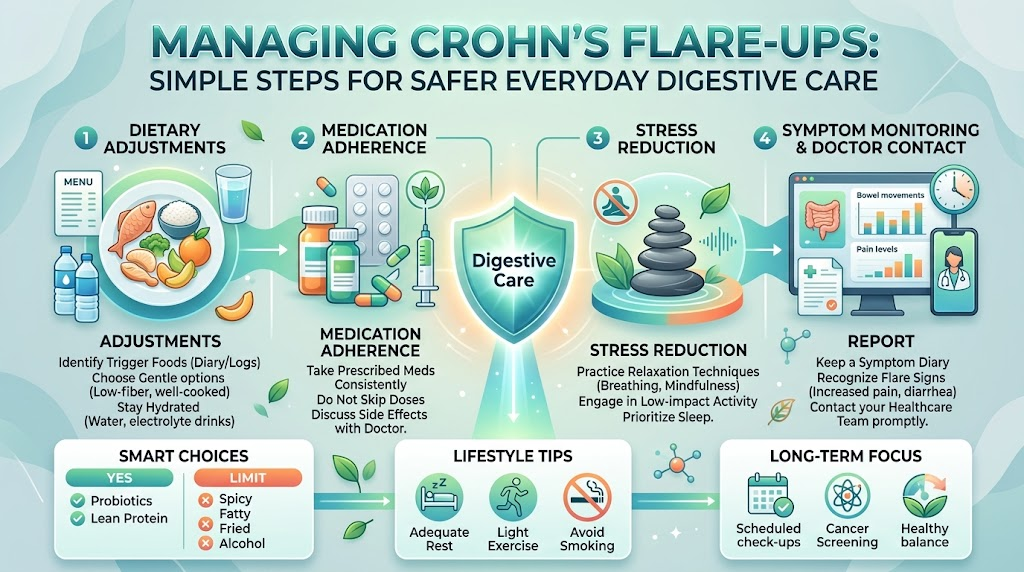
Not every trigger affects every person. A symptom diary can help find patterns. Never stop or change prescribed treatment without medical advice.
Food During a Crohn’s Flare
Food tolerance can change during active symptoms. Foods that feel fine at one time may feel harder later. So, simple food choices can sometimes feel easier.
Choose foods that are already known to feel comfortable. Small meals may also feel easier for some people. Eating slowly can help with comfort.
There is no single Crohn’s diet for everyone. A gastroenterologist or dietitian can help with food planning. They can consider symptoms, nutrition, and personal food needs.
Hydration During a Crohn’s Flare
Fluids matter when diarrhea or vomiting occurs. The body can lose more fluid during these symptoms. This may increase the risk of dehydration.
Take fluids regularly as tolerated. Fluid needs can vary by person and health condition. Some people may need medical advice about fluid replacement.
Severe fluid loss needs medical attention. Signs may include very weak feelings or fainting. Severe symptoms should not be managed only at home.
Rest and Daily Activity
A flare can make normal activities feel harder. Crohn’s fatigue may reduce energy during the day. Rest can help the body handle daily demands.
However, staying completely inactive may not suit everyone. Gentle normal movement may feel better when symptoms allow. Activity should match current symptoms and medical advice.
During a stronger flare, normal routines may need changes. The care team can help with safe activity choices.
Stress and Crohn’s Disease
Stress does not cause Crohn’s disease. However, stress may affect how digestive symptoms feel. It can also make daily coping more difficult.
Simple habits may help lower daily stress. Good sleep can support overall health. Relaxation, quiet routines, and family support may also help.
Talking with a healthcare professional can be useful. Emotional support may also help when Crohn’s disease affects daily life.
Medicines and Crohn’s Flare-Ups
Crohn’s disease treatment may include prescription medicines. The treatment plan depends on the person’s condition. It may also change as symptoms change.
Some medicines reduce bowel inflammation. These include anti-inflammatory medicines. Steroids may also be used in some situations. Immunomodulators affect the immune system. Biologic medicines target certain immune system actions.
These medicine groups have different uses and risks. A gastroenterologist chooses treatment based on medical needs. Do not start, stop, or change medicines alone.
Why Follow-Up Care Matters
Regular follow-up is an important part of Crohn’s disease management. It helps doctors review symptoms and overall health. It can also help track changes over time.
Follow-up may include medical tests when needed. Treatment may also need review. Nutrition and weight can also be discussed.
Every patient may have a different follow-up plan. A gastroenterologist can explain the right schedule. Regular Crohn’s disease monitoring can support long-term care.
Tests Doctors May Use
Doctors may use different tests during Crohn’s disease care. Blood tests can be part of a medical check. Stool tests may also be used.
A colonoscopy looks inside the large bowel. An endoscopy looks at parts of the upper digestive tract. CT and MRI scans can also create images inside the body.
Doctors choose tests based on symptoms and medical history. Test results need professional review. Readers should not try to interpret their own results.
Crohn’s Flare-Ups and Nutrition
Active Crohn’s disease can affect nutrition. Pain or diarrhea may reduce food intake. Poor appetite can also make eating harder.
Some people may lose weight during active disease. Nutrient problems can also occur in some cases. These concerns may need medical attention.
A dietitian can support Crohn’s nutrition planning. The healthcare team can review food intake and weight changes. Supplements should not be used as treatment without medical advice.
When a Crohn’s Flare Needs Medical Help
Some symptoms need prompt medical care. Severe abdominal pain should not be ignored. Heavy or ongoing bleeding also needs medical attention.
Persistent vomiting can cause fluid loss. Severe diarrhea can also lead to dehydration. High fever, fainting, or severe weakness are concerning signs.
Rapidly worsening symptoms also need professional assessment. Serious symptoms should not be managed only at home. Contact the appropriate healthcare service when symptoms become severe.
Emergency Warning Signs
Some Crohn’s disease complications can become serious. Severe or rapidly worsening abdominal pain needs urgent assessment. Heavy bleeding is another emergency warning sign.
Fainting may signal a serious problem. Severe dehydration can also become dangerous. Major weakness should not be ignored.
When symptoms are severe, seek local emergency medical care. Do not wait for symptoms to become worse. Prompt assessment can help doctors understand the problem.
Crohn’s Flare-Ups and Remission
A flare means symptoms and disease activity may become more active. Remission means symptoms and disease activity are controlled or reduced.
Remission does not mean Crohn’s disease is cured. Symptoms can return at different times. Regular care can help doctors monitor the condition.
Every person can have a different pattern. So, ongoing follow-up remains important during remission too.
How a Gastroenterologist Helps
A gastroenterologist is a doctor who treats digestive diseases. This includes conditions that affect the bowel. A gastroenterologist can assess Crohn’s symptoms and plan care.
They may review symptoms, medical history, and test results. They can also monitor treatment and disease activity. An IBD specialist may provide focused care for inflammatory bowel disease.
A gastroenterologist for Crohn’s disease can also discuss nutrition. They can help decide when further testing may be useful.
How to Prepare for a Gastroenterology Visit
Good preparation can make a visit more useful. Write down current symptoms before the appointment. Note when symptoms started and how they changed.
Bring previous medical records when available. Keep a list of current medicines. Test reports may also help the doctor understand past care.
Write down questions before the visit. Food or symptom patterns can also be useful. Do not change medicines before the visit unless advised.
Crohn’s Flare vs Remission
| Area | During a Flare | During Remission |
|---|---|---|
| Symptoms | Often more active | Often reduced |
| Bowel changes | May increase | May improve |
| Pain | May become stronger | May be lower |
| Energy | May decrease | May improve |
These patterns are general and can vary. A healthcare professional can assess individual symptoms.
How to Reduce Future Flare Risks
Crohn’s flare-up management is an ongoing process. Regular follow-up can help track disease activity. Taking prescribed treatment as directed is also important.
Tracking symptoms may help identify personal patterns. Avoiding known personal triggers can also help. Not smoking supports better digestive health.
Balanced nutrition may support overall health. However, no step can prevent every flare. Medical care remains an important part of Crohn’s disease care.
Crohn’s Disease and Daily Life
Crohn’s disease can affect work and school. It may also affect travel, sleep, and social plans. Planning ahead can make daily tasks easier.
People may need to plan bathroom access. They may also need flexible rest periods. Travel plans can include medical information and care details.
Needs can change during a flare. A healthcare team can help with personal concerns. Support from family can also make daily life easier.
How GastroHospitals.com Can Help
GastroHospitals.com helps people explore gastroenterology hospitals and digestive health information. It can also help people learn about gastroenterologists and IBD-focused care.
The platform can support research into digestive health resources. Hospital services can differ from one place to another. So, readers should check services directly with the care team.
Practical Example
Imagine someone notices more diarrhea and abdominal pain. They also feel more tired than usual. These changes may need medical attention.
The person can track when symptoms began. They can note bowel changes and food patterns. They can then contact a gastroenterologist for proper evaluation.
This example does not confirm a Crohn’s flare. Other health problems can cause similar symptoms. A professional assessment is needed to understand the cause.
Clear Answers for Better Crohn’s Disease Care
Good health content should answer common questions clearly. It should also explain medical terms in simple words. This helps readers understand their care choices.
Crohn’s disease information should come from reliable medical knowledge. It should also avoid promises about treatment results. Individual care should always come from qualified professionals.
This approach supports SEO and answer-focused search needs. It also supports local search and AI-based information tools. Clear language helps readers find useful answers faster.
Frequently Asked Questions About Crohn’s Disease Flare-Ups
1. What is a Crohn’s disease flare-up?
A flare-up means Crohn’s symptoms become more active. Symptoms can include pain, diarrhea, and tiredness.
2. What are common signs of a Crohn’s flare?
Common signs include diarrhea, abdominal pain, fatigue, and appetite changes. Some people may also have fever or weight loss.
3. What can trigger a Crohn’s disease flare-up?
Triggers vary between people. Infections, stress, smoking, missed treatment, and some medicines may play a role.
4. What foods may be easier to tolerate during a flare?
Food tolerance can change during a flare. Foods already known to feel comfortable may be easier to manage.
5. Why is hydration important during a Crohn’s flare?
Diarrhea and vomiting can cause fluid loss. Good hydration can support the body during these symptoms.
6. Can stress affect Crohn’s disease symptoms?
Stress does not cause Crohn’s disease. However, it may affect digestive symptoms and daily coping.
7. When should someone see a gastroenterologist for a flare?
A gastroenterologist can help when symptoms change or worsen. Severe symptoms need prompt medical assessment.
8. What tests may doctors use during a Crohn’s flare?
Doctors may use blood tests or stool tests. They may also use colonoscopy, endoscopy, CT, or MRI scans.
9. Can Crohn’s disease flare-ups be prevented?
No method can prevent every flare. Regular care and prescribed treatment can support long-term management.
10. When is a Crohn’s flare-up an emergency?
Severe pain, heavy bleeding, fainting, or severe dehydration need urgent care. Rapidly worsening symptoms also need emergency medical assessment.
Final Thoughts
Crohn’s disease flare-ups can vary from person to person. Symptoms may affect digestion, energy, food intake, and daily life.
Food choices, hydration, rest, and symptom tracking can support care. Regular follow-up also helps monitor Crohn’s disease over time.
Crohn’s disease needs individualized medical care. A gastroenterologist can help assess symptoms and plan appropriate care. GastroHospitals.com can also help people explore gastroenterology and digestive health resources.
When symptoms become severe, seek medical help quickly. Calm planning and proper follow-up can make Crohn’s disease care easier to manage.