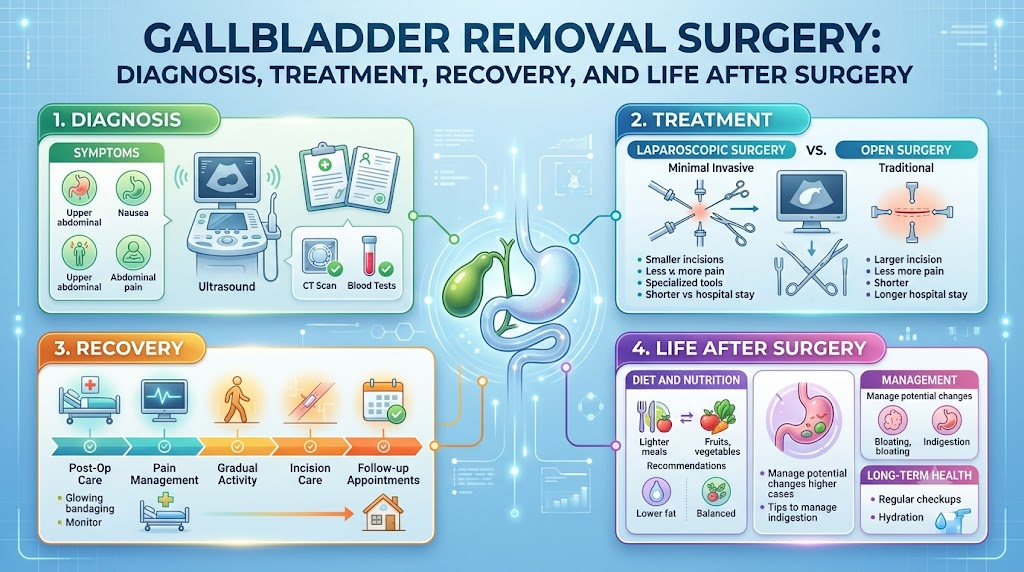
The gallbladder is a small organ near the liver. It stores bile made by the liver. Bile helps the body digest fats. Gallstones can sometimes cause painful gallbladder problems. Some problems may need gallbladder removal surgery. Surgery decisions depend on symptoms and medical findings. Your doctor will explain the safest care options. GastroHospitals helps people learn about digestive health and care.
What Does the Gallbladder Do?
The gallbladder stores bile for later use. The liver makes this bile every day. Bile helps break down fats during digestion. The gallbladder releases bile into the small intestine. This process supports normal digestion after meals.The liver keeps making bile after gallbladder removal. Bile can then flow directly into the intestine. So, people can live without a gallbladder. Digestion may change for some people after surgery.
What Is Gallbladder Removal Surgery?
Gallbladder removal surgery is called cholecystectomy. It removes the gallbladder from the body. Doctors may suggest it for certain gallbladder problems. The procedure can use different surgical approaches.Laparoscopic cholecystectomy uses small cuts. A small camera helps the surgical team see inside. Open cholecystectomy uses a larger incision. The surgical team decides which approach is suitable.
Why Might Someone Need Gallbladder Removal?
Gallstones are a common reason for surgery. These stones can block normal bile flow. They may cause repeated upper abdominal pain. Some people may also develop gallbladder inflammation.Doctors may also consider surgery for complications. Some bile duct problems may need surgical care. Certain gallbladder conditions can also need removal. Not every gallstone needs surgery. The decision depends on each person’s condition.
Common Symptoms of Gallbladder Problems
Gallbladder problems can cause different symptoms. Upper abdominal pain is a common symptom. Pain may happen after certain meals. Nausea and vomiting may also occur.Some people may develop fever or indigestion. Pain can sometimes spread toward the back. It may also reach the shoulder area. These symptoms have many possible causes. A doctor must assess symptoms before making a diagnosis.
How Is Gallbladder Disease Diagnosed?
Doctors first review symptoms and health history. They may also perform a physical examination. Blood tests can provide useful information. Imaging can help doctors view the gallbladder.Ultrasound is often used to examine gallstones. CT scans may also be used when needed. MRCP can provide detailed bile duct images. Other tests may help in selected cases. Testing depends on symptoms and medical findings.
Laparoscopic Gallbladder Removal
Laparoscopic cholecystectomy uses small cuts in the abdomen. A camera helps the surgeon see the area. Surgical tools are placed through these small openings. This approach is commonly used for gallbladder removal.The exact surgical method depends on the case. Doctors consider the person’s health and findings. The surgical team manages the procedure in hospital. Patients should ask their surgeon about the planned approach.
Open Gallbladder Surgery
Open cholecystectomy uses a larger abdominal incision. Doctors may use this approach in selected situations. The choice depends on the person’s medical needs. The surgical team decides the suitable surgical method.Open surgery does not mean something went wrong. It can be appropriate for some patients. The surgeon will explain why it may be used. Patients should discuss any concerns before surgery.
How to Prepare for Gallbladder Surgery
Preparation starts with a medical review. The doctor may ask about current medicines. They may also ask about allergies. Existing health conditions should also be discussed.Blood tests may be needed before surgery. Imaging results may also be reviewed. An anesthesia assessment is often part of preparation. Eating and drinking rules can also apply. Follow your hospital’s specific instructions.Do not stop medicines without medical advice. Tell the team about vitamins and supplements. This information helps the team plan safe care. Each hospital may give different preparation instructions.
What Happens on the Day of Surgery?
Patients usually complete hospital admission first. The team checks basic health information. The anesthesia team also reviews medical history. The surgeon may discuss the planned procedure again.The surgery then takes place under anesthesia. After surgery, the patient moves to recovery. Staff monitor the patient during early recovery. Further care depends on the person’s condition.
Gallbladder Surgery Anesthesia
Gallbladder removal is commonly done under general anesthesia. This means the patient is asleep during surgery. The anesthesia team watches the patient closely. They monitor important body functions during the procedure.Anesthesia planning depends on health history. Existing heart or lung problems may matter. Current medicines may also affect planning. The anesthesia team explains the process before surgery.
Gallbladder Surgery Risks
Every surgery has possible risks. Gallbladder surgery is not risk-free. Possible problems can include infection or bleeding. Some patients may also have anesthesia-related problems.Other possible risks include bile leakage. Injury to nearby structures can also occur. Bile duct injury is another possible concern. Blood clots can occur after some surgeries. Digestive changes may also happen.Risk levels can differ between patients. Your surgical team can explain your personal risks. This discussion should happen before surgery. Ask questions if any risk is unclear.
Gallbladder Surgery Recovery
Gallbladder surgery recovery varies between people. Some people have pain or discomfort at first. Wound care may also be part of recovery. Walking can help support normal activity when advised.Eating may start gradually after surgery. Rest is also important during early recovery. Follow-up visits can help check progress. Your surgeon will guide your return to activities.
Diet After Gallbladder Removal
Digestion can change after gallbladder removal. Some people may notice problems with fatty foods. Others may return to normal eating without major problems. Each person’s response can be different.Start with foods your care team recommends. Choose foods that you can tolerate well. There is no single diet for everyone. Talk with your doctor about ongoing digestive problems.
Digestion After Gallbladder Removal
The liver continues making bile after surgery. The gallbladder is no longer there to store it. Bile can flow directly into the small intestine. This changes how bile is stored and released.Many people adapt well to this change. Some people may notice temporary digestive symptoms. These may include loose stools or bloating. Ongoing symptoms should be discussed with a doctor.
Returning to Daily Activities
Return to normal activities can vary. Work and school needs may differ. Driving also depends on recovery and medical advice. Exercise should follow the surgeon’s instructions.Household tasks may also need gradual return. Avoid making your own recovery schedule. Your care team knows your medical details. Follow their advice about activity and rest.
Follow-Up After Gallbladder Surgery
Follow-up care helps review recovery progress. Your doctor may check the surgical wounds. They may also ask about pain and digestion. Recovery concerns can be discussed during these visits.Pathology results may be discussed when applicable. Some people may need more evaluation. This can happen if symptoms continue after surgery. Follow-up plans depend on the individual case.
Warning Signs After Surgery
Some symptoms need prompt medical attention. Severe or worsening abdominal pain needs medical review. Fever can also be a warning sign. Yellow skin or eyes should be checked quickly.Persistent vomiting may need medical attention. Increasing wound redness can also be concerning. Heavy bleeding requires urgent medical help. Severe weakness or trouble breathing also needs urgent care.Seek urgent help for severe symptoms. Also seek help when symptoms worsen quickly. Do not wait if you feel seriously unwell.
Gallbladder Removal Surgery for Older Adults
Age can affect surgery planning. Older adults may have other health conditions. Current medicines can also affect planning. Heart and lung health may need review.Recovery support at home can also matter. Family support may help with daily needs. Doctors consider the full health picture. Age alone does not decide the surgical approach.
Gallbladder Surgery for International Patients
International patients may need extra planning. Medical records should be shared with the hospital. Imaging reports can also help the care team. Clear communication with the hospital is important.Families may need help with accommodation planning. Travel plans should consider recovery needs. Follow-up arrangements should also be discussed early. GastroHospitals.com can help people research digestive care information.
How to Choose a Gallbladder Surgery Hospital
Choosing a hospital involves several practical points. Look for a qualified surgical team. Gastroenterology support can also be useful. Diagnostic facilities can help with proper assessment.Ask about anesthesia services and emergency care. Infection prevention is another important hospital service. Post-surgery monitoring can support recovery. Clear communication also helps patients understand their care.Do not choose a hospital based on one factor. Hospital services can differ between locations. GastroHospitals.com can support hospital and digestive care research.
Laparoscopic and Open Surgery Compared
| Feature | Laparoscopic Surgery | Open Surgery |
|---|---|---|
| Incision | Smaller cuts | Larger incision |
| Surgical approach | Minimally invasive | Open approach |
| Hospital recovery | Often shorter, but varies | Often longer, but varies |
| When used | Common approach in many cases | Used in selected cases |
Common Myths About Gallbladder Removal
One myth says people cannot digest food afterward. The liver still makes bile after surgery. So, digestion can continue without the gallbladder. Some people may notice changes at first.Another myth says every gallstone needs surgery. This is not always true. Doctors consider symptoms and medical findings. Another myth says recovery is the same for everyone. Recovery can vary from person to person.Gallbladder surgery also has possible risks. It is not completely risk-free. Another common myth involves diet. Everyone does not need the same diet after surgery.
How GastroHospitals.com Can Help
GastroHospitals.com focuses on digestive health information. It helps people explore digestive conditions and procedures. Users can also research hospitals and doctors. The platform supports learning before medical discussions.GastroHospitals.com does not replace a doctor. It does not provide guaranteed treatment results. Patients should discuss personal medical concerns with professionals. Medical decisions should be based on proper clinical advice.
Practical Example
A person has repeated upper abdominal pain. Their doctor reviews the symptoms and medical history. The doctor may order suitable tests for more information. The results may help guide the next discussion.The person can then ask about surgery options. They can also ask about risks and recovery. This example does not mean surgery is always needed. The medical team makes decisions based on individual findings.
Clear Information About Gallbladder Surgery
People often search questions before gallbladder surgery. Clear answers can make medical information easier. Simple definitions can explain complex medical terms. Question-based content can also help readers find answers.This approach supports SEO and AEO. It also helps information work well for GEO. Clear medical wording supports LLMO and AISEO. Careful facts also support E-E-A-T. Medical content should remain accurate and responsible.
Frequently Asked Questions
1. What is gallbladder removal surgery?
Gallbladder removal surgery removes the gallbladder. Doctors call this procedure cholecystectomy.
2. Why might someone need gallbladder removal?
Doctors may consider surgery for repeated gallstone problems. Ongoing inflammation or complications may also need surgery.
3. What is laparoscopic gallbladder surgery?
It uses small cuts and a camera. It is a common approach for gallbladder removal.
4. What is open gallbladder surgery?
Open surgery uses a larger abdominal incision. Doctors may use it in selected situations.
5. How is gallbladder removal surgery diagnosed and planned?
Doctors review symptoms, health history, and test results. They then decide whether surgery should be considered.
6. What are the common risks of gallbladder surgery?
Possible risks include infection, bleeding, and anesthesia problems. Bile leakage and bile duct injury can also occur.
7. What is recovery like after gallbladder removal?
Recovery varies between people. It may include wound care, rest, eating changes, and follow-up.
8. Can people eat normally after gallbladder removal?
Many people return to normal eating. Some may notice temporary problems with fatty foods.
9. Can someone live normally without a gallbladder?
Yes, people can live without a gallbladder. The liver continues making bile after removal.
10. When should someone contact a doctor after gallbladder surgery?
Contact a doctor for concerning symptoms after surgery. Seek urgent help for severe or rapidly worsening symptoms.
Final Thoughts
Gallbladder removal surgery is a common digestive procedure. Doctors may consider it for selected gallbladder problems. Gallstones and inflammation are common reasons for surgery. However, each person’s situation can be different.Laparoscopic and open surgery are two approaches. The surgical team decides which approach is suitable. Recovery and digestion can also vary between people. Follow-up care helps monitor recovery after surgery.Patients should ask questions before and after surgery. They should also follow their hospital’s instructions. GastroHospitals.com can help people explore digestive health information, hospitals, and doctors. Medical decisions should always be discussed with a qualified healthcare team.