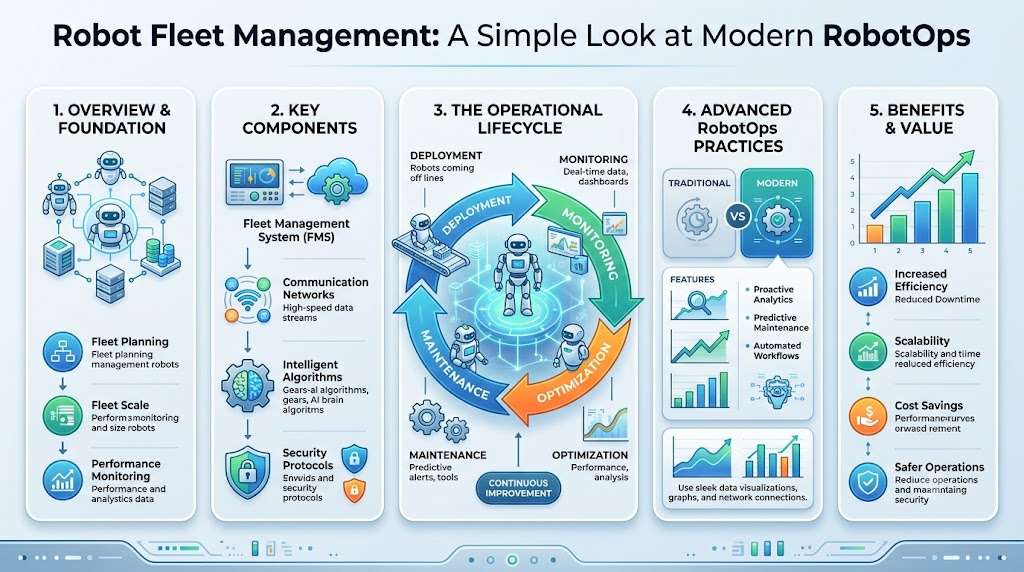
Robots now help many teams do daily work. They work in warehouses, factories, hospitals, and other places. As robot use grows, teams need better ways to manage them.
This is where RobotOps can help. RobotOps means managing robot systems in a clear and organized way. It helps teams watch robots, find problems, manage updates, and keep work running smoothly.
What Is RobotOps?
RobotOps is a way to manage robots during daily operations. It brings robot tasks, health data, updates, and alerts into one process. This helps teams understand what their robots are doing.
A RobotOps system can track many robots at once. Teams can see robot status and find issues faster. They can also manage software and system changes with less manual work.
For example, a warehouse may use 50 mobile robots. A RobotOps platform can help the team monitor all 50 robots. The team can spot a robot with low battery or a system error.
Why Is RobotOps Important?
Managing one robot can be simple. Managing hundreds of robots can become much harder. Each robot may need updates, checks, repairs, and regular monitoring.
RobotOps gives teams a better way to handle this work. It can reduce manual checks and help teams respond to issues faster. It also gives teams a clear view of robot operations.
Imagine a factory with many robotic arms. One robot stops during a busy shift. The team can get an alert and check its status quickly. This can help reduce long work delays.
How Does RobotOps Work?
RobotOps connects different parts of robot operations. These parts can include robot software, hardware data, alerts, logs, and performance details. The system collects useful information from the robots.
Teams can then use this data to monitor robot health. They can check errors, battery levels, task status, and system activity. Some systems can also support remote actions.
For example, a team may see that one robot often loses connection. The team can study its logs and find the cause. They can then fix the issue before it becomes a bigger problem.
Robot Monitoring With RobotOps
Robot monitoring helps teams know how robots are working. It can show whether a robot is active, idle, offline, or facing an error. This makes robot health easier to understand.
Good monitoring also helps teams find small issues early. A battery problem, network issue, or software error can affect robot work. Early alerts can help teams take action sooner.
For example, a delivery robot may show repeated battery warnings. The team can check the robot before its battery fails. This can prevent missed tasks and unwanted downtime.
Robot Software Updates
Robots need software updates to stay secure and useful. These updates may fix bugs, improve features, or support new hardware. Managing updates becomes harder as robot numbers grow.
RobotOps can help teams plan and manage these updates. Teams can control when updates happen and check whether updates worked. This can make software management more organized.
For example, a company may have 200 warehouse robots. Updating each robot by hand would take a lot of time. A managed update process can reduce this manual work.
RobotOps and Automation
Automation is an important part of RobotOps. Teams can automate common tasks that would otherwise need manual work. This can save time and reduce simple human errors.
Automation can support alerts, health checks, software updates, and routine actions. Teams can set rules for common robot events. The system can then respond based on those rules.
For example, a robot may become disconnected from the network. The system can detect the problem and create an alert. It may also start a basic recovery action when supported.
Benefits of RobotOps
RobotOps can make robot management easier for growing teams. It gives teams better visibility into robot health and daily work. It can also reduce repeated manual tasks.
Better monitoring can help teams find problems sooner. Organized updates can reduce software management work. Clear data can also help teams understand robot performance.
Some common benefits include:
- Better robot visibility
- Faster issue detection
- Easier software updates
- Less manual work
- Better operational control
- Improved robot uptime
RobotOps in Warehouses
Warehouses often use many robots for moving goods. These robots may carry boxes, move shelves, or support picking tasks. Managing them needs strong monitoring and control.
RobotOps helps warehouse teams watch robot activity. Teams can check robot status, errors, battery levels, and task progress. This can help keep warehouse work moving.
For example, a warehouse may have robots working all day. If several robots stop at once, the team needs quick information. RobotOps can help show which robots need attention.
RobotOps in Manufacturing
Manufacturing plants use robots for many repeated tasks. Robots may weld, assemble, inspect, or move parts. A problem with one robot can affect the whole production process.
RobotOps helps teams monitor these robots during production. Teams can track robot health and review system events. This can help them react when problems appear.
For example, one robotic arm may start showing repeated errors. The team can review its activity and error logs. They can then plan maintenance before the problem causes longer downtime.
Challenges in RobotOps
RobotOps can improve robot management, but it also has challenges. Robots may use different hardware, software, and communication systems. Connecting these systems can take careful planning.
Security is another important concern. Robots can connect to networks and other systems. Teams must protect robot data and control access carefully.
Large robot fleets also create more data. Teams need useful ways to store and understand that data. A clear RobotOps process can help turn this data into useful information.
RobotOps and Predictive Maintenance
Predictive maintenance uses robot data to find possible problems early. It looks for changes in robot behavior or performance. This can help teams plan maintenance before a failure happens.
RobotOps can support this process by collecting robot health data. Teams can study errors, sensor data, battery use, and other signals. These details can help show possible equipment problems.
For example, a robot motor may slowly use more power than normal. This change may show a possible motor issue. The team can inspect the robot before the motor fails.
Future of RobotOps
Robot use is growing across many industries. More robots will create a greater need for simple management systems. RobotOps will become more important as robot fleets grow.
Future RobotOps systems may use more AI and automation. These systems could help detect unusual behavior and suggest actions. They may also support more remote robot management.
The main goal will remain simple. Teams need safe, reliable, and easy ways to manage robots. Better RobotOps can help teams get more value from their robotic systems.
Conclusion
RobotOps helps teams manage robots in a more organized way. It brings monitoring, updates, alerts, maintenance, and daily operations together. This can make robot management easier as fleets grow.
The value of RobotOps goes beyond watching robots. It helps teams find problems, reduce manual work, and improve visibility. It also supports better planning for robot maintenance and software changes.
As more industries use robots, good robot management will matter more. RobotOps can give teams a clear process for running robotic systems. This makes it an important part of modern robot operations.