Introduction
Experiencing persistent difficulty with bowel movements is a widespread health concern that affects millions of individuals worldwide. While occasional bowel sluggishness is a minor inconvenience that usually resolves on its own, ongoing difficulty passing stool can significantly disrupt daily routines, physical comfort, and overall well-being. When bowel irregularities stretch across weeks or months, addressing them becomes essential for maintaining digestive health.For reliable health information, diagnostic insights, and hospital discovery tools, GASTROHOSPITALS provides patient-centered resources to help you understand gastrointestinal conditions and locate specialized care facilities.
What Is Chronic Constipation?
Chronic constipation is clinically defined as infrequent bowel movements or difficult passage of stool that persists for several weeks, months, or longer. Unlike acute constipation—which may occur temporarily due to travel, short-term illness, or a brief dietary shift—chronic constipation involves ongoing mechanical or functional disruptions in how the colon processes and eliminates waste.
Understanding Chronic Constipation Subtypes
 ├── Functional Constipation (Primary)
 │    ├── Normal-Transit Constipation (Standard movement speed, but perceived difficulty or hard stool)
 │    ├── Slow-Transit Constipation (Impaired colonic motor activity leads to delayed waste movement)
 │    └── Pelvic Floor Dysfunction (Dyssynergic defecation: uncoordinated pelvic floor muscle relaxation)
 └── Secondary Constipation
      ├── Metabolic / Endocrine (e.g., Hypothyroidism, Diabetes, Hypercalcemia)
      ├── Neurological (e.g., Parkinson's Disease, Multiple Sclerosis, Spinal Cord Lesions)
      ├── Structural / Anatomical (e.g., Colorectal Strictures, Rectocele, Tumors)
      └── Medication-Induced (e.g., Opioids, Calcium Channel Blockers, Iron Supplements)
From a clinical standpoint, functional constipation is categorized into distinct primary subtypes based on underlying colonic motility and muscle function:
- Normal-Transit Constipation: The most common form, where waste moves through the colon at a normal speed, but patients experience difficulty passing hard stools, abdominal bloating, or a feeling of incomplete evacuation.
- Slow-Transit Constipation: Caused by impaired motor activity in the smooth muscle layers of the colon. Waste moves sluggishly through the bowel, leading to prolonged water absorption, resulting in dry, hard, infrequent stools.
- Pelvic Floor Dysfunction (Dyssynergic Defecation): Occurs when the muscles of the pelvic floor and anal sphincters fail to relax, or contract inappropriately, during attempts to evacuate stool.
When no clear structural, metabolic, or systemic cause can be identified despite thorough medical testing, the condition is referred to as Chronic Idiopathic Constipation (CIC). Seeking a formal medical evaluation helps differentiate primary functional bowel disorders from secondary medical conditions that require targeted therapy.
Common Causes of Chronic Constipation
Because the colon’s primary job is to absorb water from digested food waste while moving it toward the rectum, any factor that slows waste movement or reduces stool moisture can contribute to chronic constipation.
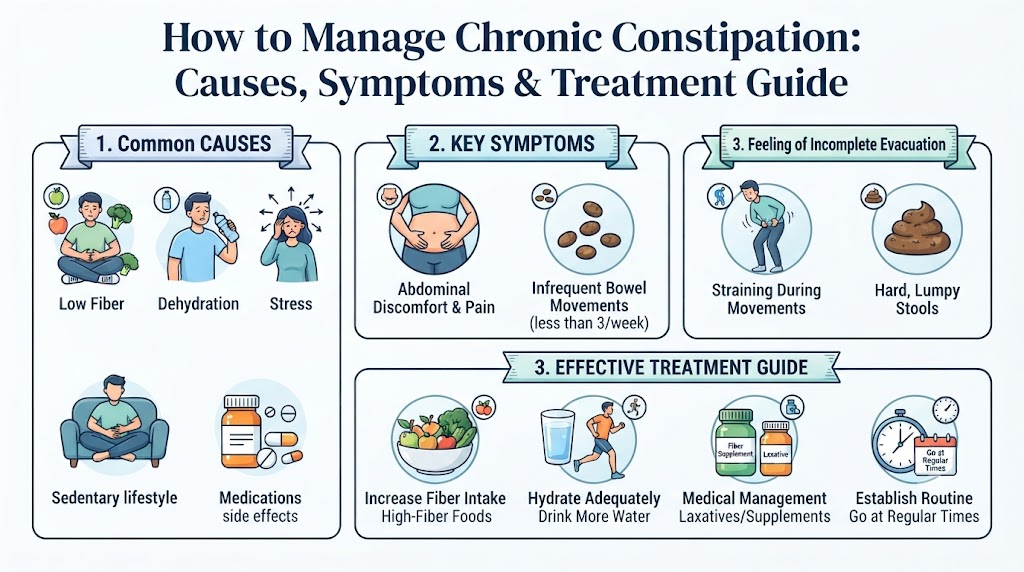
- Low-Fiber Diet: Dietary fiber adds bulk and retains water within the stool. A diet reliant on processed foods and lacking adequate whole grains, legumes, fruits, and vegetables leads to small, dense stools that move slowly through the digestive tract.
- Inadequate Fluid Intake: When total body hydration is insufficient, the colon absorbs excess water from waste material to maintain systemic fluid balance. This leaves the remaining stool dry, compact, and difficult to pass.
- Lack of Physical Activity: Regular physical movement stimulates natural peristalsis—the wave-like muscular contractions of the intestines. A sedentary lifestyle decreases intestinal motility, encouraging sluggish bowel transit.
- Ignoring the Urge to Defecate: Consistently suppressing or delaying the natural urge to have a bowel movement allows waste to remain in the rectum longer, where continuous water absorption makes the stool progressively harder.
- Medications: Numerous prescription and over-the-counter drugs can slow gastrointestinal transit. Common culprits include opioid analgesics, iron supplements, calcium channel blockers, certain antidepressants, antacids containing aluminum or calcium, and anticholinergic agents.
- Irritable Bowel Syndrome with Constipation (IBS-C): A functional gastrointestinal disorder characterized by recurrent abdominal pain, bloating, and altered bowel habits dominated by constipation.
- Metabolic and Endocrine Disorders: Systemic conditions like hypothyroidism, diabetes mellitus, elevated blood calcium (hypercalcemia), and kidney disease can alter nerve signaling and muscle function throughout the digestive tract.
- Neurological Conditions: Conditions that affect the central or autonomic nervous systems—such as Parkinson’s disease, multiple sclerosis, stroke, or spinal cord injuries—can disrupt the neural pathways controlling colonic motility.
- Pelvic Floor Muscle Dysfunction: Inability to coordinate the contraction and relaxation of pelvic floor muscles and anal sphincters during bowel movements prevents smooth stool evacuation.
- Age-Related Changes: Aging can be accompanied by reduced physical mobility, increased medication use, changes in dietary intake, and diminished colonic wall elasticity, increasing susceptibility to constipation.
Symptoms of Chronic Constipation
Recognizing the full spectrum of symptoms associated with chronic constipation helps individuals determine when self-care adjustments are appropriate and when to seek medical evaluation.
Common Clinical Features of Chronic Constipation
 ├─ Stool Frequency: Fewer than three spontaneous bowel movements per week
 ├─ Stool Consistency: Hard, lumpy, or pebble-like stools (Bristol Stool Chart Types 1 & 2)
 ├─ Evacuation Effort: Excessive straining or sensation of blockage in the rectum
 ├─ Post-Evacuation: Persistent feeling of incomplete evacuation or rectal fullness
 └─ Abdominal Discomfort: Distension, generalized bloating, & mild lower abdominal cramping
- Fewer Than Three Bowel Movements Per Week: While normal bowel frequency ranges from three times a day to three times a week, persistently passing fewer than three stools weekly is a primary indicator of sluggish transit.
- Hard, Lumpy, or Pebble-Like Stools: Stools that appear dense, dry, or cracked (corresponding to Types 1 and 2 on the Bristol Stool Chart) reflect excessive fluid extraction within the colon.
- Excessive Straining: Feeling the need to push forcefully during bowel movements indicates that stool is dry or that pelvic floor muscles are failing to relax properly.
- Feeling of Incomplete Evacuation: A persistent sensation that waste remains in the rectum even after completing a bowel movement.
- Sensation of Rectal Blockage: Feeling as though there is a physical obstruction preventing stool from exiting the anal canal.
- Abdominal Bloating and Fullness: Accumulation of trapped gas and retained waste leads to visible abdominal distension and generalized discomfort.
- Need for Manual Assistance: In severe cases, individuals may feel compelled to press on their pelvic floor or use a finger to facilitate stool evacuation.
Chronic Constipation Management Comparison Table
The following summary table outlines foundational strategies for managing sluggish bowel transit, along with their primary benefits and practical impact:
| Management Strategy | Primary Clinical Mechanism | Expected Impact on Digestive Health |
| Increase Dietary Fiber | Adds bulk to stool and retains moisture in the colon. | Softens stool, increases volume, and speeds transit time. |
| Maintain Adequate Hydration | Provides necessary fluid for fiber absorption and stool softening. | Prevents dry, hard, compact stools from forming. |
| Engage in Regular Exercise | Stimulates natural peristaltic contractions of intestinal muscles. | Encourages faster transit and improves colonic motility. |
| Establish Toilet Habits | Utilizes the body’s natural gastrocolic reflex after meals. | Retrains the bowel to evacuate at predictable times. |
| Medical Therapies (Guided) | Draws water into the bowel or stimulates intestinal nerves. | Provides safe, consistent relief under clinical supervision. |
| Pelvic Floor Biofeedback | Retrains uncoordinated pelvic floor and sphincter muscles. | Restores normal muscle relaxation during bowel movements. |
| Gastroenterology Evaluation | Identifies underlying anatomical, structural, or motor issues. | Delivers a targeted, diagnostic care plan. |
Lifestyle Changes That Help
Implementing healthy daily habits serves as the first-line, non-pharmacological approach to managing chronic constipation and supporting long-term bowel regularity.
Daily Lifestyle Framework for Bowel Health
 ├── Hydration & Fiber Baseline (25–38g daily fiber + adequate water intake)
 ├── Physical Movement (30 minutes of daily aerobic activity like brisk walking)
 ├── Bathroom Habits (Utilize the post-meal gastrocolic reflex; never ignore urges)
 └── Posture Optimization (Elevate knees using a toilet footstool to align the rectum)
Increase Dietary Fiber Gradually
Dietary fiber is essential for healthy digestion. Soluble fiber absorbs water to form a gel-like consistency that keeps stool soft, while insoluble fiber adds structural bulk that prompts the colon to contract. Increase fiber intake gradually over two to three weeks to avoid temporary gas, bloating, or abdominal cramping.
Maintain Consistent Daily Hydration
Fiber requires water to work effectively. Without adequate fluid, high fiber intake can actually worsen constipation by creating dense, unpliable waste masses. Drink water consistently throughout the day, adjusting fluid goals for physical activity, warm climates, and overall health status.
Engage in Regular Physical Activity
Regular physical movement—such as brisk walking, swimming, cycling, or yoga—helps stimulate gastrointestinal motility. Physical activity increases blood flow to abdominal organs and encourages the natural wave-like contractions of the intestinal wall.
Establish a Consistent Bathroom Routine
Capitalize on your body’s natural physiological reflexes. The gastrocolic reflex is most active shortly after eating, particularly after breakfast. Set aside 10 to 15 minutes after meals to sit comfortably on the toilet without rushing or distraction.
Respond Promptly to Natural Urges
Never suppress or delay the urge to pass stool. Delaying a bowel movement allows the rectum to adapt to the stretch, dulling natural sensory signals over time while giving the colon more time to draw moisture out of the stool.
Optimize Toilet Posture
Traditional seating postures on modern toilets can cause the puborectalis muscle to partially choke the rectum. Placing your feet on a small footstool to elevate your knees above your hips mimics a natural squatting position. This straightens the anorectal angle, allowing stool to pass with significantly less straining.
Foods That May Support Healthy Bowel Function
Choosing nutrient-dense whole foods rich in soluble fiber, insoluble fiber, and natural digestive compounds can help soften stool and encourage regular bowel transit.
Nutrient Sources for Digestive Regularity
 ├── Soluble & Insoluble Fiber
 │    ├── Whole Grains: Oats, barley, quinoa, brown rice, whole wheat
 │    ├── Legumes: Lentiis, chickpeas, black beans, split peas
 │    └── Vegetables: Broccoli, Brussels sprouts, carrots, sweet potatoes
 ├── Natural Laxative & Enzyme Fruits
 │    ├── Prunes (Dried Plums): High in sorbitol & phenolic compounds
 │    ├── Kiwi Fruit: Rich in actinidin enzymes & gel-forming fiber
 │    └── Apples & Pears: Rich in pectin & natural fruit sugars
 └── Healthy Fats & Seeds
      ├── Ground Flaxseeds & Chia Seeds: High in mucilage fiber
      └── Nuts: Almonds, walnuts, chia, and sunflower seeds
- Prunes (Dried Plums) and Prune Juice: Contain high levels of dietary fiber alongside sorbitol—a naturally occurring sugar alcohol that draws water into the intestinal lumen, acting as a natural osmotic agent.
- Kiwi Fruit: Packed with soluble fiber and the natural enzyme actinidin, kiwi has been clinically shown to improve bowel frequency, soften stool, and reduce abdominal discomfort without causing gas.
- Whole Grains: Rolled oats, barley, quinoa, brown rice, and whole-wheat preparations provide dense insoluble fiber that increases stool weight and speeds colonic transit.
- Legumes: Lentils, black beans, chickpeas, and navy beans are among the most fiber-dense foods available, providing a balanced mix of soluble and insoluble fibers.
- Fresh Vegetables: Broccoli, Brussels sprouts, carrots, artichokes, and leafy greens supply essential bulk, vitamins, and minerals that support healthy gut motility.
- Nuts and Seeds: Ground flaxseeds, chia seeds, almonds, and pumpkin seeds absorb water to form a mucilaginous gel that coats and softens stool.
- Hydrating Fruits: Apples, pears, berries, and oranges are high in water content, pectin, and dietary fiber that nourish beneficial gut bacteria.
When increasing dietary fiber, remember to drink plenty of fluids so the fiber can absorb moisture and move smoothly through your digestive system.
Medical Treatments for Chronic Constipation
When lifestyle and dietary changes alone do not provide sufficient relief, gastroenterologists may recommend targeted medical therapies based on the underlying cause of your constipation.
Medical Treatment Spectrum
 ├── Over-the-Counter Options
 │    ├── Fiber Supplements (Bulk-forming: Psyllium, Methylcellulose)
 │    ├── Osmotic Agents (Polyethylene Glycol, Magnesium Hydroxide)
 │    ├── Stool Softeners (Docusate Sodium - gentler surface-acting agents)
 │    └── Stimulant Laxatives (Senna, Bisacodyl - short-term use)
 ├── Targeted Prescription Agents
 │    ├── Secretagogues (Lubiprostone, Linaclotide, Plecanatide)
 │    └── Serotonergic Agonists (Prucalopride)
 └── Neuromuscular Therapies
      └── Pelvic Floor Biofeedback Therapy (Retraining muscle coordination)
Fiber Supplements (Bulk-Forming Laxatives)
Supplements like psyllium husk, methylcellulose, or calcium polycarbophil absorb water in the intestine to create larger, softer stools. They are generally safe for long-term daily use but must be taken with plenty of water to prevent blockages.
Osmotic Laxatives
Agents such as polyethylene glycol (PEG), milk of magnesia, and lactulose work by drawing fluid into the intestinal lumen. This increases stool moisture and volume, stimulating natural bowel contractions without causing harsh cramping.
Stool Softeners (Emollients)
Formulations like docusate sodium act as wetting agents, allowing fluids and lipids to penetrate hard waste masses. They are particularly useful for individuals who must avoid straining, such as those recovering from surgery or managing painful hemorrhoids.
Stimulant Laxatives
Medications containing senna or bisacodyl stimulate the nerve plexus within the intestinal wall, triggering rhythmic muscle contractions. While effective for temporary relief, they should be used under medical guidance to avoid dependence or severe cramping.
Targeted Prescription Medications
For persistent conditions like Chronic Idiopathic Constipation (CIC) or IBS-C, gastroenterologists may prescribe advanced targeted therapies:
- Intestinal Secretagogues: Drugs such as lubiprostone, linaclotide, and plecanatide stimulate chloride and fluid secretion into the intestinal lumen, accelerating transit and reducing abdominal pain.
- Prokinetic Agents: Medications like prucalopride act on serotonin (5-HT4) receptors in the gut wall to enhance colonic peristalsis and speed up transit time.
Biofeedback Therapy for Pelvic Floor Dysfunction
If diagnostic testing reveals dyssynergic defecation, pelvic floor biofeedback therapy is the gold-standard treatment. Guided by a specialized physical therapist, patients use visual or auditory feedback sensors to retrain their pelvic muscles to relax naturally during bowel movements.
Diagnostic Tests Your Doctor May Recommend
If your symptoms are persistent, severe, or do not respond to initial management, a gastroenterologist may order diagnostic tests to evaluate intestinal motor function and structural health.
Diagnostic Evaluation Pathway
 ├── Phase 1: Baseline Assessment (Medical history, physical exam, blood work)
 ├── Phase 2: Structural Evaluation (Colonoscopy or CT colonography to rule out blockages)
 └── Phase 3: Motility & Anorectal Diagnostics
      ├── Colonic Transit Studies (Radiopaque markers or wireless motility capsule)
      ├── Anorectal Manometry (Measures anal sphincter pressures & rectal sensation)
      └── Balloon Expulsion Test (Evaluates physical ability to evacuate a small balloon)
- Detailed Medical History and Physical Exam: The physician evaluates your symptoms, dietary habits, medication list, and performs an abdominal and digital rectal examination to check for structural issues or muscle tightness.
- Laboratory Blood Tests: Blood samples check for underlying systemic conditions, such as thyroid dysfunction (hypothyroidism), elevated calcium levels, or signs of inflammation.
- Colonoscopy: A flexible, lighted scope is used to examine the lining of the entire large intestine. This test rules out structural blockages, strictures, polyps, inflammatory bowel disease, or colorectal tumors.
- Anorectal Manometry: A thin, pressure-sensitive catheter is inserted into the rectum to measure muscle pressures, evaluate rectal sensation, and assess how well pelvic floor muscles coordinate during simulated defecation.
- Balloon Expulsion Test: Measures the time required to evacuate a small, water-filled balloon from the rectum, providing a straightforward assessment of pelvic floor muscle coordination.
- Colonic Transit Studies: The patient swallows a capsule containing radiopaque markers or a wireless motility sensor. X-rays taken over several days track how quickly waste moves through different sections of the colon.
When to See a Gastroenterologist
While occasional constipation is common and usually manageable at home, certain symptoms require formal medical evaluation by a digestive specialist.
Indications for Specialist Evaluation
 ├── Persistent Duration: Symptoms lasting longer than several weeks
 ├── Alarm "Red Flag" Symptoms
 │    ├── Rectal bleeding or blood mixed in stool (maroon or black stools)
 │    ├── Unexplained, unintended weight loss
 │    ├── Severe, persistent abdominal pain or vomiting
 │    └── Unexpected onset of symptoms after age 50
 └── Non-Responsive Condition: No improvement after basic fiber & lifestyle changes
Schedule an appointment with a gastroenterologist if you experience:
- Persistent Symptoms: Constipation that lasts for several weeks despite increasing dietary fiber, fluid intake, and exercise.
- Blood in the Stool: Bright red blood on toilet tissue, in the bowl, or dark, tarry stools, which warrant prompt investigation.
- Unexplained Weight Loss: Unintended weight loss accompanying digestive changes can signal an underlying condition.
- Severe Abdominal Pain: Intense, persistent abdominal pain, cramping, or vomiting alongside an inability to pass gas or stool.
- New Onset After Age 50: Unexplained changes in bowel habits that begin later in life require medical evaluation to rule out structural issues.
- Family History of GI Disease: A personal or family history of colorectal cancer, inflammatory bowel disease, or celiac disease.
How to Choose the Right Gastroenterology Hospital
Selecting an appropriate medical facility ensures access to experienced physicians, advanced diagnostic technology, and comprehensive care plans.
                      ┌─────────────────────────────────────────┐
                      │   Hospital Evaluation Criteria          │
                      └────────────────────┬────────────────────┘
                                           │
         ┌─────────────────────────────────┼─────────────────────────────────┐
         ▼                                 ▼                                 ▼
┌──────────────────┐              ┌──────────────────┐              ┌──────────────────┐
│ Clinical Expertise│             │ Diagnostic Power │              │ Comprehensive    │
├──────────────────┤              ├──────────────────┤              ├──────────────────┤
│• Board-certified │              │• High-definition │              │• Pelvic floor    │
│  gastroenterologists            │  endoscopy suites│              │  biofeedback unit│
│• Motility disorder│             │• Anorectal       │              │• Tailored        │
│  specialists     │              │  manometry tech  │              │  nutrition plans │
└──────────────────┘              └──────────────────┘              └──────────────────┘
Consider the following clinical priorities when evaluating healthcare facilities:
- Board-Certified Gastroenterologists: Confirm that the medical team includes specialists with dedicated fellowship training in gastroenterology and functional bowel disorders.
- Motility and Neurogastroenterology Expertise: Look for centers with specific expertise in motility disorders, offering specialized testing like anorectal manometry and colonic transit studies.
- Advanced Endoscopic Facilities: Ensure the hospital maintains modern, high-definition endoscopy suites equipped with advanced sedation and monitoring protocols.
- Comprehensive Pelvic Floor Rehabilitation: Choose facilities that offer integrated pelvic floor biofeedback therapy and physical therapy services on site.
- Multidisciplinary Teamwork: Select centers where gastroenterologists collaborate closely with registered dietitians, motility technicians, and colorectal surgeons to provide holistic care.
Hospital Selection Checklist
Use this practical checklist when researching gastroenterology centers and discussing care options:
| Feature | What to Look For | Why It Matters |
| Specialist Credentials | Board certification in gastroenterology and hepatology. | Guarantees expert evaluation and evidence-based care. |
| Motility Diagnostics | On-site access to anorectal manometry and transit studies. | Identifies specific motor and muscle dysfunctions. |
| Endoscopy Capabilities | Modern high-definition colonoscopy suites. | Allows for accurate structural evaluation and polyp removal. |
| Biofeedback Unit | Dedicated pelvic floor physical therapy and biofeedback. | Provides non-invasive treatment for dyssynergic defecation. |
| Nutritional Services | Access to specialized gastrointestinal dietitians. | Helps tailor sustainable, high-fiber dietary strategies. |
| Follow-Up Programs | Structured progress reviews and long-term care plans. | Ensures long-term symptom control and treatment adjustments. |
Possible Complications of Chronic Constipation
Leaving chronic constipation unmanaged can lead to secondary physical complications caused by persistent straining and hard waste masses.
- Hemorrhoids: Straining increases pressure in the veins surrounding the anus and lower rectum, causing them to swell, inflame, and occasionally bleed.
- Anal Fissures: Passing hard, dry, or oversized stools can stretch and tear the delicate mucosal lining of the anal canal, causing sharp pain and bright red bleeding during bowel movements.
- Fecal Impaction: Prolonged constipation can allow a dense, immovable mass of dry stool to become wedged in the rectum, requiring medical intervention to remove safely.
- Rectal Prolapse: Years of chronic straining can cause a small portion of the rectal mucous membrane to stretch and slip protrude through the anal opening.
- Reduced Quality of Life: Chronic abdominal distension, discomfort, and nausea can affect daily productivity, mood, and social well-being.
Early evaluation and proactive management help prevent these secondary complications from developing.
How GASTROHOSPITALS Helps Patients
Navigating digestive health concerns and finding qualified medical specialists can feel challenging. Platform resources help streamline your search and support informed care decisions.
- Hospital Discovery Tools: Access organized information about accredited gastroenterology hospitals, endoscopy centers, and digestive health clinics.
- Specialization Insights: Learn how different medical centers structure their neurogastroenterology departments, motility labs, and pelvic floor units.
- Patient Education Resources: Read clear, medically accurate articles explaining functional bowel disorders, diagnostic procedures, and treatment options.
- Gastroenterology Guides: Explore educational content covering IBS-C, motility testing, dietary management, and preventive gut health.
- Empowered Care Planning: Use practical checklists and diagnostic summaries to prepare for consultations and select facilities that meet your specific needs.
Common Mistakes People Make
Achieving comfortable, regular bowel movements involves avoiding common habits that can worsen sluggish digestion:
Common Digestive Pitfalls
 ├── Increasing Dietary Fiber Rapidly Without Increasing Water Intake
 ├── Overusing Over-the-Counter Stimulant Laxatives Long-Term
 ├── Ignoring or Delaying Natural Bowel Urges
 ├── Remaining Sedentary Throughout the Workday
 └── Delaying Specialist Care When Symptoms Persist
Increasing Fiber Too Quickly Without Water
Adding large amounts of fiber to your diet overnight without drinking enough fluid can cause severe gas, abdominal bloating, and even worsen constipation by creating dense stool masses. Always increase fiber gradually and stay well-hydrated.
Overusing Stimulant Laxatives
Relying on over-the-counter stimulant laxatives for weeks or months without medical supervision can cause cramping and mask underlying structural or motility issues. Use stimulant laxatives judiciously and seek professional advice for persistent symptoms.
Suppressing Natural Urges
Consistently ignoring or delaying the urge to pass stool dulls rectal sensation over time and allows the colon to extract more water, leaving stools hard and difficult to evacuate.
Sitting for Prolonged Periods
A sedentary lifestyle slows colonic transit time. Incorporating daily physical movement—such as walking breaks during the workday—supports intestinal motility.
Delaying Medical Evaluation
Assuming that chronic constipation is simply a minor nuisance and ignoring persistent symptoms can delay diagnosis of underlying motility disorders, pelvic floor dysfunction, or structural issues.
Common Myths vs. Facts
Clearing up common misunderstandings helps patients approach bowel health with clear, realistic expectations:
| Myth | Fact |
| Everyone must have a bowel movement every single day. | Normal bowel frequency varies widely, ranging from three times a day to three times a week, as long as stools pass comfortably. |
| All laxatives are habit-forming and dangerous. | Bulk-forming and osmotic laxatives are generally safe for long-term use when guided by a healthcare professional. |
| Eating more fiber will cure every case of constipation. | While fiber helps many people, conditions like slow-transit constipation or pelvic floor dysfunction require targeted medical therapies. |
| Constipation is always caused by a poor diet. | Constipation can stem from medications, hormonal imbalances, neurological conditions, or pelvic muscle dysfunction, even with a balanced diet. |
| Enemas and colon cleanses are necessary to detoxify the gut. | The body naturally eliminates waste. Overusing enemas can disrupt electrolyte balances and irritate the rectal lining. |
Real-Life Educational Scenarios
Scenario 1: Restoring Regularity Through Fiber, Hydration, and Movement
A thirty-five-year-old office worker experiences hard stools, straining, and bloating after transitioning to a sedentary desk job. During a routine checkup, their physician recommends gradually increasing daily fiber intake with oats, berries, and lentils, alongside drinking more water and taking a 30-minute daily walk. Within four weeks, stool consistency softens, straining decreases, and bowel movements become more regular.
Scenario 2: Overcoming Pelvic Floor Dysfunction with Biofeedback
An individual experiences severe straining and a persistent feeling of incomplete evacuation despite eating a high-fiber diet and taking daily fiber supplements. Their gastroenterologist orders anorectal manometry and a balloon expulsion test, which reveal dyssynergic defecation—inappropriate contraction of pelvic floor muscles during evacuation. The patient completes a course of pelvic floor biofeedback therapy, learning to relax the necessary muscles and achieving comfortable, unassisted bowel movements.
Scenario 3: Identifying Medication-Induced Constipation
A patient recovering from joint surgery experiences severe constipation after starting prescription opioid pain medications. Working with their doctor, they adjust their pain management plan to include non-opioid options alongside a temporary regimen of osmotic laxatives. As medication doses are lowered, normal bowel function returns.
Scenario 4: Managing IBS-C with Targeted Prescription Therapy
An individual living with long-standing abdominal pain, severe bloating, and infrequent bowel movements receives a diagnosis of Irritable Bowel Syndrome with Constipation (IBS-C). When dietary changes provide only partial relief, their gastroenterologist prescribes a targeted intestinal secretagogue. Over several weeks, the medication increases intestinal fluid secretion, easing abdominal discomfort and restoring regular bowel habits.
FAQs (15 Questions)
1. What is chronic constipation?
Chronic constipation is defined as infrequent bowel movements (typically fewer than three per week), excessive straining, hard or lumpy stools, or a feeling of incomplete evacuation that lasts for several weeks or longer.
2. What are the most common causes of chronic constipation?
Common causes include low dietary fiber intake, inadequate fluid consumption, lack of physical activity, delaying bowel movements, certain medications, IBS-C, thyroid disorders, and pelvic floor muscle dysfunction.
3. How much dietary fiber should adults consume daily?
Most healthcare guidelines recommend that adults consume between 25 and 38 grams of total dietary fiber per day from a variety of whole foods, fiber supplements, or both.
4. Which foods help promote healthy bowel function?
Prunes, kiwi fruit, oats, flaxseeds, chia seeds, lentils, beans, broccoli, apples, and pears are high in fiber, water, and natural compounds that support bowel regularity.
5. How much water should I drink to support bowel health?
Aim to drink fluids consistently throughout the day, ensuring your intake matches your activity level, climate, and fiber intake. Adequate hydration keeps fiber soft and pliable.
6. When should I see a doctor for constipation?
Consult a doctor if constipation persists for several weeks, fails to improve with lifestyle changes, or is accompanied by red-flag symptoms such as blood in the stool, unexplained weight loss, severe pain, or fever.
7. Are over-the-counter laxatives safe for long-term use?
Bulk-forming fiber supplements and osmotic laxatives (like polyethylene glycol) are generally safe for long-term use under medical guidance. Stimulant laxatives should generally be used for short periods unless directed otherwise by a physician.
8. What diagnostic tests evaluate chronic constipation?
Specialists may recommend blood tests, a colonoscopy, colonic transit studies, anorectal manometry, or a balloon expulsion test to evaluate structural health and muscle coordination.
9. What is pelvic floor dysfunction (dyssynergic defecation)?
Pelvic floor dysfunction occurs when the muscles of the pelvic floor and anal sphincters fail to relax, or contract inappropriately, during attempts to evacuate stool, blocking normal passage.
10. Can psychological stress contribute to constipation?
Yes. The brain and gut communicate continuously via the brain-gut axis. High stress and anxiety can alter intestinal motility, increase visceral sensitivity, and slow bowel transit.
11. Which common medications cause constipation?
Opioid pain relievers, iron supplements, calcium channel blockers, certain antidepressants, antihistamines, and aluminum-containing antacids frequently cause or worsen constipation.
12. What secondary complications can result from chronic constipation?
Unmanaged chronic constipation can lead to hemorrhoids, painful anal fissures, fecal impaction, and rectal prolapse due to chronic straining and dry stools.
13. How do gastroenterologists treat persistent constipation?
Treatment options include personalized high-fiber dietary planning, osmotic or secretagogue prescription medications, prokinetic agents, pelvic floor biofeedback therapy, or addressing underlying medical conditions.
14. How do I choose the right gastroenterology hospital?
Look for medical centers with board-certified gastroenterologists, specialized motility diagnostic labs, high-definition endoscopy suites, pelvic floor biofeedback units, and integrated nutritional support services.
15. How does GASTROHOSPITALS help patients with chronic constipation?
GASTROHOSPITALS offers educational articles, diagnostic guidance, and hospital discovery tools to help patients locate experienced gastroenterologists, explore treatment options, and make informed digestive health choices.
Final Thoughts
Managing chronic constipation is a gradual process that involves understanding your body’s unique digestive signals, adopting healthy daily habits, and seeking expert medical evaluation when needed. While sluggish bowel transit can be frustrating, taking a structured approach to diet, hydration, physical activity, and posture can restore bowel regularity and comfort.When self-care adjustments are not enough, partnering with a board-certified gastroenterologist ensures that underlying motor, structural, or pelvic floor issues are accurately diagnosed and treated with evidence-based therapies.