Introduction
Travel can be exciting, but it can also change your normal digestion. New foods, different meal times, long journeys, and less sleep may affect your stomach. Some travelers may notice bloating, constipation, diarrhea, gas, or changes in appetite. Good planning can help lower the chance of common travel stomach problems.The best tips for digestive health during travel are simple. Choose food carefully, drink safe water, wash your hands, and stay hydrated. Try to keep regular meal and bathroom habits when possible. Gastrohospitals can also help readers explore general information about digestive health and hospital care.These steps can lower some risks, but they cannot prevent every illness. Stomach symptoms may have many causes. Severe or lasting symptoms need proper medical attention.
Why Digestive Health Can Change During Travel
Travel can change many parts of your daily routine. You may eat at different times or try foods that are new to you. Long flights and road trips can also reduce your normal movement. These changes may affect healthy digestion during travel.Sleep changes can also affect how you feel. Time zone changes may disturb your usual eating and bathroom routine. Stress can add to digestive discomfort for some people. However, not every stomach problem comes from stress or routine changes.Foodborne illness can also cause travel-related digestive issues. Unsafe food or water may contain germs that can make people sick. Symptoms may include diarrhea, vomiting, stomach pain, or fever. This is why food safety while traveling deserves careful attention.
Choose Food Carefully
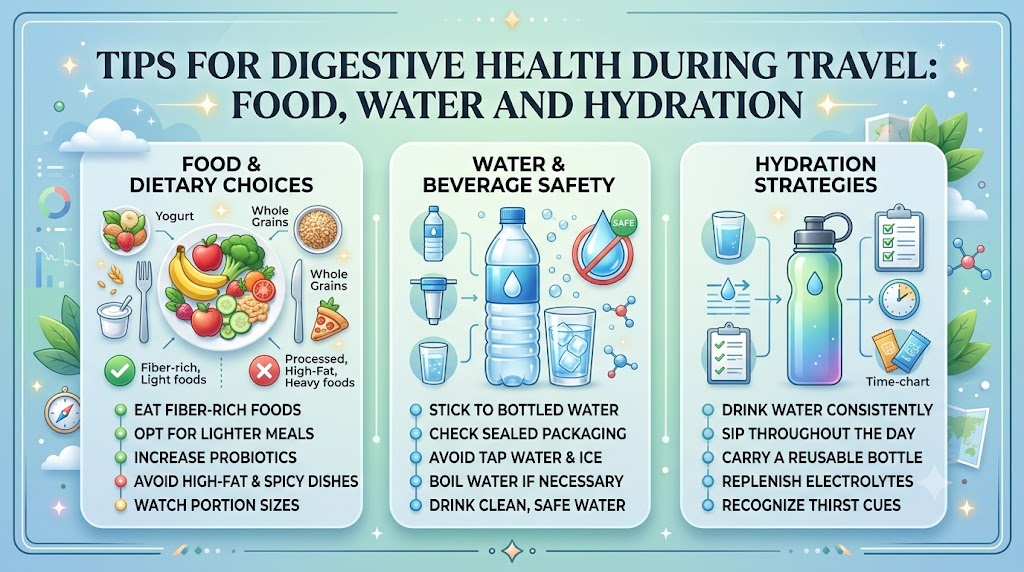
Food choices can play an important role in digestive health while traveling. Fully cooked food served hot is often a safer choice. Be careful with raw or undercooked meat, seafood, and eggs. Unpasteurized dairy products may also carry a higher infection risk.
Food can become unsafe when it stays at poor temperatures. Bacteria can grow when food is not stored or handled safely. Travelers should consider how food was prepared and stored. This does not mean every restaurant or street vendor is unsafe.
Freshly cooked meals can be easier to assess. Choose places where food handling looks clean and organized. Be cautious with foods that have been sitting out for a long time. When unsure about a food, choosing another option may be safer.
Drink Safe Water and Be Careful With Ice
Safe drinking water during travel is important in places where local water may not be treated safely. Choose water from a trusted and safe source. Unopened factory-sealed drinks can be an option when their seals are intact. Avoid containers that look damaged or tampered with.Ice also deserves attention. Ice may be made from water that is not safe to drink. Ask about the water source when you are unsure. Using unsafe water for brushing your teeth can also expose you to germs.Clear water is not always safe water. Some harmful germs cannot be seen, smelled, or tasted. Follow local health advice about water safety at your destination. Safe water choices can help reduce the risk of diarrhea and other infections.
Wash Your Hands and Protect Food Hygiene
Clean hands are one of the simplest ways to protect digestive health. Wash your hands with soap and safe water before eating. Wash them again after using the toilet. Good hand hygiene can reduce the spread of germs.Sometimes soap and water may not be available. In those situations, a suitable alcohol-based hand sanitizer can help. Sanitizer may work less well when your hands are visibly dirty. Wash with soap and water when you can.Keep food containers and eating tools clean during your trip. Avoid placing clean utensils on dirty surfaces. Be careful when sharing food with others. Small hygiene steps can help lower exposure to germs.
Keep Meals Balanced and Eating Habits Steady
Travel can make regular eating habits difficult. You may skip meals and then eat a very large meal later. Some people may feel bloated or uncomfortable after this change. Keeping meal times fairly steady may help your stomach adjust.Try to include a variety of foods that suit your normal needs. Introduce unfamiliar foods gradually if your stomach is sensitive. Eating many rich or unfamiliar foods at once may cause discomfort for some people. Your food choices should also respect your culture and health needs.There is no single travel diet that works for everyone. Avoid strict food rules that may make travel harder. Instead, focus on safe preparation, reasonable portions, and foods you normally tolerate well. These habits can support healthy eating while traveling.
Stay Hydrated During Your Journey
Fluids matter during flights, long road trips, hot weather, and outdoor activities. Travel can make it easy to forget regular drinking habits. Safe water should remain a regular part of your journey. Your fluid needs can change with weather and activity.Diarrhea and vomiting can cause the body to lose water and salts. Oral rehydration solution can help replace these losses when appropriate. It contains water and important salts in suitable amounts. Ask a healthcare professional if you are unsure when it may be needed.Do not ignore signs that you may be losing too much fluid. Very little urine, severe weakness, dizziness, confusion, or fainting can be concerning. Repeated vomiting can also make drinking difficult. Seek medical care if you cannot keep fluids down.
Reduce Bloating, Gas, and Constipation
Long journeys often mean sitting for many hours. Less movement may contribute to bloating or constipation for some people. Changes in meals can also affect normal bowel habits. A busy travel schedule may make bathroom breaks less regular.
When it is safe, take short walks during long journeys. Give yourself enough time to eat instead of rushing through meals. Try to keep a regular bathroom routine when possible. These simple habits may support normal digestion.Some people notice more gas after fizzy drinks or very large meals. Others may react to foods they do not usually eat. Pay attention to your own patterns without following strict food rules. If constipation or bloating continues, discuss it with a healthcare professional.
Manage Travel Stress and Sleep Changes
Travel can bring excitement, worry, and changes in sleep. These changes may affect digestive comfort in some people. A busy schedule may also lead to rushed meals or missed bathroom breaks. Planning ahead can make these changes easier to manage.
Allow enough time for meals and bathroom breaks. Try to keep a steady sleep routine when possible. Simple relaxation habits may also help you manage travel stress. However, stress should not automatically be blamed for stomach symptoms.Persistent or severe symptoms need proper attention. A digestive problem may have another cause. If symptoms continue or become worse, speak with a healthcare professional. Do not assume that rest alone will solve every travel stomach problem.
Prepare Before Leaving Home
Good planning can make food safety and digestive health easier during travel. Learn about food and water safety at your destination before leaving. Local health advice may explain common risks. This can help you make better choices during your trip.
Pack regular medicines in their original packaging. Keep important health information available if you have an ongoing condition. Travelers with digestive conditions should discuss travel needs with their healthcare professional. Some people may need destination-specific advice before departure.Your healthcare professional may also discuss vaccines or other preventive steps when appropriate. Do not assume that antibiotics or prescription medicines are needed for every traveler. Preventive care should match your health needs and destination. Planning early can help you handle problems more calmly.
What to Do if Diarrhea or Vomiting Starts
Diarrhea and vomiting can happen for many reasons. Foodborne infections are one possible cause during travel. Changes in food, stress, and other illnesses may also play a role. The cause cannot always be known from symptoms alone.Focus on safe fluid replacement when these symptoms begin. Oral rehydration solution may help replace water and salts lost through diarrhea. Take small amounts of fluid when drinking feels difficult. If vomiting continues, medical advice may be needed.Do not assume that everyone needs anti-diarrhea medicine or antibiotics. These treatments are not suitable for every situation. Blood in the stool, high fever, severe pain, or repeated vomiting needs prompt medical assessment. Signs of dehydration also require attention.
Digestive Health for Children, Older Adults, and People With Health Conditions
Some travelers may need extra care with food and water safety. Young children can become dehydrated quickly when they have diarrhea or vomiting. Older adults may also face greater dehydration risks. Pregnant people and those with certain health conditions may need special advice.Before travel, discuss health concerns with a suitable healthcare professional. Ask about destination risks and steps that may apply to your situation. Keep needed health information easy to access during the trip. Good planning can make it easier to get help if symptoms develop.Safe food, clean hands, and safe water remain important for everyone. However, the right advice can differ between people. Do not assume that advice for one traveler applies to another. Extra planning can be especially useful for people with ongoing health needs.
Warning Signs That Need Medical Attention
Some digestive symptoms need more than simple travel care. Severe or worsening abdominal pain is one warning sign. Bloody or black stools can also need urgent medical assessment. Persistent vomiting may lead to serious fluid loss.High fever, fainting, confusion, or serious dehydration are also concerning. Very little urine, severe weakness, or inability to drink may signal a serious problem. Seek urgent medical help when severe symptoms occur. Do not wait until the trip ends if emergency care may be needed.Diarrhea that continues for two weeks or longer after travel also needs medical evaluation. Tell the healthcare professional about your recent travel. Mention foods, water exposure, and other important details when asked. Travel history can help guide further assessment.
How to Find Digestive Health Support While Traveling
It helps to know where you can seek medical care before a trip. Travelers can research local clinics, hospitals, or medical services in advance. Keep travel insurance information available if you have coverage. Save important health details where you can access them easily.If symptoms develop, explain them clearly to the healthcare professional. Mention when symptoms started and whether they are getting worse. Tell them about recent meals and possible water exposure. Also mention any ongoing health conditions when relevant.People who remain sick after returning home should share their travel history. This information can help a healthcare professional understand possible causes. Do not hide travel details because they may seem unrelated. Clear information can support a more complete medical assessment.
How GastroHospitals.com Can Help Readers Learn About Digestive Care
Reliable digestive health information can help travelers prepare before leaving home. It can explain common digestive concerns and help people understand when professional care may be needed. Good information can also help travelers prepare useful questions for a healthcare visit.GastroHospitals.com can serve as a general resource for exploring digestive health topics and hospital care information. Readers should use online information for education, not as a replacement for personal medical advice. Hospital details and available services should always be confirmed directly when needed.Travelers can also use health information to plan ahead. Learning about food safety, hydration, and warning signs can improve preparation. When symptoms become serious, professional medical care should take priority over online research.
A Fictional Travel Example
Fictional example: Arjun travels to another country and develops stomach discomfort after eating several unfamiliar foods. He also has loose stools and feels tired. Instead of assuming the exact cause, he reviews his recent food and water choices.Arjun starts focusing on safe fluids and watches his symptoms closely. His symptoms then become more concerning, so he seeks medical help locally. The healthcare professional asks about his travel history and symptoms. Arjun shares these details clearly.
This example is fictional and does not describe a real patient. It does not show a diagnosis or guaranteed outcome. The main lesson is to use safe habits and seek professional help when symptoms become concerning.
Frequently Asked Questions
1. How can I protect my digestive health while traveling?
Choose well-cooked food and drink water from a safe source. Wash your hands before eating and after using the toilet. Keep regular meals and bathroom habits when possible. Stay alert for symptoms that need medical care.
2. What foods are safer to eat during travel?
Fully cooked food served hot is generally a safer choice. Be careful with raw or undercooked meat, seafood, and eggs. Avoid foods that may have been stored at unsafe temperatures. Also take care with unpasteurized dairy products.
3. How can I choose safe drinking water?
Use water from a trusted and properly treated source. Unopened factory-sealed drinks can be an option when the seal is intact. Be careful with ice when its water source is unknown. Use safe water for brushing your teeth when needed.
4. Why do some people get diarrhea while traveling?
Travelers may encounter germs in unsafe food or water. Changes in food and eating habits may also affect digestion. Stress and routine changes can contribute to discomfort for some people. The exact cause may require medical assessment.
5. How can I reduce bloating during long journeys?
Try to avoid very large meals when traveling. Walk when it is safe during long periods of sitting. Eat slowly and allow enough time for meals. Notice foods that commonly cause discomfort for you.
6. What should I do if diarrhea starts during a trip?
Focus on safe fluid replacement and watch for warning signs. Oral rehydration solution may help replace lost water and salts. Seek medical advice for severe or lasting symptoms. Blood in the stool, high fever, severe pain, or dehydration needs prompt attention.
7. Can travel stress affect digestion?
Yes, stress may affect digestive comfort in some people. Poor sleep and rushed meals may also change normal routines. However, not every digestive symptom comes from stress. Persistent or severe symptoms should be assessed by a healthcare professional.
8. Which travelers need extra food safety precautions?
Young children, older adults, pregnant people, and some people with health conditions may need extra care. These travelers may face greater risks from dehydration or foodborne illness. They should discuss travel needs with a healthcare professional when appropriate.
9. When should I seek medical help for stomach problems?
Seek medical help for severe pain, bloody or black stools, or repeated vomiting. High fever, fainting, confusion, and serious dehydration also need prompt attention. Do not wait for the trip to end when symptoms may be serious.
10. Can digestive symptoms continue after returning home?
Yes, some digestive symptoms can continue after travel. Diarrhea lasting two weeks or longer needs medical evaluation. Tell your healthcare professional about your recent travel. This information may help them assess your symptoms.
Final Thoughts
Travel can change eating habits, sleep, activity, and bathroom routines. These changes may affect digestive comfort during a journey. Safe food, clean hands, safe water, regular habits, and good hydration can lower some risks. However, no single habit can guarantee that illness will not occur.Pay attention to how you feel during and after travel. Do not ignore severe pain, bloody stools, serious dehydration, repeated vomiting, or other warning signs. Seek medical care when symptoms are severe, persistent, or worrying. Early attention can be important when a serious problem may be developing.GastroHospitals.com can help readers explore general digestive health information and learn more about digestive care. Use reliable information to prepare, but rely on healthcare professionals for personal medical advice. With sensible planning and safe habits, travelers can better protect their digestive health while enjoying their journey.