Introduction
Celiac disease is more than just a digestive issue; it is a serious autoimmune condition that changes how your body interacts with food. When you are diagnosed, it is natural to feel overwhelmed by the lifestyle adjustments required. However, understanding your condition is the first step toward reclaiming your health and feeling your best again.Learning how to manage celiac disease effectively is about more than just avoiding bread; it is about navigating your environment, understanding labels, and ensuring your body receives the nutrition it needs to thrive. Proper management is the key to preventing long-term complications and enjoying an active, fulfilling life. For comprehensive care and support from specialists who understand your needs, visit GastroHospitals to explore the resources available to you.In this guide, we will break down the essentials of celiac management, from dietary strategies to navigating social situations, ensuring you have the tools to live well.
Understanding Celiac Disease
What Is Celiac Disease?
Celiac disease is an autoimmune disorder where the ingestion of gluten—a protein found in wheat, barley, and rye—triggers an immune response that attacks the small intestine. This attack damages the villi, the small, finger-like projections that absorb nutrients.
How Celiac Disease Affects the Digestive System
When the villi are damaged, your body loses its ability to absorb essential vitamins and minerals properly. This leads to malabsorption, which can cause symptoms ranging from digestive distress to systemic fatigue and nutritional deficiencies.
Difference Between Celiac Disease and Gluten Sensitivity
While both conditions involve discomfort after eating gluten, they are different. Celiac disease is an autoimmune condition confirmed through medical testing, while non-celiac gluten sensitivity involves symptoms without the same intestinal damage.
Why Early Diagnosis Matters
Early diagnosis is vital to prevent the damage caused by chronic inflammation. Once the condition is identified, shifting to a strict gluten-free diet allows the small intestine to heal, effectively halting the autoimmune response.
Common Symptoms of Celiac Disease
Symptoms of celiac disease are highly variable. Digestive issues are common, but many patients present with non-digestive symptoms.
- Digestive Symptoms: Chronic diarrhea, constipation, bloating, and gas.
- Fatigue and Weakness: Often resulting from malabsorption of vital nutrients.
- Weight Loss: Unexplained weight loss despite a normal diet.
- Nutritional Deficiencies: Anemia is common due to poor iron absorption.
- Skin Manifestations: A painful, itchy rash known as dermatitis herpetiformis.
- Neurological Symptoms: Brain fog, headaches, or numbness in extremities.
- Symptoms in Children: Delayed growth, irritability, and failure to thrive.
Common Celiac Disease Symptoms and Management Approaches
| Symptom | Possible Cause | Impact on Daily Life | Recommended Management |
| Diarrhea | Malabsorption | High; constant urgency | Strict gluten-free diet |
| Bloating | Intestinal inflammation | Moderate; physical discomfort | Elimination of gluten |
| Abdominal Pain | Gut damage | High; restricts activity | Medical consultation |
| Fatigue | Anemia/Nutrient loss | High; affects energy levels | Iron/Vitamin supplements |
| Weight Loss | Poor absorption | Moderate; loss of strength | Nutrient-dense meals |
| Anemia | Iron malabsorption | Moderate; constant fatigue | Medical monitoring |
| Skin Rash | Autoimmune reaction | Moderate; visible distress | Dermatologist referral |
| Nutritional Deficiencies | Villi damage | High; systemic health risk | Clinical nutrition support |
Managing these symptoms starts with strict adherence to a gluten-free diet. When you stop the intake of gluten, the inflammation in your small intestine begins to subside. However, for those with severe symptoms or long-standing undiagnosed disease, your doctor may recommend additional treatments to address specific nutrient deficiencies or secondary conditions.
Consistently monitoring your health is essential. Even if you feel better, your body may still be recovering from previous damage. Working with a registered dietitian or a gastroenterologist ensures that your management plan is comprehensive and addresses any lingering nutritional gaps.
Causes and Risk Factors
Celiac disease is triggered by a combination of genetics and environmental factors. If you have a first-degree relative—a parent, child, or sibling—with the condition, your risk increases significantly.
It is also associated with other autoimmune conditions like Type 1 diabetes and thyroid disease. Environmental triggers, such as the timing of gluten introduction in infancy or viral infections, may also play a role in whether a genetically susceptible individual develops the disease.
How Celiac Disease Is Diagnosed
Diagnosis requires professional medical evaluation. It typically begins with blood tests that check for specific antibodies. If these markers are elevated, your gastroenterologist will likely perform an endoscopy to take a biopsy of the small intestine.
It is critical that you continue eating gluten until the diagnostic process is complete. If you stop eating gluten before testing, your blood work may show a false negative, making it impossible to confirm the condition.
How to Manage Celiac Disease Effectively
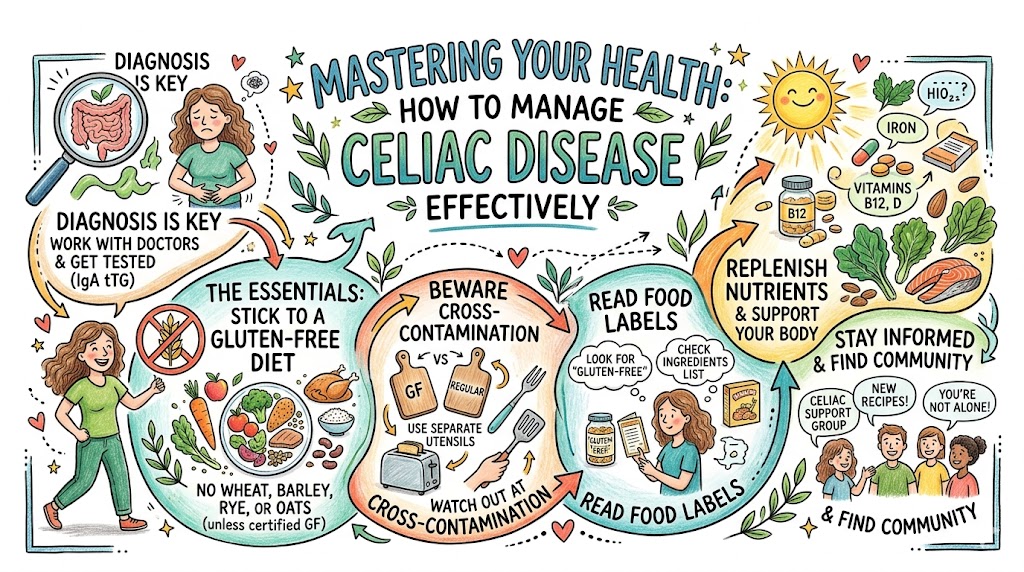
Effective management revolves around total compliance with a gluten-free lifestyle. This means avoiding all forms of wheat, barley, and rye.
- Read Food Labels: Gluten hides in unexpected places, including processed meats, sauces, and soups.
- Prevent Cross-Contamination: Use separate toasters, cutting boards, and cooking utensils to keep your food safe from gluten particles.
- Plan Ahead: Whether you are traveling or dining out, check menus in advance and communicate your needs clearly.
- Professional Guidance: Partner with a gastroenterologist and a dietitian to monitor your recovery.
Foods to Eat and Foods to Avoid
Naturally Gluten-Free Foods
Focus your diet on whole, unprocessed foods. Fresh fruits, vegetables, meat, fish, poultry, legumes, and nuts are naturally free of gluten.
Safe Grains and Alternatives
Rice, quinoa, buckwheat, and gluten-free oats are excellent staples. When buying flours, look for almond, coconut, or certified gluten-free rice flour.
Foods That Commonly Contain Gluten
Avoid bread, pasta, cereals, crackers, and any food containing wheat, barley, or rye. Always check labels for hidden ingredients like malt, hydrolyzed vegetable protein, or soy sauce (which often contains wheat).
Nutritional Considerations
Because celiac disease impairs nutrient absorption, patients often struggle with iron, vitamin B12, vitamin D, and calcium levels.
Focus on a balanced diet that includes lean proteins and colorful vegetables. In some cases, your doctor may prescribe specific supplements to address deficits that diet alone cannot correct. Regular blood work is necessary to track these levels as your body recovers.
Living Well with Celiac Disease
Living well means not letting your diet define your identity. It requires building healthy habits that become second nature.
Social situations can be challenging, but clear communication with hosts and restaurants makes dining out safer. Travel also becomes easier when you carry gluten-free snacks and research safe accommodations beforehand. Focus on the abundance of foods you can eat, rather than the few you must avoid.
Common Mistakes Patients Make
- Ignoring Hidden Gluten: Not realizing that cross-contamination in kitchens is a major source of illness.
- Inconsistent Adherence: Believing that “just one cheat” won’t cause damage, when in reality, even trace amounts trigger an immune response.
- Self-Diagnosis: Changing your diet before getting tested, which leaves your diagnosis unconfirmed.
- Skipping Follow-Ups: Neglecting long-term health checks, which can lead to missed nutritional gaps or other issues.
Digestive Health and Wellness Tips
- Chew your food thoroughly to aid initial digestion.
- Eat smaller, more frequent meals if you have bloating.
- Keep a food diary to identify personal triggers.
- Stay hydrated with water throughout the day.
- Manage stress, which can directly affect digestive comfort.
- Practice mindful eating in a calm environment.
- Get adequate fiber from gluten-free sources like seeds and vegetables.
- Maintain a regular meal schedule to keep your gut rhythmic.
- Limit alcohol, which can irritate the gut lining.
- Get enough sleep to support your immune system.
- Consult a specialist for persistent heartburn.
- Incorporate fermented foods if tolerated to support gut flora.
- Cook at home more often to control ingredients.
- Prioritize movement to improve digestive motility.
- Always read labels twice, even on familiar products.
Latest Advances in Celiac Disease Care
Researchers are actively exploring new therapies, including enzyme supplements designed to help break down gluten and vaccines aimed at re-training the immune system. While these are not yet cures, they offer hope for the future. For now, diagnostic methods have become faster and more accurate, helping patients get the answers they need earlier in life.
Frequently Asked Questions (FAQ)
- Can I ever have gluten again if I have celiac disease?No. Celiac disease is a lifelong condition. Even a small amount of gluten can cause significant damage to your small intestine, even if you do not feel immediate symptoms.
- Is a gluten-free diet healthy for everyone?Not necessarily. For people without celiac disease or gluten sensitivity, there is no clinical benefit to eliminating gluten. For those with celiac, it is medically necessary.
- Does celiac disease cause long-term health issues?Yes, if left untreated. Chronic inflammation can increase the risk of nutritional deficiencies, bone density loss, and in rare cases, specific types of intestinal cancers.
- How long does it take for the gut to heal after starting a diet?Healing times vary. While symptoms often improve within weeks, full intestinal repair can take months or even years, depending on the severity of the damage.
- Can I share a kitchen with family members who eat gluten?Yes, but you must be diligent. Use dedicated toasters and separate containers for spreads to prevent cross-contamination from breadcrumbs.
- Are gluten-free oats safe?Only if they are labeled “certified gluten-free.” Standard oats are often processed in facilities that handle wheat, leading to cross-contamination.
- Do I need to take supplements forever?Not necessarily. Once your gut heals and your nutrient levels stabilize, you may be able to get all your nutrients from a balanced diet, as directed by your doctor.
- Is celiac disease hereditary?Yes, it has a strong genetic component. If a family member is diagnosed, other first-degree relatives should be screened even if they don’t have symptoms.
- Can stress trigger celiac symptoms?While stress doesn’t cause celiac disease, it can exacerbate digestive symptoms for anyone, including those with autoimmune conditions.
- How do I explain my diet to others?Be clear and concise. Explain that it is a medical necessity, not a preference, and offer to bring your own safe meal to gatherings.
- Are there hidden sources of gluten in medications?Yes, sometimes gluten is used as a binder. Always ask your pharmacist to check the ingredients of your medications.
- What if I accidentally eat gluten?Don’t panic. Drink plenty of water, rest, and monitor your symptoms. If you experience severe reactions, contact your doctor.
- Will my children definitely have celiac disease?Not definitely, but they have a higher risk. Talk to your pediatrician about when and how to screen them.
- Is celiac disease the same as wheat allergy?No. An allergy is an immune reaction to wheat proteins, while celiac disease is an autoimmune response to gluten (which is in wheat, barley, and rye).
- How often should I see my gastroenterologist?Initially, you may need frequent visits. Once stable, an annual check-up to monitor your nutrient levels and overall health is standard.
Final Conclusion
Living with celiac disease is a journey of adaptation, but it is entirely possible to lead a vibrant, active, and healthy life. While the initial diagnosis can feel life-changing, learning how to manage celiac disease effectively empowers you to take control of your well-being. By strictly adhering to a gluten-free diet and working closely with your healthcare team, you protect your body from harm and allow your digestive system to function exactly as it should.
Remember that you are not alone. The gluten-free community is larger and more supportive than ever, and resources are readily available to help you navigate grocery shopping, dining out, and travel. Focus on the bounty of delicious, naturally gluten-free foods available to you, and don’t hesitate to seek the help of experts to ensure you are meeting your nutritional needs.