Introduction
Receiving a request for a colonoscopy can feel a bit daunting. Many patients feel nervous not just about the procedure itself, but about the preparation process. It is completely normal to have questions or feel a sense of anxiety about the days leading up to your exam. However, it is important to know that you are taking a vital step for your long-term health. A colonoscopy is widely considered the gold standard for digestive health, allowing doctors to detect early signs of issues long before they become serious problems.At GastroHospitals, we want you to feel empowered, not intimidated. The secret to a smooth colonoscopy experience lies in the preparation. When you follow your instructions precisely, you help your doctor see everything clearly, which ensures the most accurate diagnosis. Think of your bowel preparation as a necessary clearing of the path to give your medical team the best possible view.Consider the experience of a typical patient: John, who was scheduled for his first screening, was initially worried about the diet and the laxatives. By keeping a simple checklist and understanding exactly why each step mattered, he found that the process was much more manageable than he had anticipated. By the time he reached the clinic, he felt prepared and confident. In this guide, we will walk you through your journey step-by-step, helping you navigate your preparation with ease and peace of mind.
What Is a Colonoscopy?
A colonoscopy is a medical procedure that allows a gastroenterologist to look inside your entire large intestine (the colon) and the rectum. During the exam, the doctor uses a colonoscope—a long, flexible, thin tube with a tiny light and camera at its tip.
The Purpose of the Procedure
The primary goal of a colonoscopy is prevention and detection. Doctors use it to look for polyps (small growths that could potentially become cancerous over time), inflammation, areas of bleeding, or early signs of colorectal cancer. If a polyp is found, the doctor can often remove it right there during the procedure, effectively preventing it from becoming a future health concern. It is this unique ability to both diagnose and intervene that makes the colonoscopy so important for preventive health.
Why Colonoscopy Preparation Is Important
You might hear that the “prep is the hardest part,” and there is a very good reason for that. A colonoscopy requires your colon to be completely empty. If there is any stool left in the bowel, it acts like a curtain blocking the doctor’s view.
The Impact on Accuracy
If the colon is not properly cleaned, small polyps or early-stage tissue changes can be hidden underneath residual stool. This means the doctor might miss a crucial finding, or they may have to stop the procedure and ask you to return another day to repeat the process. Proper preparation is the bridge between a quick, successful screening and the need for a repeat, less comfortable experience. By following the diet and laxative guidelines, you are essentially ensuring that your doctor can do their job with the highest level of precision.
Step-by-Step Colonoscopy Preparation Timeline
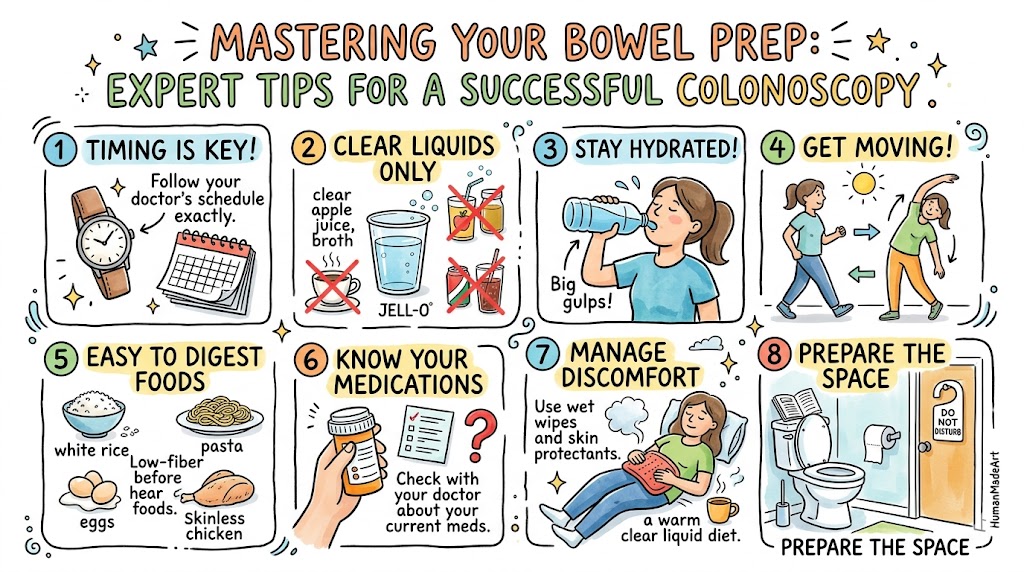
The preparation process usually begins about a week before your procedure. Here is your roadmap to success.
5–7 Days Before
- Transition to Low-Fiber: Begin removing high-fiber foods from your diet. This includes whole grains, raw vegetables, beans, and certain fruits.
- The “No-Seed” Rule: Avoid foods with small seeds, nuts, or corn, as these can be difficult for the bowel to process and might remain in the colon during the exam.
3 Days Before
- Simplify Your Meals: Focus on easily digestible proteins like chicken or fish and white starches like white rice or plain potatoes (peeled).
- Stay Hydrated: Drink plenty of water throughout the day.
1 Day Before
- The Clear Liquid Phase: This is the most critical day. No solid foods are allowed. You should consume only clear liquids such as broth (chicken or vegetable), apple juice, white grape juice, sports drinks, and water.
- Color Coded: Avoid any red, blue, or purple dyes. These colors can stain the colon lining and look like blood to the doctor during the exam.
Night Before
- Bowel Prep Solution: Start your prescribed laxative regimen at the time instructed by your doctor. You will have frequent bathroom visits, so ensure you have a comfortable spot near a restroom.
Day of Procedure
- Fasting: You must stop all intake, including water, usually 2–4 hours before your procedure time, depending on your doctor’s specific instructions. Follow these timing rules strictly to ensure the sedation is safe.
Foods You Can Eat Before Colonoscopy
During the days leading up to your prep, choose foods that digest easily and leave little residue.
- Proteins: Eggs, lean chicken, turkey, and white fish.
- Starches: White rice, white pasta, white bread, and peeled, boiled potatoes.
- Dairy: Plain yogurt (without fruit or chunks).
- Clear Liquids: Chicken or beef broth, electrolyte drinks, coconut water, and herbal teas.
Foods to Avoid Before Colonoscopy
To ensure a clean colon, please strictly avoid these items in the days leading up to your test:
- Whole Grains: Brown rice, oats, whole wheat bread, and cereals.
- Vegetables: Raw salads, broccoli, cauliflower, corn, and beans.
- Fruits: Any fruit with skin or seeds, including berries and dried fruits.
- Nuts and Seeds: Chia, flax, sunflower, or pumpkin seeds.
- Dyes: Avoid anything red or purple—this includes Jell-O, juices, and sports drinks.
- Fried Foods: Anything heavy, greasy, or difficult to digest.
What Is a Clear Liquid Diet?
A clear liquid diet allows your body to stay hydrated while ensuring nothing is left in the digestive tract. “Clear” means you should be able to hold the liquid up to a light and see through it.
- Examples: Water, black tea or coffee (no milk or cream), clear broth, apple juice, white grape juice, and clear electrolyte sports drinks.
- Why it works: These liquids are absorbed by the body rapidly, leaving no bulk in the colon. Staying well-hydrated with these fluids is also essential to help your body handle the laxative preparation without feeling lightheaded or exhausted.
Bowel Preparation (Laxatives) Explained
Laxatives are the tools used to flush the bowel. Your doctor will prescribe a specific solution, which may come in a large volume or a split-dose format.
- How they work: These solutions contain substances that draw water into the bowel, causing strong, frequent bowel movements that effectively wash the colon clean.
- The Split-Dose Method: Many doctors now recommend a “split dose,” where you take half the laxative the night before and the second half the morning of the procedure. This is widely considered the most effective way to ensure the colon is pristine for your exam. Expect diarrhea; it is exactly what needs to happen to get you ready.
How to Make Colonoscopy Prep Easier
Preparation can be challenging, but these practical tips can improve your experience significantly:
- Chill the Prep: If your laxative solution is drinkable, keep it in the refrigerator. Drinking it cold can make it much more palatable.
- Use a Straw: Using a straw helps bypass some of the taste buds at the front of your tongue.
- Flavoring: If allowed, add a splash of lemon or a crystal-light flavor packet to your clear liquids to keep things interesting.
- Comfort is Key: Use soft, wet wipes instead of dry toilet paper to prevent irritation during the frequent bathroom visits.
- Stay Comfortable: Set up your bathroom or a nearby room with books, a tablet, or a comfortable chair to pass the time.
- Hydrate Often: Sip on clear fluids consistently throughout the day, even when you aren’t drinking the laxative.
Common Mistakes Patients Make
Even with the best intentions, errors can happen. Avoid these common pitfalls:
- Skipping the Last Dose: It is tempting to skip the final dose on the morning of the procedure, but this is the most critical dose for ensuring the end of your colon is clean.
- Ignoring the Dye Rule: Drinking red or purple fluids is a common mistake that can lead to confusion during the procedure.
- Not Enough Hydration: Many patients forget to drink enough clear fluids outside of their laxative, leading to dehydration-related headaches.
- Forgetting Medications: Check with your doctor about blood thinners or diabetes medications well in advance. Do not assume you should take them as usual.
What Happens If Prep Is Not Done Properly
If your colon is not clean, the doctor cannot safely navigate the scope or see the lining clearly. This often results in:
- Poor Visibility: Small growths may be obscured, meaning the screening was essentially wasted.
- Procedure Cancellation: If the doctor cannot see, they will have to stop and reschedule.
- Repeat Prep: If the procedure is cancelled, you will have to undergo the preparation process all over again.
- Increased Risk: A poor prep makes it harder for the doctor to perform the exam safely.
What to Expect on Procedure Day
The day of the colonoscopy is often much easier than the day before.
- Arrival: You will check in, change into a gown, and have your vitals (blood pressure, heart rate) checked.
- Sedation: You will be given medication through an IV that will help you relax and likely fall into a light sleep. Most patients report waking up feeling like they just took a refreshing nap.
- The Procedure: The exam itself usually takes about 20 to 45 minutes.
- Recovery: You will stay in a recovery area for about 30 to 60 minutes while the sedation wears off.
Safety Tips During Preparation
- Listen to Your Doctor: If you have concerns about your ability to tolerate the laxative, call your provider.
- Medication Review: Always provide a complete list of your medications to the clinic.
- Stay Near a Bathroom: Do not plan to leave the house once you start your laxatives.
- Support System: Arrange for someone to drive you home, as the sedation will make you drowsy.
Who Needs a Colonoscopy?
General screening typically begins for everyone around the age of 45 to 50, even without symptoms. However, you should talk to your doctor sooner if you have:
- A family history of colon cancer.
- Persistent digestive changes, such as blood in the stool or unexplained abdominal pain.
- Conditions like inflammatory bowel disease (IBD).
Benefits of Colonoscopy
- Early Cancer Detection: The best way to catch cancer before it develops.
- Polyp Removal: The only screening test that is truly preventive because it removes the “pre-cancer” cells.
- Accurate Diagnosis: It provides a clear, visual answer to what is causing your symptoms.
- Peace of Mind: Knowing your status is the best health investment you can make.
Recovery After Colonoscopy
Once the sedation wears off, you may feel:
- Mild Bloating: The doctor uses air to inflate the colon for a better view; this will pass as you pass gas naturally.
- Grogginess: It is perfectly normal to feel tired for the rest of the day.
- Gradual Eating: You can generally return to your normal diet, though it is usually recommended to start with something light.
FAQs (15 Questions)
1. How do I prepare for a colonoscopy? Preparation involves a gradual shift to a low-fiber diet, followed by a clear liquid diet on the day before the procedure, and taking a prescribed laxative to clean your colon. It is essential to follow the specific instructions provided by GastroHospitals to ensure your colon is ready.
2. Can I eat before colonoscopy? You will need to transition to a clear liquid diet on the day before your procedure. Solid foods must be avoided on that day. On the morning of the procedure, you will likely need to be completely fasted, including no liquids, depending on your specific scheduled time.
3. Is colonoscopy painful? Most patients receive sedation that keeps them very comfortable. Many people fall asleep during the procedure and report feeling very little to nothing at all. You may feel some pressure or bloating during the procedure, but it is rarely described as painful.
4. How long does prep take? The dietary prep takes about 5 to 7 days, but the intense bowel cleaning usually happens within the 24 hours leading up to your procedure. It is a one-day intense commitment for a lifetime of preventive health.
5. What if I fail prep instructions? If your prep is not complete, please contact your doctor’s office as soon as possible. It is better to have an honest conversation early than to arrive at the clinic and find out you cannot have the procedure performed safely.
6. Do I need to be off work? Yes, it is highly recommended to take the day of the procedure off. Many people also find it helpful to take the day before off to manage their bowel preparation comfortably at home.
7. Can I drink coffee? You can drink black coffee (without milk or cream) on the clear liquid day, but only if it does not violate any specific “no caffeine” instructions from your doctor. Avoid any additives.
8. What should I wear? Wear loose, comfortable clothing. You will be changing into a hospital gown for the procedure, so something that is easy to put on and take off is ideal.
9. Can I drive home alone? No. Because of the sedation medication used, it is unsafe to drive for at least 24 hours. You must have a friend or family member drive you home.
10. What if I am on blood thinners? You must inform your doctor about these. You may need to pause them for a few days before the procedure to reduce the risk of bleeding during a potential polyp removal.
11. Why red/purple liquids are bad? These dyes can leave a residue in the colon that mimics the appearance of blood, which could potentially cause your doctor to worry about conditions that aren’t actually present.
12. Is the laxative taste bad? Many modern laxatives are much better tasting than they were in the past. If you find the taste challenging, remember to keep it cold and use a straw.
13. How frequent are the bowel movements? Expect to visit the bathroom quite frequently once the laxative starts working. This is normal and shows that the preparation is doing its job.
14. Can I chew gum? Most doctors advise against chewing gum on the day of the procedure, as it can cause you to swallow air, which can make the examination more uncomfortable.
15. When will I get results? If no biopsies were taken, you will often know the findings right away. If a sample was taken for a biopsy, it typically takes a few days to get the final pathology results.
Final Conclusion
Preparing for a colonoscopy is a meaningful act of self-care. While the process of bowel preparation requires some planning and discipline, it is a small, temporary commitment that yields significant, long-term health rewards. By meticulously following the diet and laxative instructions, you are providing your gastroenterology team with the best opportunity to protect your health.Remember, you are not doing this alone. The team at GastroHospitals is here to guide you through every step. We have seen thousands of patients navigate this process successfully, and you have all the resources you need to do the same. If you feel nervous, focus on the result: a clean bill of health, peace of mind, and the confidence that you are taking proactive control of your digestive wellness.Do not let anxiety prevent you from getting the screening you need. The discomfort of the preparation is fleeting, but the benefit of early detection can last a lifetime. Reach out to your healthcare provider, clear your schedule, keep your clear liquids handy, and trust the process. You are doing exactly what you need to do for your future. When the day of your colonoscopy arrives, you will be prepared, relaxed, and ready to complete this vital part of your healthcare journey with confidence. Your health is your most valuable asset, and today, you are choosing to protect it.