Introduction
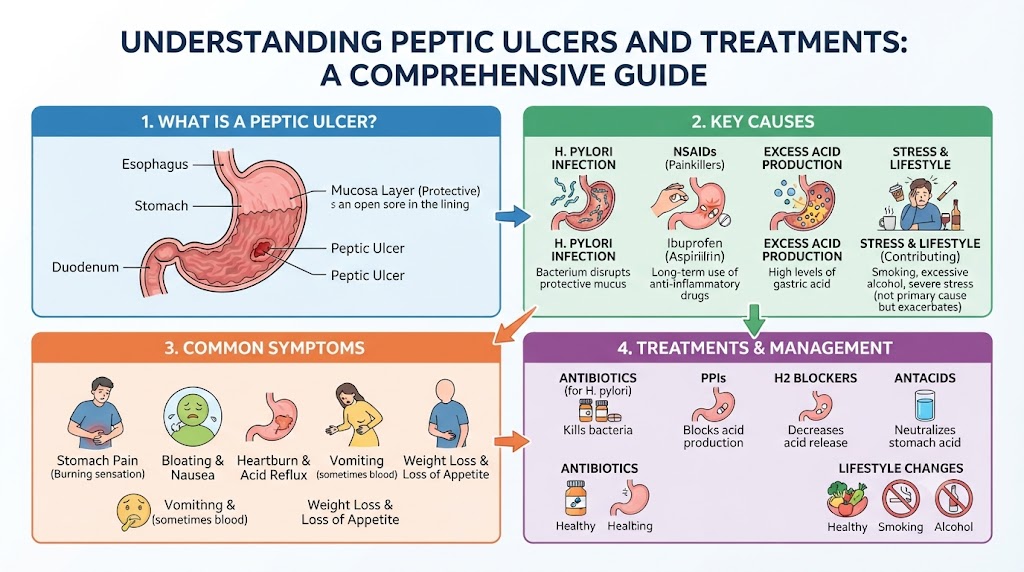
A peptic ulcer is a sore that develops on the lining of the stomach, the lower esophagus, or the small intestine. While these ulcers are common, they can cause significant discomfort and, if left untreated, lead to more serious health issues. Understanding the difference between gastric (stomach) ulcers and duodenal ulcers is essential for recognizing symptoms and seeking the right care.Early diagnosis and targeted treatment are critical for healing the lining of the digestive tract and preventing recurrence. At GastroHospitals, we emphasize the importance of professional evaluation to identify the root cause of these sores. This guide will help you understand what peptic ulcers are, how they are diagnosed, and how medical professionals manage them to restore your digestive health.
Understanding Peptic Ulcers
Peptic ulcers occur when the protective mucus layer that covers the digestive tract is eroded, allowing stomach acid to damage the underlying tissue. This acid—essential for digestion—becomes harmful when the natural defense mechanisms are compromised.
The role of the protective mucus is to buffer the acid and prevent it from reaching the delicate stomach and intestinal wall. When this layer is breached, the acidic environment creates a painful, open sore. Identifying the underlying cause—whether it be an infection or medication-related—is the first step in successful treatment.
PEPTIC ULCER OVERVIEW TABLE
| Aspect | Description |
| Medical Condition | Peptic Ulcer Disease |
| Organs Affected | Stomach, duodenum (small intestine), and esophagus |
| Common Causes | H. pylori infection, long-term NSAID use |
| Specialists Involved | Gastroenterologists |
| Treatment Goal | Eliminate underlying cause and promote healing |
Types of Peptic Ulcers
Gastric Ulcer
These ulcers form specifically on the inside lining of the stomach. They are often associated with chronic use of anti-inflammatory medications.
Duodenal Ulcer
These occur on the inside lining of the upper portion of the small intestine (the duodenum). They are frequently caused by H. pylori infection.
Esophageal Ulcer
These occur in the lower part of the esophagus and are often related to severe, untreated acid reflux.
TYPES OF ULCERS TABLE
| Ulcer Type | Location | Common Features |
| Gastric Ulcer | Stomach lining | Pain often worsens after eating |
| Duodenal Ulcer | Upper small intestine | Pain often improves after eating |
| Esophageal Ulcer | Lower esophagus | Often associated with heartburn/reflux |
Common Causes of Peptic Ulcers
Helicobacter pylori (H. pylori) Infection
This bacterium infects the mucus layer of the stomach, causing inflammation and increasing susceptibility to acid damage.
Long-Term NSAID Use
Nonsteroidal anti-inflammatory drugs (like aspirin, ibuprofen, and naproxen) can irritate the stomach lining when used regularly.
Smoking and Alcohol
Both habits can delay healing and increase the production of stomach acid.
Excess Stomach Acid
In some individuals, excessive acid production creates an environment where ulcers are more likely to form.
CAUSES & RISK FACTORS TABLE
| Cause/Risk Factor | How It Contributes | Can It Be Managed? |
| H. pylori Infection | Destroys protective mucus | Yes (via antibiotics) |
| NSAID Use | Inhibits protective prostaglandins | Yes (medical supervision) |
| Smoking | Slows tissue repair | Yes |
| Alcohol | Increases inflammation | Yes |
| Excess Acid | Corrodes lining | Yes (medication) |
Symptoms of Peptic Ulcers
The most common symptom is a burning or gnawing sensation in the middle of the abdomen. This pain may come and go, often feeling worse when the stomach is empty.
Emergency Warning: If you experience vomiting blood (which may look like coffee grounds), dark, tarry stools, or sudden, intense, unremitting abdominal pain, seek emergency medical care immediately, as these may be signs of a perforated ulcer or severe bleeding.
SYMPTOMS TABLE
| Symptom | Possible Meaning | Medical Evaluation Needed |
| Burning Pain | Active ulceration | Yes |
| Bloating | Digestion disturbance | Yes |
| Nausea | Inflammation | Yes |
| Black Stools | Potential internal bleeding | Urgent/Emergency |
| Vomiting Blood | Severe internal bleeding | Emergency |
| Sudden Severe Pain | Potential perforation | Emergency |
Diagnosis of Peptic Ulcers
A medical professional will conduct a thorough assessment to pinpoint the cause and location of an ulcer.
DIAGNOSTIC TESTS TABLE
| Test | Purpose | What It Detects |
| Endoscopy | Visual inspection | Ulcer size and location |
| H. pylori Testing | Identifying infection | Presence of bacteria |
| Blood Tests | Screening | Signs of anemia or infection |
| Stool Test | Screening | Blood or H. pylori antigens |
| Imaging | Secondary assessment | Perforations or severe issues |
Treatment Options
TREATMENT OPTIONS TABLE
| Treatment | Purpose | When It May Be Used |
| PPIs | Reduce stomach acid production | Standard therapy for all ulcers |
| H2 Blockers | Reduce acid release | Alternative to PPIs |
| Antibiotics | Kill H. pylori bacteria | Specifically for infected ulcers |
| Protective Medicines | Coat the ulcer crater | To facilitate healing |
| Endoscopic Treatment | Stop bleeding/seal vessels | During endoscopy if bleeding is found |
| Surgery | Repair perforation/obstruction | When complications are severe |
Lifestyle Changes That Support Recovery
While medication is the cornerstone of treatment, lifestyle adjustments help provide the stomach environment necessary for healing.
LIFESTYLE MANAGEMENT TABLE
| Healthy Habit | Benefit |
| Balanced Diet | Reduces irritation and supports immunity |
| Smoking Cessation | Improves blood flow and tissue repair |
| Alcohol Reduction | Prevents further lining irritation |
| Medication Adherence | Ensures the ulcer heals completely |
| Regular Medical Follow-Up | Monitors progress and prevents recurrence |
Possible Complications
If neglected, ulcers can progress to complications that require aggressive medical or surgical intervention.
COMPLICATIONS TABLE
| Complication | Why It Happens | Emergency? |
| Bleeding | Ulcer erodes into a blood vessel | Yes |
| Perforation | Ulcer creates a hole through the wall | Yes |
| Obstruction | Swelling blocks food passage | Yes |
| Recurrent Ulcers | Incomplete treatment | No, but requires care |
| Anemia | Chronic slow blood loss | Yes (long term) |
Future of Peptic Ulcer Care
| Innovation | Potential Benefit |
| AI Endoscopy | Earlier, more accurate ulcer detection |
| Advanced H. pylori Testing | Faster diagnosis and tailored antibiotic choice |
| Personalized Therapy | Treatment optimized for your specific physiology |
| Modern Endoscopic Treatment | Minimally invasive healing of severe complications |
| Digital Monitoring | Tracking healing progress at home |
FAQs
- What is a peptic ulcer?
A sore in the digestive tract lining. - What causes stomach ulcers?
H. pylori or NSAID medication usage. - What is H. pylori?
A bacterium that causes stomach inflammation. - How are ulcers diagnosed?
Usually via an upper GI endoscopy. - Can peptic ulcers heal?
Yes, with proper medication and care. - What foods to avoid?
Spicy or highly acidic foods can irritate. - Are ulcers contagious?
No, but the bacteria can be spread. - Can stress cause ulcers?
Stress aggravates them but doesn’t cause them. - When is surgery needed?
For complications like perforation. - When to seek emergency care?
With vomiting blood or tarry stools. - Do I need an endoscopy?
Often yes, for accurate diagnosis. - How long to heal?
Usually 4 to 8 weeks. - Can I use OTC pain meds?
Avoid NSAIDs unless approved by a doctor. - Is diet enough to heal?
No, medication is usually required. - What is a duodenal ulcer?
A sore in the first part of the small intestine.
Final Thoughts
Managing peptic ulcers requires a commitment to your digestive health. By identifying the root cause and following a prescribed treatment plan, most individuals experience significant improvement and healing. Consistency with medications and regular follow-ups with a healthcare professional are the best ways to ensure lasting recovery and prevent the return of symptoms.We encourage you to visit GastroHospitals to explore our resources on digestive health and connect with specialists who can guide you on your journey to wellness. Your gut health is a top priority, and professional intervention is always the most effective path to healing.