Introduction
As cloud adoption accelerates across industries, organizations are seeking skilled professionals who can secure their cloud environments. With Microsoft Azure being one of the most widely used cloud platforms, securing Azure workloads, managing identities, and protecting sensitive data have become paramount. The Azure Security Engineer Associate (AZ-500) certification is designed to equip IT professionals with the knowledge and practical experience needed to secure Azure environments effectively.
This guide delves into every aspect of the AZ-500 certification, from its core requirements to a detailed breakdown of what you’ll learn. It’s intended for professionals looking to specialize in cloud security and take their careers to the next level.
What is the Azure Security Engineer Associate (AZ-500)?
The Azure Security Engineer Associate (AZ-500) certification is designed to validate your ability to implement security controls, monitor security status, and respond to security incidents in a Microsoft Azure environment. This certification tests your knowledge of cloud security, threat management, identity management, and how to secure Azure resources across both private and public clouds.
Azure security engineers are responsible for protecting an organization’s Azure environment by managing identity, securing data and applications, implementing security policies, and responding to incidents. The AZ-500 exam focuses on ensuring candidates can deploy security solutions, configure security policies, and monitor compliance in Azure cloud environments.
Who Should Consider the Azure Security Engineer Associate (AZ-500)?
This certification is intended for professionals who are responsible for implementing and managing security in an Azure environment. If you’re already an Azure Administrator, Security Consultant, or Cloud Engineer, and you want to specialize in cloud security, this certification is perfect for you.
It’s also beneficial for professionals such as:
- IT Security Administrators: Those looking to specialize in securing cloud resources.
- DevOps Engineers: If you work with CI/CD pipelines and want to integrate security into the development lifecycle (DevSecOps).
- Network Engineers: If you’re looking to enhance your skills in securing Azure networks, virtual machines, and other resources.
- Cloud Architects: If you are involved in designing cloud infrastructure and need to add security to your design expertise.
Anyone who works with Microsoft Azure in a security context will find this certification valuable in demonstrating their proficiency in protecting cloud services.
Key Skills You Will Gain
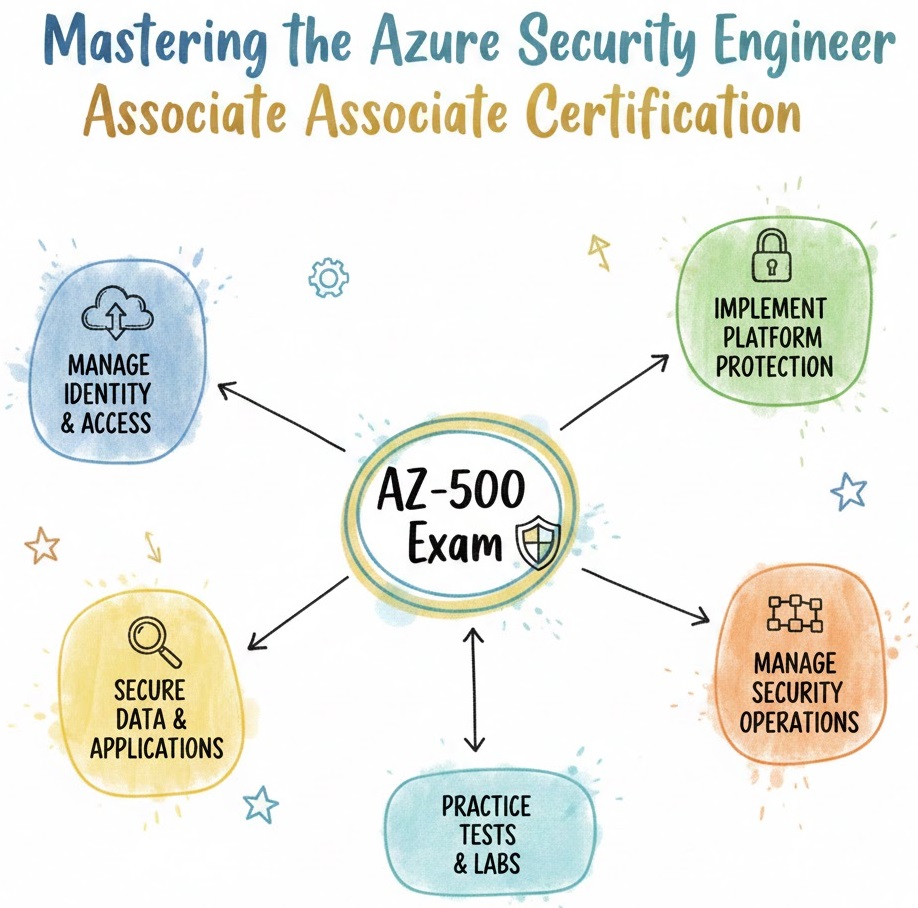
The AZ-500 certification will teach you a broad range of skills in securing Azure resources. The key areas covered in the exam are:
- Identity and Access Management (IAM): You will learn to configure and manage Azure Active Directory (Azure AD), implement multi-factor authentication (MFA), configure user and group permissions, and set conditional access policies. Identity management is a critical part of securing an Azure environment.
- Platform Protection: Azure security engineers are tasked with protecting infrastructure. You will understand how to configure Azure network security, including network security groups, firewalls, VPNs, and Azure DDoS Protection. These tools help protect the network and services that are running in the cloud.
- Data and Application Security: This module will teach you how to secure Azure databases, secure your storage solutions, and implement encryption at rest and in transit. You’ll also learn how to protect applications deployed in the Azure environment by securing the app’s data and configuration.
- Security Operations: Security engineers must constantly monitor Azure environments for threats. You will gain hands-on experience using Azure Security Center, Azure Sentinel, and Azure Monitor to detect and respond to threats, as well as configure alerts to stay on top of any malicious activity.
- Governance and Compliance: In this section, you’ll explore how to implement governance and security policies using Azure Policy, Azure Blueprints, and Role-Based Access Control (RBAC). You’ll also get an understanding of regulatory compliance frameworks like GDPR, HIPAA, and ISO 27001 that are supported within Azure.
Real-World Projects You Will Be Ready to Tackle After Certification
Once you complete the AZ-500 certification, you will have acquired practical knowledge and experience to handle real-world security challenges. Some of the projects you should be ready to work on include:
- Setting Up Identity Management in Azure: Configuring Azure AD for user authentication, implementing MFA, and establishing secure access policies using Conditional Access for different groups in an organization.
- Securing Azure Resources: You will be able to configure network security measures like NSGs (Network Security Groups), set up VPNs, and deploy firewalls to secure virtual networks, ensuring data is protected while stored or in transit.
- Implementing Threat Detection and Response: Using Azure Sentinel and Azure Security Center, you’ll be able to monitor security threats, set up alerts, and automate incident response workflows to mitigate security risks proactively.
- Cloud Governance: Creating policies and ensuring compliance with Azure Policy, setting up Azure Blueprints, and performing regular security assessments for Azure workloads, applications, and data.
- Securing Hybrid Environments: Configure and secure hybrid cloud environments by integrating on-premise data centers with Azure cloud solutions, ensuring a unified security approach across platforms.
How to Prepare for the AZ-500 Exam
The AZ-500 exam is a comprehensive test that requires thorough preparation. Below are some plans to help you structure your study:
7-Day Plan
- Days 1-2: Review the fundamentals of Azure security, including Azure AD, RBAC, and Multi-factor Authentication.
- Days 3-4: Study platform security tools, including Azure Security Center, NSGs, and Firewalls.
- Days 5-6: Focus on threat monitoring, Azure Sentinel, and incident response workflows.
- Day 7: Take practice exams and review areas you found challenging.
30-Day Plan
- Week 1-2: Study Azure IAM and Azure AD. Dive deeper into setting up security controls and enforcing security policies across Azure resources.
- Week 3: Study platform protection techniques, threat protection, and Azure monitoring tools.
- Week 4: Review governance, compliance, and prepare for the exam using mock tests and case studies.
60-Day Plan
- Weeks 1-2: Study Azure AD, IAM configurations, and Multi-factor Authentication in detail.
- Weeks 3-4: Focus on securing Azure resources, setting up encryption, and monitoring security events.
- Weeks 5-6: Review security operations, compliance, and governance in Azure, with practice exams to track your progress.
Common Mistakes to Avoid During Preparation
- Skipping Hands-on Labs: A major part of the AZ-500 exam is hands-on experience. Make sure to practice using the Azure portal or set up a free Azure account to get real experience.
- Ignoring Hybrid Environments: Hybrid cloud configurations are an important aspect of the exam. Practice securing both on-premises and Azure-based resources.
- Not Reviewing Governance and Compliance: These topics can be tricky, but they are crucial for the exam. Ensure you understand Azure Policy, Azure Blueprints, and the security and compliance controls available.
- Overlooking Incident Response: Make sure to study how to detect, respond to, and remediate incidents using Azure Sentinel and Azure Monitor.
Recommended Certifications After AZ-500
Once you achieve the AZ-500 certification, consider pursuing additional certifications to deepen your expertise:
- Microsoft Certified: Azure Solutions Architect Expert (AZ-303 & AZ-304): For architects designing complex Azure-based solutions.
- Certified Cloud Security Professional (CCSP): To enhance your understanding of cloud security best practices globally.
- Microsoft Certified: Azure DevOps Engineer Expert (AZ-400): For DevOps engineers who want to enhance their security knowledge and integrate it into CI/CD pipelines.
Choose Your Path: 6 Learning Tracks
If you want to specialize further after the AZ-500, here are some career paths you might consider:
1. DevOps
- Focus on secure automation and DevSecOps by integrating security into continuous delivery pipelines.
2. DevSecOps
- Master the art of embedding security within DevOps workflows, ensuring security is addressed throughout the software development lifecycle.
3. SRE (Site Reliability Engineering)
- Learn to monitor and secure cloud applications to ensure reliability and security in production environments.
4. AIOps/MLOps
- Specialize in leveraging artificial intelligence to enhance security incident detection and automated responses in the cloud.
5. DataOps
- Secure data pipelines and develop a governance framework to ensure that sensitive data is protected.
6. FinOps
- Learn to manage cloud costs securely and efficiently while maintaining compliance and protecting financial data.
Role → Recommended Certifications
Here’s a quick guide to the recommended certifications for various cloud roles:
| Role | Recommended Certifications |
|---|---|
| DevOps Engineer | AZ-500, AZ-400 (Azure DevOps Engineer Expert) |
| SRE | AZ-500, AZ-303 (Azure Solutions Architect) |
| Platform Engineer | AZ-500, AZ-303 & AZ-304 (Azure Solutions Architect) |
| Cloud Engineer | AZ-500, AZ-900 (Azure Fundamentals) |
| Security Engineer | AZ-500, CCSP (Certified Cloud Security Professional) |
| Data Engineer | AZ-500, DP-200 (Azure Data Engineer) |
| FinOps Practitioner | AZ-500, Cloud Financial Management |
| Engineering Manager | AZ-500, AZ-400 (Azure DevOps Engineer Expert) |
Top Institutions for Azure Security Engineer Associate (AZ-500) Training
1.DevOpsSchool
DevOpsSchool offers a comprehensive training program tailored to Azure Security Engineer Associate (AZ-500). The training focuses on real-world scenarios, ensuring students can apply security best practices for securing Azure-based environments. Through hands-on labs, students learn to secure networks, manage identities, and protect applications. The course is taught by experienced instructors who help learners develop the practical skills required to pass the AZ-500 exam.
2. Cotocus
Cotocus provides expert-led training for Azure security. Their AZ-500 course covers all aspects of Azure security, including threat detection, identity management, data protection, and network security. The training is structured to give learners the necessary skills to pass the AZ-500 exam and prepare them for real-world Azure security tasks. Cotocus offers personalized mentorship and additional resources for continuous learning.
3. ScmGalaxy
ScmGalaxy is known for its flexible and practical training approach. Their AZ-500 course combines theoretical learning with hands-on labs, ensuring that students gain real-world experience. ScmGalaxy’s trainers focus on core Azure security topics such as identity protection, network security, and threat response using Azure tools like Azure Security Center and Azure Sentinel.
4. BestDevOps
BestDevOps offers in-depth training designed specifically for professionals looking to become Azure Security Engineers. Their AZ-500 course provides an in-depth understanding of securing Azure environments, with a focus on network security, compliance, and securing Azure workloads. Learners benefit from interactive sessions and case studies to solidify their skills and knowledge, ensuring they are well-prepared for the AZ-500 exam.
5. DevSecOpsSchool
DevSecOpsSchool specializes in integrating security practices into the DevOps lifecycle. Their AZ-500 training course is designed for professionals who are involved in both DevOps and security, offering a unique DevSecOps perspective on securing cloud-based applications. Students will learn how to secure Azure resources and implement security at every stage of the DevOps pipeline.
6. SRESchool
SRESchool offers targeted training for professionals in Site Reliability Engineering (SRE). Their AZ-500 certification training emphasizes security within Azure’s highly reliable environments. The training helps SREs integrate security practices into their reliability goals, covering topics like threat management, monitoring, and disaster recovery on Azure.
7. AIOpsSchool
AIOpsSchool combines AI and cloud security, preparing professionals for the challenges of securing machine learning (ML) models and AI workloads in Azure. Their AZ-500 course includes a focus on automated threat detection and security incident response using Azure Sentinel and other Azure security tools. This training is ideal for professionals looking to secure AI/ML workflows in Azure.
8. DataOpsSchool
DataOpsSchool provides training that focuses on securing data services in Azure. Their AZ-500 training program teaches how to protect data across cloud-based environments, implement encryption strategies, and manage data security compliance within Azure. The program is particularly useful for professionals in the DataOps and data engineering fields who need to secure large datasets and cloud databases.
9. FinOpsSchool
FinOpsSchool offers a specialized approach that combines cloud financial operations (FinOps) with security best practices. The AZ-500 course at FinOpsSchool focuses on securing financial data in Azure, ensuring that cloud cost management strategies align with security protocols. This is perfect for professionals involved in cloud cost optimization who also need to maintain robust security practices.
FAQs
1. How difficult is the AZ-500 exam?
The AZ-500 exam is moderately challenging, requiring both theoretical knowledge and hands-on practical experience. It tests your ability to secure Azure environments across various domains, so a solid understanding of security tools and services in Azure is crucial.
2. How long does it take to prepare for the AZ-500 exam?
Typically, preparation for the AZ-500 exam takes between 30 to 60 days, depending on your experience with Azure and security. If you’re new to Azure, it might take a bit longer to get comfortable with the concepts and hands-on practice.
3. What are the prerequisites for the AZ-500 exam?
There are no formal prerequisites for the AZ-500 exam. However, it is recommended to have a basic understanding of Azure services and cloud security concepts. Some experience with Azure Active Directory (Azure AD) and other Azure services is beneficial for a smoother preparation journey.
4. Can I take the AZ-500 exam without prior Azure experience?
While prior Azure experience is not mandatory, it will certainly help. Azure security concepts can be complex, so having some familiarity with cloud services and Azure infrastructure will make studying easier and more effective.
5. What topics are covered in the AZ-500 exam?
The exam covers:
- Identity and access management with Azure AD and RBAC.
- Platform protection including securing virtual machines and applications.
- Network security through Azure Firewalls, VPNs, and NSGs.
- Security operations using Azure Security Center and Azure Sentinel.
- Data protection with Azure Key Vault, encryption, and compliance.
6. How much does the AZ-500 exam cost?
The AZ-500 exam typically costs $165 USD. Prices may vary slightly depending on your region. Check the official Microsoft certification website for the most accurate pricing.
7. How many questions are in the AZ-500 exam?
The AZ-500 exam consists of 40 to 60 questions. These questions may include multiple-choice, drag-and-drop, and scenario-based questions to test your ability to apply security controls in real-world situations.
8. What resources should I use to prepare for the AZ-500 exam?
Here are some recommended resources:
- Microsoft Learn: Free, official learning paths for AZ-500.
- Practice Exams: Use practice exams to familiarize yourself with the exam format.
- Hands-on Labs: Set up your own Azure environment to gain practical experience.
- Online Courses: Platforms like Pluralsight, Udemy, and LinkedIn Learning offer in-depth courses on Azure security topics.
FAQs
1. How difficult is the AZ-500 exam?
The AZ-500 exam is moderately challenging. It tests both your theoretical knowledge of Azure security and your ability to implement practical security solutions. A strong understanding of Azure services and hands-on experience with its security tools is essential to pass the exam.
2. How long does it take to prepare for the AZ-500 exam?
Typically, preparation for the AZ-500 exam takes 30 to 60 days, depending on your background and familiarity with Azure. For those who are new to Azure, it may take a bit longer to get up to speed with core services and security concepts.
3. What are the prerequisites for the AZ-500 exam?
While there are no formal prerequisites for the AZ-500, it’s recommended to have some foundational knowledge of Azure. Azure Fundamentals (AZ-900) is a good starting point if you’re new to Azure. A basic understanding of cloud computing concepts and networking is also helpful.
4. Can I take the AZ-500 certification without prior Azure experience?
It is possible to take the exam without prior experience in Azure, but it is highly recommended to have at least some familiarity with the Azure environment. Hands-on experience with Azure services will significantly help you understand the concepts and tools covered in the exam.
5. What topics are covered in the AZ-500 exam?
The AZ-500 exam covers several key areas, including:
- Identity and Access Management (Azure AD, RBAC)
- Platform Protection (Securing VMs, Containers, and Applications)
- Security Operations (Azure Security Center, Azure Sentinel)
- Network Security (Azure Firewall, VPNs, NSGs)
- Data Protection (Encryption, Azure Key Vault)
6. How much does the AZ-500 exam cost?
The cost of the AZ-500 exam is approximately $165 USD. Prices may vary depending on your region, so it’s best to check the official Microsoft website for the most up-to-date pricing.
7. How many questions are in the AZ-500 exam?
The AZ-500 exam consists of 40 to 60 questions, which include multiple-choice questions, case studies, and hands-on lab scenarios. These questions test your ability to apply security concepts to real-world situations.
8. What is the passing score for the AZ-500 exam?
The passing score for the AZ-500 exam is 700 out of 1000. Microsoft uses a weighted scoring system, so some questions are worth more points than others, depending on their complexity.
9. What resources should I use to prepare for the AZ-500 exam?
Here are some recommended resources:
- Microsoft Learn: Free, official learning paths and modules for AZ-500 preparation.
- Practice Exams: Use platforms like MeasureUp or Whizlabs for practice exams to familiarize yourself with the question format.
- Hands-on Labs: Set up a personal Azure account and practice configuring security tools and services.
- Books and Online Courses: Books like “Exam Ref AZ-500: Microsoft Azure Security Technologies” or online courses on platforms like Pluralsight, Udemy, and LinkedIn Learning.
10. Can I retake the AZ-500 exam if I fail?
Yes, if you fail the AZ-500 exam, you can retake it. However, you must wait 24 hours after your first attempt before retaking the exam. If you fail again, a 14-day waiting period is required before you can attempt the exam again.
11. Is the AZ-500 certification worth it?
Yes, the AZ-500 certification is highly valuable, especially as more companies migrate to the cloud. Azure is one of the leading cloud platforms, and professionals with skills in Azure security are in high demand. Earning the AZ-500 will open up career opportunities in cloud security, DevSecOps, and network administration.
12. What is the validity period of the AZ-500 certification?
The AZ-500 certification is valid for two years. After this period, you must renew your certification to maintain your status. Microsoft offers renewal options through online exams or continued professional development.
Conclusion
The Azure Security Engineer Associate (AZ-500) certification is an essential credential for those looking to secure Azure cloud environments. As more companies move to the cloud, security has become a top priority, and professionals with expertise in cloud security are in high demand.In this guide, we’ve covered everything you need to know about the AZ-500 certification, including what it is, who should take it, and the skills you’ll gain. We’ve also discussed practical preparation strategies, common mistakes to avoid, and the next certifications you should pursue to continue advancing your career in cloud security.